
John Deacon – Queen Bassist and Collaborator of David Bowie on Under Pressure
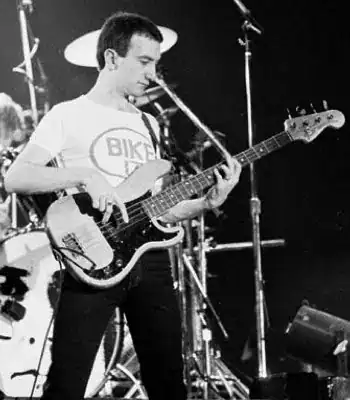
Photo: Eddie Mallin / Wikimedia Commons / CC BY-SA 2.0 — Wikimedia file page
John Richard Deacon (born 19 August 1951) is an English retired musician, songwriter and electrical engineer best known as the bassist of Queen. Joining Brian May, Roger Taylor and Freddie Mercury in early 1971, he completed the four-member line-up that remained unchanged throughout Mercury’s lifetime and became one of the most successful partnerships in rock history.
Although John Deacon rarely sought publicity, his influence on Queen was profound. His melodic bass playing, technical understanding of electronics and instinctive songwriting produced some of the band’s best-loved recordings, including You’re My Best Friend, Another One Bites the Dust, Spread Your Wings and I Want to Break Free.
For followers of David Bowie, Deacon is forever associated with Under Pressure, the landmark 1981 collaboration between Bowie and Queen. Recorded at Mountain Studios in Montreux, the song united five exceptional musicians in a spontaneous creative session that produced one of the most celebrated recordings in popular music. Deacon’s bass performance became one of the defining elements of the finished recording, which remains a cornerstone of both Queen’s and Bowie’s musical legacy.
Key Facts
- Full name: John Richard Deacon
- Born: 19 August 1951, Leicester, England
- Occupation: Retired musician, bassist, songwriter and electronics engineer
- Band: Queen (joined February 1971)
- Instrument: Bass guitar
- David Bowie connection: Performer and joint songwriter on Under Pressure (1981)
- Major Queen songs: You’re My Best Friend, Spread Your Wings, Another One Bites the Dust, Back Chat, I Want to Break Free
- Education: Electronics, Chelsea College, University of London
- Final public performance with Queen: 17 January 1997, Paris
- Status: Retired from public musical life
A quiet musician behind some of rock’s biggest moments
Among the four members of Queen, John Deacon was consistently the least publicly visible. While Freddie Mercury became celebrated for his commanding stage presence, Brian May for his distinctive guitar sound and Roger Taylor for his powerful drumming and songwriting, Deacon generally avoided publicity. Throughout Queen’s career, he gave comparatively few interviews and rarely sought the attention that accompanied the band’s worldwide success.
His reserved personality should not be mistaken for a lack of influence. Deacon became an essential part of Queen‘s musical identity. His precise and melodic bass playing provided a foundation beneath May’s layered guitars, Taylor’s drumming and Mercury’s vocals, while his songwriting produced several of the band’s most successful and enduring recordings.
Deacon’s contribution extended beyond the conventional role of a bass guitarist. His knowledge of electronics, disciplined musicianship and instinct for arrangement made him a valuable creative partner within Queen. He consistently approached songs with restraint, concentrating on what best served the composition rather than drawing attention to his own performance.
Those qualities are especially evident in Under Pressure, the 1981 collaboration between Queen and David Bowie. Deacon’s bass performance became one of the recording’s defining elements, establishing his lasting place within the documented musical history shared by Queen and Bowie.
Early life in Leicester
John Richard Deacon was born on 19 August 1951 in Leicester, England. He grew up during a period when British popular music was changing rapidly. During his childhood, skiffle, rock and roll and the emerging beat movement transformed the musical landscape, while artists such as Elvis Presley, Cliff Richard and, later, The Beatles inspired thousands of young people to take up musical instruments.
From an early age, Deacon displayed two interests that would remain closely connected throughout his life: music and electronics. His father, Arthur Deacon, encouraged his curiosity about electrical devices and practical engineering, while music became an increasingly important part of family life. John was fascinated by how electronic equipment worked and enjoyed taking devices apart to understand their construction.
His enthusiasm for music grew even stronger after discovering The Beatles during the early 1960s. Like many young musicians of his generation, he dreamed of playing in a band. His first instrument was a small plastic Tommy Steele toy guitar, but he later bought a proper guitar with money earned from a newspaper round. He practised regularly and began playing with friends in Leicester.
Deacon attended Linden Junior School before moving to Gartree High School. Teachers and classmates remembered him as an intelligent, quiet and technically minded student who showed as much interest in science as in music. Rather than seeking attention, he developed a reputation for careful preparation, patience and reliability—qualities that would later become hallmarks of both his musicianship and his professional career.
By the age of fourteen, Deacon had become sufficiently confident to form his first band, The Opposition. Although modest in scale, the group marked the beginning of his practical experience as a performing musician and laid the foundations for the career that would eventually lead him to Queen.
A passion for electronics and engineering
John Deacon‘s fascination with electronics continued to develop throughout his teenage years and remained an important part of his life alongside music. While many aspiring musicians devoted all of their attention to learning their instruments, Deacon spent just as much time studying electrical circuits, amplifiers and audio equipment. He assembled electronic kits, repaired equipment and developed a practical understanding of how sound could be recorded, reproduced and amplified.
His interest eventually led him to study Electronics at Chelsea College, part of the University of London. The course provided a solid scientific background that complemented his musical abilities. Although he never pursued engineering as a full-time profession, the analytical skills he acquired during his studies became a lasting influence on the way he approached music and problem-solving.
Within Queen, Deacon’s technical knowledge occasionally proved valuable when equipment required attention or practical solutions were needed during rehearsals and recording sessions. While specialist engineers remained responsible for the band’s recording technology, Deacon’s understanding of electronics allowed him to communicate easily with technicians and contributed to the efficient working atmosphere for which Queen became known.
His engineering background also reflected his personality. Methodical, patient and thoughtful, Deacon preferred careful preparation to improvisation and reliability to unnecessary complexity. Those qualities became evident not only in his technical interests but also in his bass playing, songwriting and professional approach throughout his years with Queen.
Discovering the bass guitar
Like many British teenagers during the mid-1960s, John Deacon was inspired by the explosion of popular music that followed the success of The Beatles and other leading British groups. His first serious instrument was the guitar, which allowed him to learn the fundamentals of chords, rhythm and melody before he discovered the instrument that would ultimately define his career.
After joining his first band, The Opposition, Deacon initially played guitar. When the group’s bassist left, he volunteered to take over the position rather than see the band interrupted. Although the decision was made largely for practical reasons, it proved to be a turning point in his musical development.
Deacon adapted quickly to the bass guitar and soon realised that the instrument suited both his personality and his musical instincts. Rather than treating the bass purely as a rhythmic accompaniment, he developed an approach that balanced harmonic support with melodic movement. His playing was characterised by precision, restraint and an ability to strengthen a song without overwhelming it.
The move from guitar to bass shaped the remainder of his musical career. It established the playing style that would later become one of Queen‘s defining characteristics and eventually form an essential part of the celebrated collaboration between Queen and David Bowie on Under Pressure.
The Opposition
The Opposition, John Deacon‘s first band, during the late 1960s.
John Deacon‘s first significant experience as a performing musician came with the Leicester-based group The Opposition, which he joined in 1965 while still attending school. Like countless local British bands of the era, the group performed contemporary beat, rhythm and blues and pop music at school dances, youth clubs and community events. Although these appearances were relatively modest, they provided invaluable practical experience for a young musician learning the realities of rehearsing, performing and working within a band.
As the musicians gained confidence and broadened their ambitions, the group adopted the name The New Opposition. The change reflected a developing repertoire and a desire to move beyond simply performing current chart material. Like many young British bands during the late 1960s, they were influenced by the rapidly evolving rock scene and gradually began exploring a wider musical direction.
The band later shortened its name to Art. Although it never secured a recording contract or achieved commercial success, the experience proved to be an important stage in Deacon’s musical education. Regular rehearsals and live performances taught him discipline, reliability and the importance of listening closely to fellow musicians—qualities that would remain central throughout his career with Queen.
Perhaps most importantly, these formative years confirmed the kind of musician Deacon wanted to become. Rather than seeking attention through showmanship, he concentrated on supporting the music itself with consistency, precision and careful preparation. Those characteristics earned the respect of fellow musicians and became defining features of his professional career long before he joined Queen.
By the time Deacon left Leicester for London in 1969, he had already accumulated several years of valuable experience as a live musician. Combined with his growing knowledge of electronics and engineering, those experiences prepared him for the next stage of his life, where his academic studies and musical ambitions would eventually lead him to Queen.
Moving to London
In 1969, John Deacon left Leicester to study Electronics at Chelsea College, then part of the University of London. The move represented an important turning point in his life. While pursuing his academic studies, he also entered one of Britain’s most vibrant musical environments, where aspiring musicians, established performers and new bands were constantly emerging.
Although his university education remained an important priority, Deacon never abandoned his ambition to continue performing. London offered opportunities that were unavailable in Leicester, allowing him to expand both his musical experience and his professional network. He continued to develop as a bassist while balancing rehearsals and performances with his academic responsibilities.
The capital exposed Deacon to a remarkably diverse music scene. Progressive rock, blues, hard rock, folk and emerging experimental styles flourished at the turn of the decade, and London had become the centre of Britain’s recording industry. Observing this rapidly changing musical landscape broadened his understanding of contemporary music and strengthened his ambition to build a professional career.
The combination of higher education, practical musicianship and immersion in London’s thriving music scene proved invaluable. By the beginning of the 1970s, Deacon had acquired the experience, discipline and confidence that prepared him for the opportunity that would soon change his life: joining a young band called Queen.
The search for the right bassist
By the end of 1970, Queen had already begun to develop the musical identity that Brian May, Roger Taylor and Freddie Mercury envisioned. Their ambitious combination of powerful rock music, intricate vocal harmonies and original songwriting demanded a bassist who possessed not only technical ability but also the flexibility to adapt to increasingly sophisticated arrangements.
Before John Deacon joined the group, Queen worked with several bass players while searching for the right long-term member. Mike Grose became the band’s first bassist in 1970 but remained only briefly. He was followed by Barry Mitchell, whose period with the group was likewise short. A third bassist, Doug Bogie, also played with Queen before moving on.
Each musician contributed during an important stage of Queen‘s early development, but none became a permanent member. As the band’s musical ambitions continued to grow, Brian May, Roger Taylor and Freddie Mercury realised that they needed someone whose musicianship, personality and commitment matched their long-term vision for the group.
Their search therefore extended beyond finding an accomplished bass player. The chemistry between the four members would become just as important as technical ability. That search finally came to an end in early 1971, when a quiet nineteen-year-old electronics student from Leicester attended an audition that would permanently change the history of Queen.
Joining Queen
Early in 1971, John Deacon was introduced to Brian May, Roger Taylor and Freddie Mercury, who were continuing their search for a permanent bassist. Through London’s close-knit music community, he learned that the band was holding auditions and accepted the opportunity to play with them.
Rather than relying on image or showmanship, Deacon allowed his musicianship to speak for itself. His accurate timing, disciplined playing and thoughtful approach impressed the members of Queen, while his calm personality complemented the stronger and more extroverted characters already within the group. Just as importantly, he demonstrated a willingness to listen, adapt and contribute to the music as part of a team.
In February 1971, John Deacon officially became Queen‘s fourth member. At nineteen years of age, he completed the line-up that would remain unchanged throughout Freddie Mercury‘s lifetime and would become one of the most enduring partnerships in the history of popular music.
Deacon settled into the band remarkably quickly. His reliability, technical musicianship and quiet professionalism earned the respect of his fellow musicians, while his musical ideas gradually became an increasingly important part of Queen‘s creative process. From that moment onward, Brian May, Roger Taylor, Freddie Mercury and John Deacon developed the collaborative relationship that would define the band’s extraordinary success over the following two decades.
Finding his place within Queen
Joining Queen marked the beginning of a period of rapid musical development for John Deacon. Although he was the youngest member of the band, he quickly adapted to its demanding rehearsal schedule and increasingly ambitious compositions. Working alongside Freddie Mercury, Brian May and Roger Taylor challenged him to develop not only as a bassist but also as a songwriter and arranger.
Rather than attempting to reshape the band’s direction, Deacon focused on understanding Queen‘s collaborative approach to writing, rehearsing and performing. His willingness to listen, refine ideas and contribute thoughtfully helped establish the mutual trust that became one of the group’s defining strengths. As the members spent more time rehearsing and performing together, Deacon’s confidence within the band steadily increased.
His contribution soon extended well beyond dependable bass playing. Deacon’s melodic instincts, technical understanding of music and attention to detail made him an increasingly important creative partner. Whether supporting Freddie Mercury‘s vocal melodies, complementing Brian May‘s guitar arrangements or reinforcing Roger Taylor‘s powerful rhythmic foundation, his playing consistently strengthened Queen‘s evolving sound.
These formative years established the working relationships that would define Queen throughout its classic period. By the time the band entered the recording studio to make its debut album, John Deacon was no longer the newest member but an integral part of one of the most successful and enduring creative partnerships in rock history.
Queen‘s early years and first recordings
With its line-up finally complete in 1971, Queen entered one of the most demanding and formative periods in its history. Brian May, Roger Taylor, Freddie Mercury and John Deacon devoted themselves to rehearsals, club performances and the development of original material as they worked to establish a musical identity unlike that of any other British rock band of the period.
The group’s early compositions combined hard rock, progressive influences, intricate vocal harmonies and theatrical ambition. Rehearsals became increasingly detailed as the four musicians learned how their contrasting styles could work together. Deacon’s precise and melodic bass playing provided a dependable foundation beneath May’s layered guitars, Taylor’s powerful drumming and Mercury’s expanding vocal arrangements.
In 1972, Queen entered into an agreement with Trident Audio Productions, giving the band access to Trident Studios in London’s Soho district. Because established commercial clients received priority, Queen often recorded during evenings, overnight sessions and other periods when the studios were available. Although the schedule was demanding, it gave the group valuable studio experience and allowed the musicians to experiment extensively with arrangements, recording techniques and layered production.
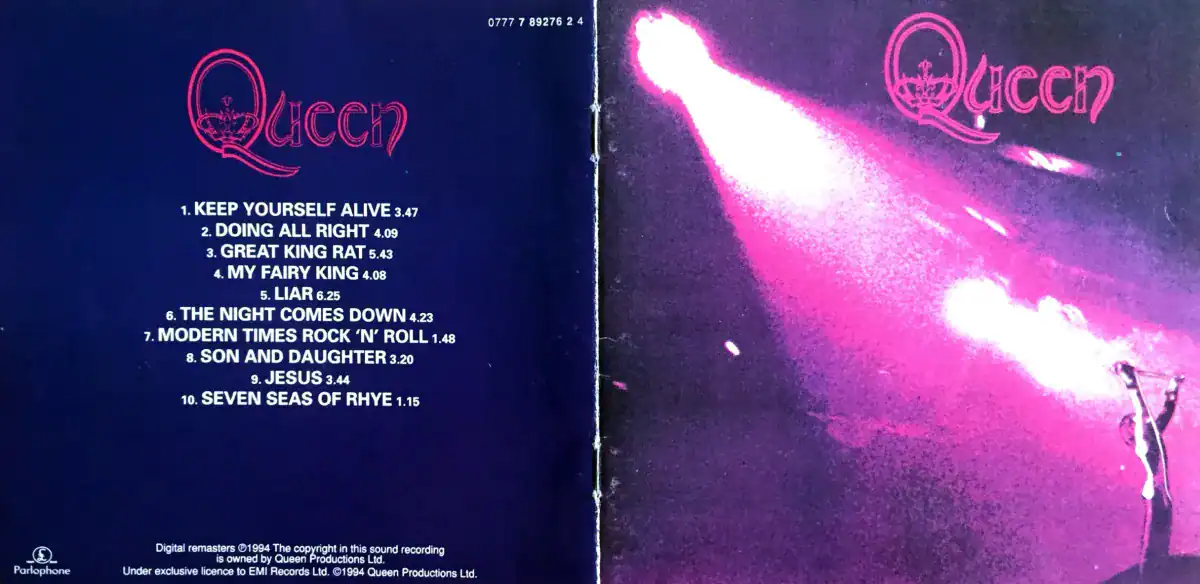
The band’s self-titled debut album, Queen, was released on 13 July 1973. Produced by Queen together with Roy Thomas Baker and John Anthony, the record introduced listeners to a group whose musical ambition was already unmistakable. Blending heavy rock with progressive structures and elaborate vocal harmonies, the album demonstrated a confidence and originality unusual for a debut release.
For John Deacon, the album marked the beginning of a recording career that would ultimately span fifteen Queen studio albums. It also represented the first opportunity for the completed four-member line-up to present its collective musical vision to an international audience. Although the record achieved only modest commercial success at the time, it established the foundations for the remarkable body of work Queen would create over the following two decades.
The band’s reputation grew rapidly with the releases of Queen II (1974), Sheer Heart Attack (1974) and A Night at the Opera (1975). These albums revealed an increasingly confident group that combined heavy rock, progressive arrangements, intricate harmonies and theatrical presentation into a distinctive musical style recognised around the world.
Throughout this period, Deacon became an increasingly important part of Queen‘s creative development. His bass playing strengthened the band’s arrangements, while his growing confidence as a songwriter prepared the way for original compositions that would later become some of Queen’s best-known recordings.
By the middle of the 1970s, Queen had evolved from an ambitious young band into one of Britain’s most innovative rock acts. The trust developed through years of rehearsing, recording and touring together became one of the principal reasons for the group’s musical versatility, creative longevity and international success.
Growing confidence as a musician
As Queen‘s reputation expanded during the mid-1970s, John Deacon developed steadily as both a musician and a composer. Extensive touring throughout the United Kingdom, Europe and later North America enabled the band to refine its performances night after night. The experience strengthened the musical understanding between Brian May, Roger Taylor, Freddie Mercury and Deacon, creating the exceptional chemistry for which Queen would become renowned.
The increasing demands of international touring also allowed Deacon to grow in confidence as a live performer. Although he remained one of the quietest members of the band on stage, his consistency and precision became an essential part of Queen‘s concerts. His dependable performances provided a solid musical foundation that allowed the band’s increasingly ambitious arrangements to be reproduced successfully before large audiences.
Away from the stage, Deacon became more actively involved in Queen‘s songwriting. Like the other members of the group, he was encouraged to develop original material, reflecting the band’s unusual philosophy that every member could contribute compositions. This collaborative environment allowed each musician to develop individually while strengthening Queen’s collective musical identity.
By the second half of the 1970s, John Deacon had established himself as far more than Queen‘s bassist. His growing confidence as both a performer and songwriter ensured that he became an increasingly important creative force within the band, helping to shape the music that would bring Queen worldwide success.
From bassist to songwriter
Queen performing You’re My Best Friend, one of John Deacon‘s best-known compositions.
Although John Deacon joined Queen primarily as its bassist, he gradually established himself as one of the band’s most successful songwriters. Queen was unusual in encouraging all four members to contribute original material, allowing each musician to develop an individual writing style while strengthening the band’s remarkably diverse catalogue.
Deacon’s first composition to appear on a Queen album was Misfire, included on Sheer Heart Attack (1974). Although it was never released as a single, the song demonstrated that he had become an active creative contributor alongside Freddie Mercury, Brian May and Roger Taylor.
His breakthrough as a songwriter came with You’re My Best Friend, released in 1976 as the second single from A Night at the Opera. Written for his wife, Veronica Tetzlaff, the song featured Freddie Mercury on lead vocals and Deacon performing the distinctive Wurlitzer electric piano. It became an international hit and remains one of Queen‘s best-loved recordings.
Over the following years, Deacon demonstrated remarkable versatility as a composer. Spread Your Wings showcased his gift for melodic storytelling, while Another One Bites the Dust (1980), inspired by contemporary funk, became Queen‘s first number-one single on the Billboard Hot 100 in the United States and their biggest-selling American single. He later added further classics to Queen‘s catalogue with Back Chat and I Want to Break Free, confirming his reputation as one of the band’s most commercially successful songwriters.
By the beginning of the 1980s, John Deacon had become recognised not only as Queen‘s bassist but also as one of its most accomplished composers. His growing confidence as a songwriter, combined with his disciplined musicianship and collaborative approach, prepared him for one of the most significant recording sessions of his career when Queen entered Mountain Studios in Montreux during the summer of 1981.
The road to Under Pressure: Mountain Studios, Montreux
By the beginning of the 1980s, Queen had established itself as one of the world’s leading rock bands. The enormous success of The Game (1980), together with extensive international touring, confirmed the group’s position at the forefront of contemporary popular music. Brian May, Roger Taylor, Freddie Mercury and John Deacon had developed into a creative partnership in which all four members contributed as performers and songwriters.
At the same time, David Bowie continued to pursue new artistic directions. Following the release of Scary Monsters (and Super Creeps) in September 1980, he remained determined not to repeat earlier successes. As throughout his career, Bowie welcomed opportunities to work with other musicians when circumstances offered the possibility of an unexpected creative result.
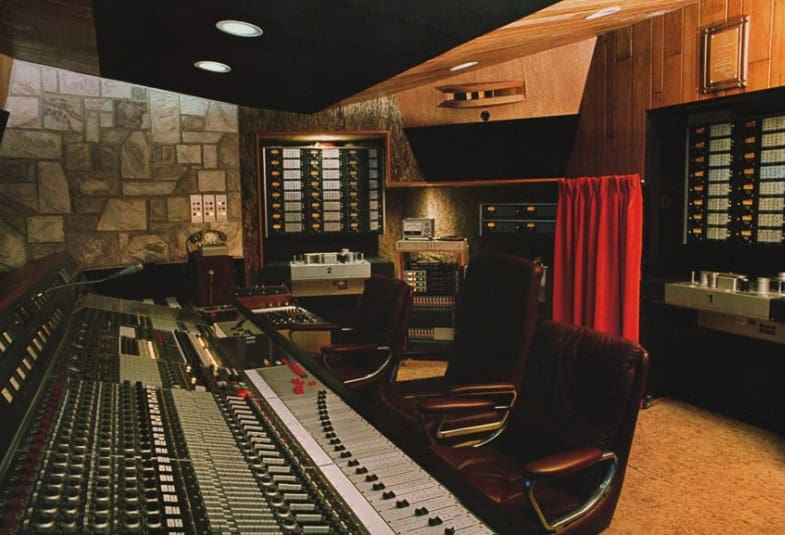
During the summer of 1981, Queen returned to Mountain Studios in Montreux to work on material that would eventually appear on Hot Space. The band had first recorded at Mountain Studios in 1978 and purchased the facility the following year. Situated beside Lake Geneva, the studio provided Queen with a familiar working environment in which ideas could be explored without the restrictions normally associated with commercial studio bookings.
David Bowie was also in Switzerland during this period. After learning that Queen were working in Montreux, he visited Mountain Studios. The meeting was informal. There was no completed composition waiting to be recorded, no scheduled collaborative session and no commercial plan to produce a joint single.
What began as a social visit gradually developed into a musical exchange. As the conversation turned towards music, instruments were picked up and the five musicians began exploring riffs, rhythms and vocal ideas through improvisation. Producer David Richards documented the evolving performances as musical fragments were introduced, tested, reshaped or abandoned.
Later recollections of the sessions have differed regarding certain details and the precise order in which individual ideas appeared. Those differences are understandable given the informal and spontaneous nature of the recording process. What is clear is that David Bowie, Freddie Mercury, Brian May, Roger Taylor and John Deacon all became involved as the informal jam developed into a more substantial composition.
As the session continued, the musicians recognised that they were creating something more significant than an informal studio experiment. Ideas were refined collectively, with each participant responding to the contributions of the others. The absence of a predetermined plan allowed the composition to develop in a direction that neither Bowie nor Queen would necessarily have reached independently.
The resulting studio encounter laid the foundations for Under Pressure. What had begun as an unplanned meeting at Mountain Studios became one of the defining collaborations in the recorded histories of both Queen and David Bowie.
The making of Under Pressure
David Bowie and Queen during the recording of Under Pressure at Mountain Studios, Montreux, 1981.
Unlike many classic recordings that began with a completed composition, Under Pressure evolved gradually during a series of collaborative sessions at Mountain Studios. David Bowie and the four members of Queen developed the song through improvisation, experimenting with musical ideas before shaping them into a finished recording. Producer David Richards documented the sessions as arrangements, melodies and lyrics gradually emerged.
Although the principal events surrounding the recording are well documented, participants have described certain details differently over the years. Brian May, Roger Taylor, David Richards and others have recalled the sessions from their own perspectives, occasionally disagreeing about the precise sequence in which particular ideas appeared. These differing recollections are typical of an informal recording session that developed organically over several days rather than according to a fixed plan.
Freddie Mercury on the Montreux sessions
“We were jamming to some of his songs and some of ours. We had a few bottles of wine and things.”
What remains beyond dispute is that Under Pressure emerged through genuine collaboration. Musical ideas were continually introduced, discussed, refined or abandoned as the session progressed. Rather than following the vision of a single songwriter, the composition developed through the combined contributions of David Bowie, Freddie Mercury, Brian May, Roger Taylor and John Deacon, each influencing the final recording in different ways.
As work continued, the song gradually assumed its familiar structure. Bowie’s lyrical direction, Mercury’s extraordinary vocal invention, May’s guitar textures, Taylor’s rhythmic drive and Deacon’s understated bass playing combined to produce a recording unlike anything either Bowie or Queen had previously created. More than four decades later, Under Pressure remains one of the clearest examples of how spontaneous collaboration between exceptional musicians can produce an enduring work of popular music.
The famous bass line
Few bass parts in popular music are as instantly recognisable as the opening figure of Under Pressure. Built around a simple descending pattern, the bass line immediately establishes the song’s atmosphere before the vocals enter. Its apparent simplicity became one of its greatest strengths, providing a memorable musical foundation for one of the most celebrated collaborations in rock history.
John Deacon performed the bass line heard on the finished recording, and his restrained, melodic style became one of the defining characteristics of the song. Rather than relying on technical complexity, the performance reflected the musical qualities for which Deacon became widely respected throughout his career: precision, balance and an instinctive understanding of how a bass guitar could strengthen an arrangement without dominating it.
The precise origin of the bass figure has remained the subject of discussion for decades. Participants in the Mountain Studios sessions have recalled the recording in slightly different ways, and later interviews do not always agree on exactly when or by whom the original musical idea was first introduced. What is beyond dispute is that the bass line developed during the collaborative recording sessions and formed an essential part of the finished composition performed by Queen and David Bowie.
Although remarkably economical in construction, the bass line demonstrates many of the qualities that characterised John Deacon‘s musicianship throughout his career. Rather than relying on virtuosity, the performance illustrates the importance of timing, balance and musical judgement. Its effectiveness lies not in complexity but in its ability to support the composition while remaining instantly recognisable.
Over more than four decades, the opening figure has become one of the most recognisable instrumental passages in modern popular music. It has been analysed by musicians, discussed in books and documentaries and studied by generations of bass players seeking to understand why such a straightforward musical idea became so enduring. The continued admiration reflects not only the quality of Deacon’s performance but also the exceptional collaboration that produced Under Pressure.
Today, the opening notes of Under Pressure remain inseparable from both Queen and David Bowie. They continue to introduce new listeners to one of the most celebrated collaborations in rock history while highlighting John Deacon‘s lasting contribution to a recording whose influence has extended far beyond its original release.
David Bowie and Freddie Mercury
As the instrumental framework of Under Pressure gradually developed, attention turned to the vocal arrangement. According to Brian May‘s later recollections, David Bowie suggested an unusual creative exercise in which the singers improvised independently rather than working from a completed lyric or melody. The approach encouraged spontaneity and allowed unexpected musical ideas to emerge before the song’s structure had been finalised.
Freddie Mercury‘s remarkable vocal improvisations produced several memorable phrases that remained part of the finished recording. Bowie’s contribution developed in a different direction. Rather than concentrating solely on melody, he became increasingly focused on the lyrical content, shaping the song around themes of pressure, conflict, compassion and human responsibility.
Brian May on David Bowie’s contribution
“David had a real vision and he took over the song lyrically.”
An early working version of the composition became known as People on Streets. As the sessions progressed, Bowie refined the lyrical direction and helped transform the song into a more focused reflection on social pressure, empathy and the importance of human connection. His dramatic vocal style contrasted naturally with Mercury’s powerful and highly expressive performance, creating one of the most distinctive vocal partnerships in popular music.
Although David Bowie and Freddie Mercury became permanently linked through Under Pressure, they never performed the song together in concert. The original studio recording therefore remains the only completed collaboration to unite their two voices, preserving a unique musical partnership that has never been recreated by its original participants.
A true collaboration
One of the most remarkable aspects of Under Pressure is that it cannot accurately be described as either a Queen recording featuring David Bowie or a David Bowie recording accompanied by Queen. Instead, it emerged through an unusually open creative process in which five accomplished musicians contributed ideas that gradually evolved into a finished composition.
Unlike many collaborations involving internationally successful artists, the recording developed without a completed song or a predetermined plan. Musical ideas were introduced, discussed, reshaped and refined as the sessions progressed, allowing the final composition to reflect the combined contributions of David Bowie, Brian May, Roger Taylor, Freddie Mercury and John Deacon.
The finished songwriting credit reflected that collective approach. Rather than assigning authorship to one principal composer, Under Pressure was officially credited to David Bowie, John Deacon, Brian May, Freddie Mercury and Roger Taylor. Although participants later remembered certain aspects of the recording sessions differently, all five musicians were recognised as contributors to the finished work.
More than four decades after its release, Under Pressure continues to be regarded as one of the finest examples of artistic collaboration in popular music. The recording demonstrated that exceptional results can emerge when accomplished musicians work collectively, allowing the strongest ideas to develop regardless of their individual origin.
Release and worldwide success
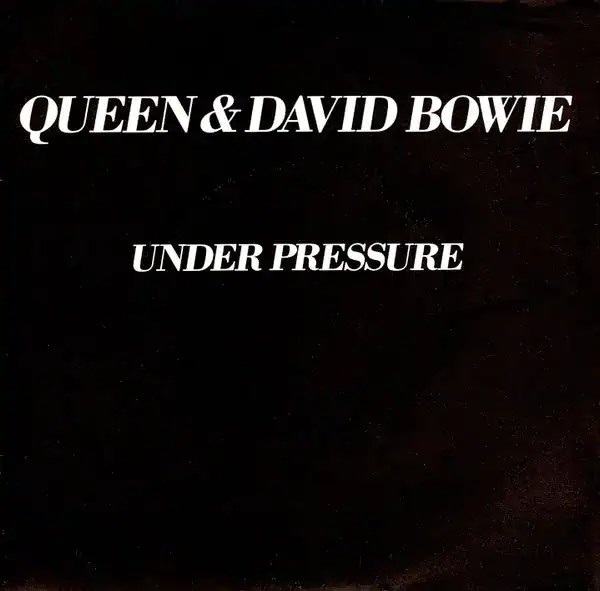
Under Pressure was released on 26 October 1981 as a stand-alone single credited jointly to Queen and David Bowie. Rather than appearing immediately on a studio album, the recording was presented as a unique collaboration between two of Britain’s most influential musical acts. Its release attracted considerable attention, bringing together Queen‘s powerful musicianship with David Bowie’s distinctive artistic vision.
The response was immediate. Under Pressure reached number one on the UK Singles Chart, where it remained for two consecutive weeks, becoming Queen‘s second British chart-topper and David Bowie’s second UK number-one single. The recording also achieved major commercial success internationally, reaching number one in Canada and charting highly across Europe, Australia and several other territories.
Critics praised both the recording and the collaboration behind it. Rather than sounding like a commercially arranged partnership between established stars, the single was widely recognised as the result of genuine musical interaction. The performances of Bowie and Queen complemented one another while preserving the distinctive musical identities of both artists.
Although initially released as a stand-alone single, Under Pressure was later included on Queen‘s Hot Space album, released in May 1982. By then, the song had already established itself as one of the defining recordings in the catalogues of both Queen and David Bowie.
For John Deacon, the success of Under Pressure further demonstrated the importance of his understated musical approach. His memorable bass performance became an integral part of a recording that continues to receive worldwide radio airplay, appears on numerous compilation albums and remains one of the most celebrated collaborations in the history of popular music.
Performing the song live
Queen – Under Pressure (Hot Space Tour ’82).
Although Under Pressure quickly became one of the most successful collaborations of the early 1980s, David Bowie and Queen never performed the song together in concert. The original studio recording therefore remained unique, preserving the spontaneity and creative atmosphere of the Mountain Studios sessions.
Queen introduced the song during the Hot Space Tour in 1982. With Bowie absent from the touring line-up, Freddie Mercury performed both vocal parts in his own distinctive style, while John Deacon faithfully recreated the instantly recognisable bass line that had become one of the recording’s defining musical features.
John Deacon‘s contribution remained central to every performance. His instantly recognisable bass line provided the musical foundation upon which the arrangement was built, allowing audiences to identify the song within its opening moments. Night after night, Deacon reproduced the part with the precision, restraint and consistency that had characterised the original studio recording.
David Bowie later returned to Under Pressure during his own concert performances, interpreting the song with various guest vocalists rather than attempting to recreate the original studio partnership with Freddie Mercury. These performances demonstrated the enduring appeal of the composition while acknowledging that the unique chemistry captured during the 1981 recording sessions could never be exactly reproduced on stage.
As a result, the original studio recording has retained a unique place in popular music history. Unlike many famous collaborations that became regular concert performances by their original participants, Under Pressure survives as the only completed recording to unite the original performances of David Bowie, Freddie Mercury, Brian May, Roger Taylor and John Deacon.
The Freddie Mercury Tribute Concert
David Bowie and Annie Lennox performing Under Pressure at The Freddie Mercury Tribute Concert, Wembley Stadium, London, 20 April 1992.
On 20 April 1992, nearly five months after Freddie Mercury‘s death, Queen organised The Freddie Mercury Tribute Concert for AIDS Awareness at Wembley Stadium in London. More than 70,000 people attended the event, which was broadcast worldwide and celebrated Mercury’s life while raising awareness of the global AIDS epidemic.
John Deacon appeared alongside Brian May and Roger Taylor throughout the concert, while David Bowie delivered one of the event’s most memorable performances. Joining Annie Lennox for Under Pressure, Bowie transformed the celebrated 1981 collaboration into a moving tribute to Freddie Mercury, creating one of the defining moments of the concert.
David Bowie participated during the second half of the concert. After delivering a memorable performance of “Heroes“, he joined Annie Lennox for a powerful rendition of Under Pressure. Rather than attempting to recreate the original 1981 recording with Mercury, the performance honoured both the song itself and the singer whose voice had helped make it one of rock’s most celebrated collaborations.
David Bowie recites Psalm 23
“The Lord is my shepherd; I shall not want…”
— David Bowie, before performing “Heroes“
For John Deacon, the concert became one of the last major public performances of his career with Queen. Although he continued to participate in selected Queen projects during the following years, Freddie Mercury‘s death fundamentally changed the future of the band and marked the end of its original performing era.
The performance of Under Pressure formed a poignant link between the original 1981 recording and the post-Mercury history of Queen. More than a decade after the song had been created at Mountain Studios, John Deacon and David Bowie returned to it under profoundly different circumstances, transforming a celebrated collaboration into a moving tribute to Freddie Mercury.
John Deacon in David Bowie’s story
Among the many musicians who collaborated with David Bowie during his career, John Deacon occupies a distinctive position. Unlike artists who worked with Bowie across multiple albums or tours, Deacon’s documented collaboration was limited to a single recording. Yet that recording became one of the most celebrated and enduring partnerships in modern popular music.
The significance of Under Pressure extends far beyond its commercial success. More than four decades after it was recorded, the song remains one of the most admired collaborations in rock history, bringing together the creative strengths of David Bowie and the four members of Queen in a way that has never been repeated.
Deacon’s contribution illustrates an important aspect of Bowie’s career. Bowie rarely judged collaborators by the length of their professional relationship, but by the quality of the creative result. Throughout his career he surrounded himself with musicians whose individual talents expanded his artistic vision, whether they became long-term partners or contributed to a single recording.
The sessions at Mountain Studios demonstrated exactly that philosophy. John Deacon‘s melodic bass playing, disciplined musicianship and collaborative approach became essential elements of a recording that continues to rank among the defining works in the catalogues of both Queen and David Bowie. Although Deacon and Bowie never recorded together again, their single collaboration proved sufficient to secure Deacon’s place within Bowie’s remarkable network of musical collaborators.
For that reason, John Deacon‘s significance within David Bowie’s history is measured not by the number of collaborations but by the enduring importance of the one they created together. Under Pressure remains one of the finest examples of Bowie’s ability to bring exceptional musicians together at exactly the right moment.
Life after Freddie Mercury
Freddie Mercury‘s death on 24 November 1991 marked the end of Queen‘s original era. Although Brian May, Roger Taylor and John Deacon remained committed to preserving the band’s legacy, all three recognised that Queen could never continue in the same form without its lead singer.
Following the Freddie Mercury Tribute Concert in April 1992, the surviving members gradually turned their attention to completing unfinished recordings featuring Mercury’s final vocal performances. The result was Made in Heaven, released in 1995. Combining Mercury’s last studio vocals with newly recorded instrumental contributions from Brian May, Roger Taylor and John Deacon, the album became the final Queen studio album to feature all four original members.
For Deacon, the project represented both a tribute to his longtime friend and the conclusion of an extraordinary musical partnership that had begun in 1971. Rather than attempting to replace Mercury, the surviving members chose to complete the recordings with respect for his original performances, allowing the album to serve as a fitting conclusion to Queen‘s classic recording career.
Although John Deacon continued to honour his commitments to Queen during the years that followed, it became increasingly clear that he no longer wished to pursue an active public career. Unlike Brian May and Roger Taylor, who continued performing and recording, Deacon gradually withdrew from public life, bringing one of the most distinguished careers in British rock music to a quiet and dignified close.
Retirement from public life
Following the completion of Made in Heaven and the release of No-One but You (Only the Good Die Young) in 1997, John Deacon gradually withdrew from public musical life. The single became the final new Queen recording on which he performed, bringing to a close more than twenty-six years as the band’s bassist and songwriter.
Unlike Brian May and Roger Taylor, who continued to perform and record under the Queen name, Deacon chose not to participate in further concerts, recording projects or public appearances. He quietly stepped away from the music industry without making a formal retirement announcement, allowing his body of work to speak for itself.
Although Deacon retired from active musical life, he did not completely sever his connection with Queen. Brian May and Roger Taylor have both explained that he continues to be consulted on important business matters concerning the band’s catalogue and legacy. However, he has chosen not to take part in artistic decisions, recording sessions or live performances.
Since his retirement, John Deacon has maintained an exceptionally private life. He has rarely appeared in public, given very few interviews and consistently declined opportunities to return to the spotlight. His decision has allowed his musical achievements to remain the defining legacy of a career built upon professionalism, musicianship and lasting artistic contribution.
John Deacon‘s place in David Bowie’s legacy
David Bowie’s career was defined by an extraordinary willingness to collaborate with musicians from widely different musical backgrounds. Some became long-term creative partners, while others contributed to a single recording that nevertheless left a lasting mark on his catalogue. John Deacon belongs to the latter group. Although their documented collaboration was limited to Under Pressure, its artistic significance ensured that his contribution became a permanent part of Bowie’s recorded legacy.
What distinguishes Deacon’s place in Bowie’s history is not the number of projects they completed together but the exceptional quality of the work they produced. Under Pressure remains one of the rare occasions on which Bowie joined an already established band as an equal creative partner, resulting in a recording that reflected the strengths of all five musicians rather than the vision of a single artist.
For visitors to DavidBowieWorld.com, John Deacon represents one of the many remarkable musicians whose talent helped shape David Bowie’s musical journey. His melodic bass playing, professionalism and collaborative spirit contributed to one of the defining recordings of Bowie’s career and secured his place within the wider story of David Bowie.
More than four decades after its release, Under Pressure continues to introduce new audiences to the unique collaboration between David Bowie and Queen. Through that single recording, John Deacon earned an enduring place in David Bowie’s history and remains an essential figure within the remarkable network of artists who helped define Bowie’s musical legacy.
Official Website & Further Information
- Official Queen website
- Queen Concerts Archive
- Discogs – John Deacon
- Discogs – Queen and David Bowie: Under Pressure
- IMDb – John Deacon
Article Origin
This article was researched and written specifically for DavidBowieWorld.com. It draws upon official Queen and David Bowie sources, contemporary interviews, published biographies, historical press coverage, archival material and documented accounts relating to John Deacon‘s career and the recording of Under Pressure. Where participants have offered differing recollections of the 1981 Mountain Studios sessions, those differences have been acknowledged rather than presented as settled fact.
Every effort has been made to distinguish documented information from later recollections and to present John Deacon‘s connection with David Bowie as accurately and responsibly as possible.
© DavidBowieWorld.com — David Bowie Collaborations & Creative Circle Archive.
