
Pat Gibbons – David Bowie’s Acting Manager and Business Representative

Pat Gibbons worked within the management organisation surrounding David Bowie during the mid-to-late 1970s and into the following decade. His responsibilities included acting management, business representation and communication connected with Bowie’s recording and touring activities.
Already present during the Young Americans period in 1975, Gibbons subsequently became a named contact for Bowie’s business affairs. He travelled within the 1976 entourage and remained associated with the artist’s professional organisation during the years that followed.
In April 1980, he was identified as vice president of Bewlay Bros. Ltd. U.S.A., Bowie’s management company. His career also included American representation and management work for Joe Jackson.
- Name: Pat Gibbons; also identified professionally as Patrick Gibbons
- Early musical background: Played guitar in an early rock band associated with Elka Park, New York
- Concert-industry background: Worked in the Tower Theater’s box-office operation near Philadelphia
- Bowie role: Acting manager and business representative
- Documented Bowie connections covered here: 1975–1981
- 1976 travels: Accompanied Bowie, Iggy Pop, Corinne “Coco” Schwab and Andrew Kent on their Soviet Union excursion
- 1980 position: Vice president of Bewlay Bros. Ltd. U.S.A.
- Other artist connection: Joe Jackson during the Night and Day period
- Role distinction: Gibbons’ acting-management position was separate from Eric Barrett‘s road-management responsibilities
Early music and Elka Park
Pat Gibbons‘ early musical background included a connection with Elka Park, the Catskills community in New York State where his family spent summers.
During the 1950s and 1960s, he stayed at the family cottage, Sprucelawn. His involvement in music included playing guitar in one of the community’s earliest rock bands.
Before his work in artist representation, he therefore had experience of music as a player. A detailed account of his education and the steps through which he entered professional management has not been established.
The Tower Theater and the concert business
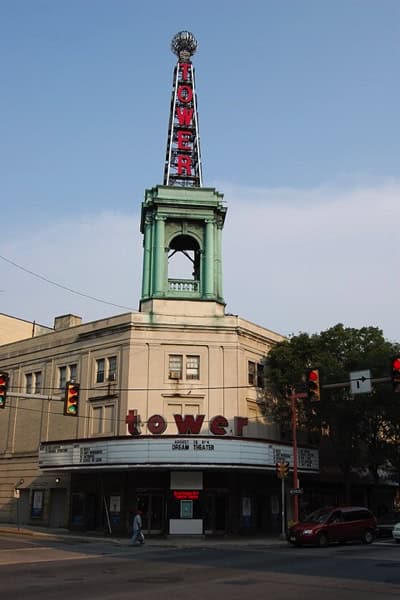
Gibbons’ professional background also included the Tower Theater in Upper Darby, near Philadelphia, where he worked in the box-office operation.
The venue became an important part of the area’s live-music circuit during the early 1970s. Its staff dealt with the practical demands of presenting concerts, bringing together ticketing, promotion, house management and backstage work.
This placed Gibbons within the administration of live music before the artist-management activities for which he later became known. The precise circumstances of his first meeting with Bowie remain unclear.
1975: an advance copy of Young Americans

Gibbons was already part of Bowie’s management circle during the Young Americans period.
During a visit to Bowie’s New York home, journalist Diane Kelly encountered Gibbons arriving with an advance copy of the album. Bowie examined the sleeve and questioned why its edges did not close neatly.
Gibbons explained that the copy had been prepared quickly for Bowie to inspect and that the finished release would not have the same problem.
The encounter offers a specific glimpse of his activities: bringing the physical album to the artist and addressing a concern about its presentation. It also establishes his presence before the 1976 touring period with which he is frequently associated.
January 1976: becoming a business contact
At the beginning of 1976, Bowie publicly terminated his professional relationship with Michael Lippman.
The announcement directed legal matters to Stanley Diamond and business enquiries to Patrick Gibbons. Preparations for the forthcoming album and tour continued while the arrangements surrounding Bowie’s representation were changing.
Responding to speculation about the separation, Gibbons emphasised that Bowie was making his own decisions.
Pat Gibbons on working for David Bowie
“David makes up his own mind. I operate on his instructions”
— Pat Gibbons, quoted by Ben Edmonds in Record World, 17 January 1976; excerpt.
The statement defines the relationship directly: Gibbons represented Bowie and acted on his instructions, while the artist retained authority over his affairs.
Earl Slick recalls difficulties reaching Bowie

The management transition also formed part of guitarist Earl Slick‘s memories of the period before the 1976 tour.
Slick had remained with Lippman after Bowie’s separation from him. He later recalled trying to speak directly with Bowie and being told by Gibbons that the singer was not speaking to anyone.
According to Slick, he was unable to get through. He subsequently described the wider situation as one in which conflicting information contributed to unnecessary ill feeling between himself and Bowie.
This is Slick’s recollection of his experience. It establishes neither Gibbons’ motives nor a complete explanation for the guitarist’s absence from the tour, but it records the difficulty Slick remembered encountering through Bowie’s management.
Acting manager during the 1976 tour
During the American tour in March 1976, Gibbons was identified as Bowie’s acting manager.
The immediate organisation also included Corinne “Coco” Schwab as secretary and Barbara De Witt in press relations. Eric Barrett was separately described as road manager.
Bowie was publicly describing himself as his own manager. Gibbons worked within that arrangement, providing representation while the artist participated directly in the administration of his career.
David Bowie on managing his affairs
“My office is a suitcase that stays in my room.”
— David Bowie, interviewed by Chris Charlesworth in Detroit, March 1976.
Gibbons was described during this period as a salaried employee handling details. Regular staff meetings brought alternatives and recommendations before Bowie for consideration.
David Bowie on his staffing arrangements
“Everybody gets fixed salaries now, and it’s worked out much better.”
— David Bowie, interviewed by John Steel; Scene, 6 May 1976, as dated in the archived transcription.
George Murray and the touring invitation
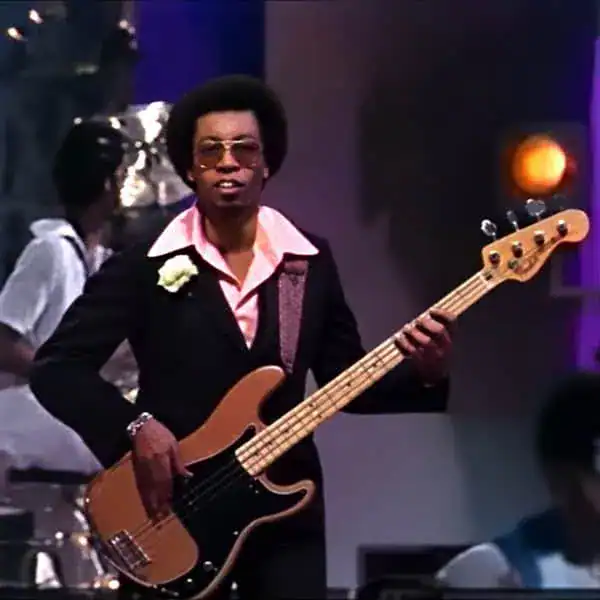
Bassist George Murray remembered an encounter with Gibbons that resolved his uncertainty about joining Bowie’s forthcoming tour.
After working with Bowie in the studio, Murray had not received confirmation about his place in the live band. In his later account, Gibbons asked about his availability and passed on Bowie’s invitation.
George Murray recalls Pat Gibbons‘ invitation
“Good, David wants you on the tour. So I’ll see you later.”
— Pat Gibbons, as remembered by George Murray in his interview with Ian Fortnam, Classic Rock / Louder, December 2024.
The exchange illustrates Gibbons communicating a professional decision to a musician. Its wording survives as Murray’s recollection rather than a contemporary recording.
April 1976: Berlin and the Soviet Union journey
Gibbons travelled within Bowie’s immediate circle during the European touring period. Photographer Andrew Kent documented the people accompanying the artist, including Iggy Pop, Coco Schwab and driver Tony Mascia.
A photograph identified as Berlin, 9 April 1976, places Gibbons with Bowie and members of that party.
Later that month, he accompanied Bowie, Pop, Schwab and Kent on their excursion to the Soviet Union.
A railway scheduling problem delayed the group’s onward journey to Helsinki and prompted alarmed press coverage about Bowie’s whereabouts. The episode became one of the more memorable journeys associated with the 1976 tour.
Kent’s photographs preserve the experience beyond its newspaper headlines, placing Gibbons within the smaller travelling party around the performer.
1977: the international versions of “Heroes”
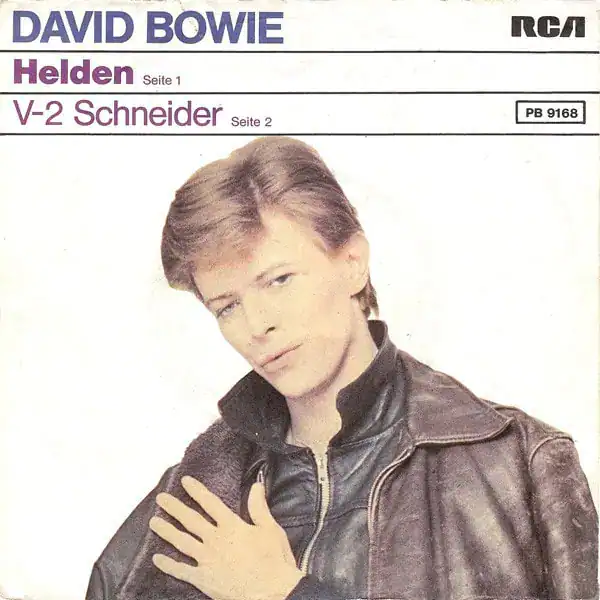
By the end of 1977, Gibbons was discussing the foreign-language versions of “Heroes”.
His explanation connected the project with Bowie’s awareness of language barriers while living in Switzerland and working in Germany. The French and German versions addressed audiences who usually encountered British and American rock in English.
Corinne Schwab was associated with the French translation, while Antonia Maass supplied the German translation.
Gibbons’ involvement in these discussions was managerial: explaining the international thinking around a release whose creative work belonged to its writers, performers, producers and translators.
1978–1979: touring plans and continuing representation
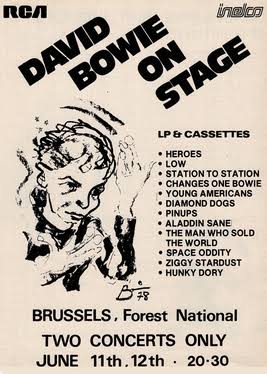
During late 1977, Gibbons also participated in discussions about Bowie’s forthcoming 1978 American tour.
The proposed itinerary then being described began on the west coast in March and continued east through May. These were advance plans for the concert campaign associated with Bowie’s recent work.
His name continued to appear as a professional contact for Bowie during 1978 and 1979, in association with lawyer Stan Diamond. The wording Pat Gibbons & Co. was used in 1979.
These connections establish his continuing representative position across the later 1970s, extending his Bowie chronology beyond a single touring season.
1980–1981: Bewlay Bros. and a continuing Bowie connection
In April 1980, Gibbons was identified as vice president of Bewlay Bros. Ltd. U.S.A., Bowie’s management firm. The company had established New York offices.
The formal title places him within the business organisation at a senior level. Although the Bewlay Bros. name had appeared during the changes of early 1976, its structure should not be assumed to have remained unchanged throughout the intervening period.
Bowie also visited Elka Park in 1980, connecting Gibbons’ professional association with the community that formed part of his earlier life.
A 1981 industry directory continued to associate Gibbons with Bowie and Stan Diamond. The exact date on which his work for Bowie ended has not been established.
Joe Jackson and Night and Day
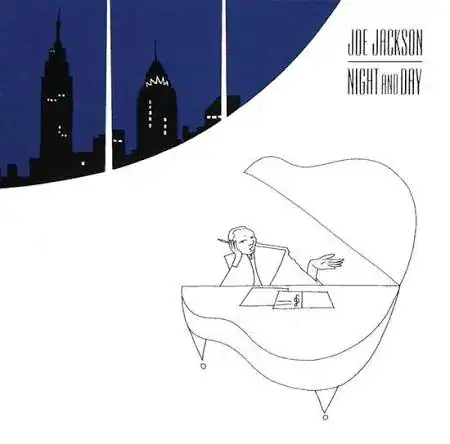
Gibbons’ career also included work with Joe Jackson during the Night and Day period.
Credits associated with the 1982 album identify Pat Gibbons, Select Artists Group, New York as the American representative. John Telfer and Basement Music were separately credited for management.
In January 1983, Gibbons was identified as Jackson’s U.S. manager at a gold-record presentation for the album following a performance at the Brendan Byrne Arena in New Jersey.
Those pictured included Jackson, Gibbons, Telfer, producer David Kershenbaum and representatives of A&M Records.
The occasion provides a specific professional setting for Gibbons beyond his Bowie association, placing him within the team surrounding another artist’s American album campaign.
Pat Gibbons in Bowie’s collaborative history
Gibbons’ contribution belongs to the organisational side of Bowie’s career. Delivering an advance album, serving as a business contact, communicating with musicians and discussing forthcoming activities were practical responsibilities with consequences for the people involved.
His career also demonstrates why the different positions around an artist deserve careful distinction. Acting management, legal advice, personal assistance and road management formed related parts of the organisation, each with its own responsibilities.
The documented episodes give Gibbons a place in Bowie’s history that extends from the Young Americans period into the early 1980s. They provide a firmer account of his contribution than general claims about backstage influence or personal support.
Official Website & Further Information
No independently verified official website or personal social-media account for this Pat Gibbons has been established for this page.
His known professional connections include the Tower Theater, David Bowie’s management organisation, Bewlay Bros. Ltd. U.S.A. and American representation for Joe Jackson.
These associations help distinguish his career from those of other people sharing his name. Any future personal or professional profile added here should first be confirmed as belonging to the same individual.
First-Hand Contributions
This page includes Gibbons’ own published explanation of his working relationship with Bowie, alongside Bowie’s comments about his business arrangements.
George Murray‘s remembered conversation and Earl Slick‘s account provide two musicians’ perspectives on communication through Bowie’s management. Both are presented as retrospective recollections.
No direct cooperation, private correspondence or unpublished contribution from Pat Gibbons or his family is claimed. Attributable first-hand material could help clarify his first meeting with Bowie, the development of his duties and his later professional life.
Article Origin
This article has been researched and written for DavidBowieWorld.com as part of its archive of David Bowie’s collaborators and professional associates.
It follows Pat Gibbons‘ early musical and concert-industry background, his work within Bowie’s organisation and his subsequent connection with Joe Jackson.
The Bowie chronology presented here covers documented connections between 1975 and 1981. These are not offered as confirmed dates for the beginning and end of their entire professional relationship.
Biographical details that could not be established have been left open. The article can be expanded as further verified information becomes available.
© DavidBowieWorld.com — David Bowie Collaborations & Creative Circle Archive.
