
Alan Parker – British Session Guitarist in David Bowie’s Studio Orbit
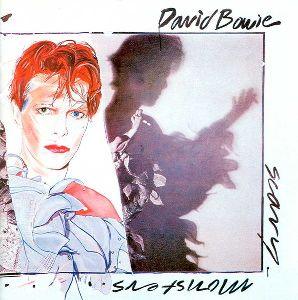
David Bowie Scary Monsters (and Super Creeps) (1980)
Alan Parker was one of Britain’s great session guitarists — a musician admired for precision, tonal intelligence and extraordinary versatility. Though not one of David Bowie’s high-profile band personalities, he belonged to the wider studio world in which Bowie regularly worked.
Rather than being a central Bowie sideman in the manner of Carlos Alomar or Robert Fripp, Parker is better understood as part of the elite British session culture surrounding the late-1970s and early-1980s recording environment in which Bowie operated.
- Born: 26 August 1944, London
- Died: 26 April 2020
- Role: Session guitarist
- Bowie link: Associated with Bowie’s wider studio orbit
- Known for: Precision, texture and adaptability
A master of the British session scene
Alan Parker built a remarkable reputation as one of the most dependable and musically sophisticated guitarists in British session history. He moved effortlessly through rock, pop, funk, soundtrack work and commercial sessions.
His name often appeared less prominently than the stars he supported, but among musicians he was considered elite — a player trusted for taste, discipline and speed.
The studio world Bowie inhabited
During the late 1970s and early 1980s, Bowie frequently drew upon musicians from Britain’s highly developed session scene, alongside distinctive collaborators such as Robert Fripp, Carlos Alomar and Chuck Hammer.
Alan Parker belonged to that same professional ecosystem — a world where technical fluency and stylistic flexibility were prized.
Bowie after Berlin
By the time Bowie reached Scary Monsters (and Super Creeps) in 1980, he was emerging from the experimental Berlin years into a harder-edged, more angular musical language.
The album’s celebrated guitar architecture was shaped chiefly by Robert Fripp, Carlos Alomar and Chuck Hammer, but it also reflected the kind of studio culture in which Parker was respected as a peer.
The session ethic
What linked Parker philosophically to Bowie’s world was not celebrity, but craft. Bowie consistently valued musicians capable of translating unusual ideas into precise musical realities.
That ethos — serving invention through disciplined musicianship — was exactly what defined Parker’s career.
Serving the song, not the spotlight
Unlike many celebrated guitar personalities, Alan Parker represented another tradition: the session player whose artistry often disappears into the finished recording.
That invisibility was not absence, but professionalism — a quality deeply valued in serious studio culture.
Beyond Bowie
Parker’s larger legacy reaches far beyond any Bowie association. He played with an extraordinary range of artists and appeared on countless recordings, television themes and soundtrack sessions.
For many musicians, he became a model of what elite session playing could be: technically brilliant, stylistically fluent and ego-free.
Legacy
Alan Parker’s place in Bowie history is indirect but meaningful. He represents the extraordinary session culture that surrounded, supported and often quietly enabled ambitious artists like Bowie.
If Bowie’s famous collaborators often embodied the visible drama of innovation, musicians like Parker embodied its invisible infrastructure. Without players of that calibre, much adventurous music would never have existed.
In that sense, Alan Parker belongs not to Bowie mythology as a headline figure, but to the deeper story of the musicians who made that mythology possible.
