
Kendrick Lamar – How To Pimp a Butterfly Influenced David Bowie’s Blackstar
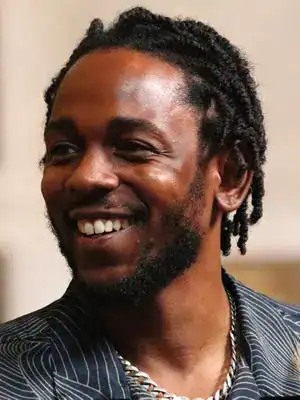
Kendrick Lamar at the 2018 Pulitzer Prize ceremony. Photograph by Andrew Lih (Fuzheado) / Wikimedia Commons / CC BY-SA 4.0.
Kendrick Lamar (born 17 June 1987) is an American rapper and songwriter whose ambitious approach to hip-hop became an unexpected but documented influence on David Bowie during the creation of Bowie’s final studio album, ★ (Blackstar).
Bowie and Lamar never collaborated, and there is no known evidence that the two artists met. Their connection was creative rather than personal. During the period in which Bowie and producer Tony Visconti were developing Blackstar, Lamar’s 2015 album To Pimp a Butterfly became one of the contemporary records they were listening to and discussing.
What attracted Bowie and Visconti was not an intention to reproduce Lamar’s sound. Instead, they responded to the freedom with which Lamar moved between musical traditions while maintaining a distinctive artistic identity. That approach became part of the creative environment surrounding one of Bowie’s most experimental late-career recordings.
- Name: Kendrick Lamar Duckworth
- Born: 17 June 1987, Compton, California, USA
- Profession: Rapper and songwriter
- Bowie connection: Lamar’s music influenced the creative thinking surrounding ★ (Blackstar)
- Key album in the Bowie connection: To Pimp a Butterfly (2015)
- Direct collaboration with Bowie: None
- Major recognition: Pulitzer Prize for Music for DAMN. (2018)
Early life and career
Kendrick Lamar Duckworth was born on 17 June 1987 in Compton, California. Growing up in a city with an important place in the history of West Coast hip-hop, he began writing and recording music while still young and gradually established himself within the Southern California rap scene.
His early recordings demonstrated the detailed storytelling and close observation that would later become central to his work. Rather than concentrating solely on individual songs, Lamar increasingly used albums to construct larger narratives involving family, neighbourhood, identity, violence, morality and personal responsibility.
Breakthrough with good kid, m.A.A.d city

Lamar reached a much wider international audience with good kid, m.A.A.d city in 2012.
The album used interconnected songs, recurring voices and narrative scenes to recount experiences surrounding Lamar’s adolescence in Compton. Its structure helped establish him as an artist interested not only in individual tracks but in the possibilities of the album as a sustained narrative form.
That approach would become still more ambitious on his next major studio album.
To Pimp a Butterfly
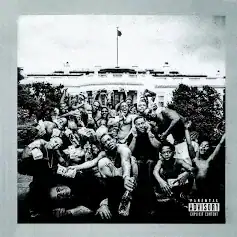
Released in 2015, To Pimp a Butterfly considerably broadened Lamar’s musical language. Hip-hop remained at its centre, but the record incorporated musicians and approaches associated with jazz, funk, soul and spoken-word traditions.
The album also developed a complex lyrical structure addressing fame, race, identity, exploitation, responsibility, self-doubt and the pressures surrounding success.
Rather than allowing those different influences to turn the album into a collection of disconnected styles, Lamar integrated them into a coherent work with a highly individual identity.
It was this freedom of approach that would attract the attention of David Bowie and Tony Visconti.
David Bowie discovers Kendrick Lamar
Kendrick Lamar – Alright, from To Pimp a Butterfly (2015)
David Bowie’s interest in new music continued throughout the final years of his life. While developing material that would become Blackstar, Bowie and Tony Visconti listened to a wide range of contemporary music.
Kendrick Lamar was among the artists who caught their attention.
Visconti revealed in 2015 that he and Bowie had been listening extensively to Lamar. To Pimp a Butterfly was particularly significant because of the way it crossed musical boundaries without becoming confined to a single established genre.
This distinction is central to understanding the connection. There is no evidence that Bowie wanted to make a hip-hop record or directly imitate Lamar’s production. The influence concerned creative method: the freedom to draw from multiple musical languages while creating something personal.
Tony Visconti on Kendrick Lamar
Tony Visconti on Kendrick Lamar
“We were listening to a lot of Kendrick Lamar.”
— Tony Visconti, discussing the making of Blackstar, 2015
Visconti made clear that Lamar’s influence did not mean that Bowie intended to reproduce his music. What appealed to Bowie and Visconti was the openness of the approach behind To Pimp a Butterfly.
The album demonstrated that an artist working primarily within hip-hop could absorb jazz, funk, soul and other traditions while still producing music with a recognisable personal identity.
For Bowie, whose own career had repeatedly involved crossing and questioning musical boundaries, that principle was particularly relevant.
The road to Blackstar
Bowie’s search for a different musical environment for Blackstar also led him towards musicians working in New York’s contemporary jazz scene.
Saxophonist Donny McCaslin became central to the project, together with musicians from his group. Their ability to move between jazz, rock, electronic textures and improvisation gave Bowie a musical vocabulary distinct from that of his previous studio albums.
The resulting sessions did not attempt to imitate Lamar. Instead, the connection lay in the broader idea that contemporary music did not need to respect conventional genre divisions.
Donny McCaslin on Bowie and Kendrick Lamar
Donny McCaslin on Bowie and Kendrick Lamar
“It was an album that David talked about a lot, both with me and with producer Tony Visconti.”
— Donny McCaslin on Kendrick Lamar‘s To Pimp a Butterfly, 2016
McCaslin’s recollection provides particularly important evidence because he was directly involved in the Blackstar sessions.
He explained that Bowie was interested in Lamar as an artist who brought together different genres in pursuit of a personal musical vision. That observation closely matches Visconti’s account of what Bowie found stimulating about Lamar’s work.
Taken together, the accounts of Visconti and McCaslin establish the Kendrick Lamar connection without requiring speculation about a personal relationship or direct collaboration.
Recording Blackstar

The musicians assembled around Donny McCaslin gave Bowie access to a flexible and highly responsive ensemble. Instead of asking them simply to reproduce familiar Bowie arrangements, he placed musicians with strong improvisational backgrounds inside carefully constructed songs and studio environments.
Tony Visconti again served as producer alongside Bowie, continuing a creative relationship that stretched back across several decades of Bowie’s career.
The music developed for Blackstar moved through jazz-informed playing, rock, electronic production and experimental structures while resisting straightforward classification.
That does not make Blackstar a musical descendant of To Pimp a Butterfly. The two records sound very different. The documented relationship is subtler and more interesting: Lamar’s album provided Bowie and Visconti with an example of contemporary music being made without rigid respect for genre boundaries.
Blackstar
David Bowie – Blackstar (2015), directed by Johan Renck
David Bowie released ★ (Blackstar) on 8 January 2016, his sixty-ninth birthday.
Bowie died two days later, on 10 January 2016.
The circumstances of its release inevitably changed the way the album was heard, but its experimental character had been developed through Bowie’s continuing engagement with new musicians, new ideas and contemporary music.
Within that history, Kendrick Lamar occupies an unusual position. He did not perform on the album, did not write material for Bowie and was not part of the recording sessions.
His importance lies instead in the fact that his work formed part of the creative conversation surrounding the record.
No direct collaboration
For historical accuracy, it is important to distinguish inspiration from collaboration.
There is no known recording featuring both David Bowie and Kendrick Lamar, and there is no documented evidence that Lamar participated in the making of Blackstar.
There is likewise no established evidence that Bowie and Lamar met personally.
The documented connection comes from Bowie’s collaborators Tony Visconti and Donny McCaslin, both of whom independently described Lamar and To Pimp a Butterfly as part of the musical discussion surrounding Bowie’s final album.
The Pulitzer Prize

Lamar’s work continued to receive major recognition after To Pimp a Butterfly.
In 2018, his album DAMN. received the Pulitzer Prize for Music.
The award represented an important moment in the institutional recognition of hip-hop and confirmed Lamar’s position as a major figure in contemporary American music.
By then, the artistic qualities that had interested Bowie — narrative ambition, musical openness and a refusal to remain within narrow genre boundaries — had become defining characteristics of Lamar’s wider body of work.
Later career
Lamar continued to develop long-form album projects after DAMN., maintaining an approach in which musical experimentation and detailed writing remained central.
His later work further demonstrated that the genre-crossing philosophy Bowie and Visconti had noticed in 2015 was not an isolated feature of a single album, but part of Lamar’s broader artistic approach.
Legacy
Kendrick Lamar‘s place in David Bowie’s history is relatively small in terms of direct contact, but significant in what it reveals about Bowie’s creative life during his final years.
Even after more than five decades of recording, Bowie was still actively listening to younger artists and examining how contemporary musicians approached composition, production and genre.
The Lamar connection therefore tells us as much about Bowie as it does about Kendrick Lamar.
Bowie did not need to sound like another artist in order to learn from that artist. What mattered was the underlying creative principle.
In To Pimp a Butterfly, Bowie encountered a contemporary musician using radically different traditions from his own while demonstrating something Bowie had valued throughout his career: the freedom to absorb influences, cross boundaries and still create an unmistakably individual work.
That is the historically documented connection between Kendrick Lamar and David Bowie’s Blackstar.
Official Website & Further Information
For official Kendrick Lamar music, news and project information, visit:
Article Origin
This article has been researched and written exclusively for DavidBowieWorld.com.
The documented connection between Kendrick Lamar and David Bowie’s Blackstar is based primarily on first-hand accounts from producer Tony Visconti and saxophonist Donny McCaslin, both of whom worked directly with Bowie during the creation of his final studio album.
Their accounts establish that Bowie was listening to and discussing Kendrick Lamar‘s To Pimp a Butterfly during this period. The article intentionally distinguishes this documented artistic influence from direct collaboration: no collaboration between David Bowie and Kendrick Lamar is known.
The Kendrick Lamar portrait used on this page originates from the 2018 Pulitzer Prize ceremony and is credited to photographer Andrew Lih, also known as Fuzheado, under a Creative Commons Attribution-ShareAlike 4.0 licence.
© DavidBowieWorld.com — 2026
