
Charles Mingus & David Bowie | Jazz, Freedom and Artistic Risk
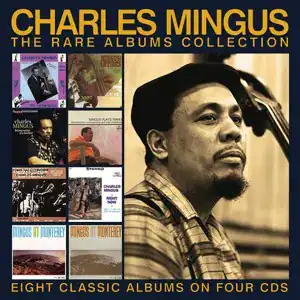
Photo: Unknown photographer / editorial use
Charles Mingus (22 April 1922 – 5 January 1979) was one of the most powerful and original figures in twentieth-century jazz. A bassist, composer, bandleader and arranger, Mingus created music that combined discipline, improvisation, political anger, blues feeling and explosive emotional force.
His link with David Bowie was not a direct collaboration, but it was real and meaningful. Bowie knew Mingus’s work, borrowed the famous “Wham Bam Thank You Ma’am” phrase from Mingus’s world for Suffragette City, and attended a Mingus performance at the Village Gate in New York on 4 February 1973.
- Name: Charles Mingus Jr.
- Born: 22 April 1922, Nogales, Arizona, United States
- Died: 5 January 1979, Cuernavaca, Mexico
- Role: Jazz bassist, composer, bandleader, arranger
- Bowie link: Important jazz influence; Bowie saw Mingus live in 1973
- Direct Bowie connection: Suffragette City and the Mingus-linked phrase “Wham Bam Thank You Ma’am”
- Core idea: Artistic freedom, emotional truth and refusal to conform
Why Mingus mattered to Bowie
Charles Mingus mattered to David Bowie because he represented a form of music that refused easy categories. Mingus could be deeply structured and wildly unpredictable at the same time. His work moved between jazz, blues, gospel, modern composition, political protest and raw emotional release.
Bowie did not imitate Mingus in any simple way. The connection is better understood as one of attitude and artistic method. Mingus showed that music could be complex, difficult, theatrical, angry, tender and deeply human without losing its force. That idea fits strongly with Bowie’s own belief that art should remain restless and should not settle into safety.
Mingus and Suffragette City
The clearest Bowie-Mingus connection appears in Suffragette City, one of Bowie’s most famous glam rock songs from The Rise and Fall of Ziggy Stardust and the Spiders from Mars. Near the end of the song, after its famous false ending, Bowie shouts the line “Wham bam, thank you, ma’am”.
The phrase is strongly connected to Mingus through the track Wham Bam Thank You Ma’am on Mingus’s 1962 album Oh Yeah. Bowie later explained that he had bought a Mingus record after a recommendation from the record department at Medhurst, and that the phrase came from that Mingus title. Bowie’s school friend George Underwood also remembered shouting the line when Bowie played Suffragette City at Haddon Hall, linking it again to Mingus’s Oh Yeah.
This makes the Mingus connection concrete. It is not only a general influence or a vague admiration. A phrase from Mingus’s musical world entered one of Bowie’s most enduring rock songs and became part of the song’s explosive identity.
Oh Yeah and the power of a phrase
Mingus’s Oh Yeah is an unusual and forceful album. On it, Mingus moved away from the expected role of bassist and took up piano and vocals, creating a record full of blues shouts, gospel feeling, humour, anger and rough theatrical energy.
That world helps explain why the phrase appealed to Bowie. Wham Bam Thank You Ma’am sounded comic, sexual, aggressive and rhythmically sharp all at once. In Suffragette City, Bowie used it in exactly that kind of explosive way: as a sudden burst of theatre after the false ending.
David Bowie sees Charles Mingus live in 1973
On 4 February 1973, David Bowie attended a performance by Charles Mingus at the Village Gate nightclub in New York City. The Village Gate was one of New York’s best-known jazz venues, and seeing Mingus there placed Bowie close to one of modern jazz’s most uncompromising figures during the height of Bowie’s Ziggy Stardust period.
The account of the evening describes Bowie inviting a small group to go with him after dinner. The Mingus group was remembered as brilliant, and Mingus reportedly surprised the audience by playing a solo on a large, flexible steel saw, bending the blade and bowing it to create an eerie, strange sound.
The musical saw moment is important because it shows Mingus as both serious and theatrical. Mingus had a reputation for intensity and difficulty, but the saw performance suggested humour, provocation or both. For Bowie, who understood theatre and danger in performance, this kind of unpredictable gesture must have been memorable.
Mingus died on 5 January 1979, almost six years after Bowie saw him at the Village Gate. That makes the 1973 performance a significant moment: Bowie witnessed one of his musical reference points still active, alive and uncompromising.
Pre-Ziggy influence: discipline and rebellion
Long before and during the Ziggy Stardust period, Bowie absorbed ideas from jazz as well as rock, theatre, literature and film. Mingus offered a model in which tight composition and apparent chaos could exist together. His bands could sound disciplined one moment and explosive the next.
That balance between control and collapse can be heard across Bowie’s own work, even when the music is not directly jazz. Bowie often built songs and performances around tension: between character and confession, structure and instability, beauty and threat.
Mingus as a model of artistic freedom
Mingus’s importance lies not only in his bass playing but in his total control of musical identity. He wrote, arranged, led bands, challenged musicians and shaped performances as living events rather than fixed museum pieces.
Bowie’s career followed a very different path, but the principle is related. Both artists resisted being reduced to one style. Both used performance as a form of self-invention. Both understood that music could carry drama, anger, intellect and humour at the same time.
The political and emotional force of Mingus
Mingus was also a political artist. His work could address racism, hypocrisy and social violence without becoming simple protest slogan. A composition such as Fables of Faubus attacked segregation-era politics with satire, fury and musical intelligence.
This political edge matters in a Bowie context because Bowie was drawn to artists who took risks and refused polite surfaces. Mingus’s music often sounds like a fight between order and disorder, and that emotional pressure gives it lasting power.
The Black Saint and the Sinner Lady
One of Mingus’s central achievements is The Black Saint and the Sinner Lady, released in 1963. The album is often regarded as one of his masterpieces because it combines jazz composition, orchestral structure, improvisation, Spanish colour, blues feeling and emotional intensity into one continuous work.
For a Bowie page, this album is important because it shows Mingus as more than a bassist or bandleader. He was a large-scale composer with a theatrical imagination. The music feels dramatic, unstable and cinematic, qualities that also became essential to Bowie’s own artistic world.
Key Mingus works connected to this influence
- Oh Yeah (1962)
- Mingus Ah Um (1959)
- The Black Saint and the Sinner Lady (1963)
- Pithecanthropus Erectus (1956)
- Let My Children Hear Music (1972)
These recordings show different sides of Mingus: the blues shouter, the political satirist, the large-scale composer, the modern jazz innovator and the bandleader who could turn tension into form.
From Mingus to Blackstar
Bowie’s final album Blackstar was not a Mingus tribute, and it should not be described as one. Its jazz elements came through a different generation of New York musicians and through Bowie’s late-career interest in contemporary jazz language.
Even so, Mingus remains relevant as part of the larger jazz tradition that Bowie respected: music built on risk, freedom, structure and emotional truth. In that broad sense, the path from Bowie’s early fascination with jazz to the atmosphere of Blackstar belongs to the same lifelong openness to artists who refused easy categories.
Place within Bowie’s universe
Charles Mingus was not a Bowie collaborator in the usual sense. He did not record with Bowie, perform with him or take part in Bowie’s bands. His place in Bowie’s universe is different: he belongs among the powerful influences and reference points that helped shape Bowie’s understanding of what music could be.
The connection is strong because it is specific. Bowie borrowed from the Mingus-linked “Wham Bam Thank You Ma’am” phrase for Suffragette City, and he saw Mingus live at the Village Gate in 1973. Together, those details make Mingus more than a background influence. They show a real line of contact between Bowie’s rock theatre and Mingus’s uncompromising jazz world.
