
George Orwell (‘1984’) & David Bowie

Photo: Unknown photographer / Wikimedia Commons / CC BY-SA 4.0
George Orwell (1903–1950), the pen name of Eric Arthur Blair, was an English novelist, essayist and journalist. His final novel, Nineteen Eighty-Four, published in 1949, became one of the twentieth century’s most influential works of political fiction.
Although George Orwell never met David Bowie, Nineteen Eighty-Four became one of the principal literary influences on Bowie’s work during the creation of Diamond Dogs. Bowie planned to adapt the novel for the stage before transforming many of its ideas into his own dystopian concept album after permission to dramatise the book was refused.
- Real name: Eric Arthur Blair
- Born: 25 June 1903, Motihari, Bengal Presidency, British India
- Died: 21 January 1950, London, England
- Profession: Novelist, essayist and journalist
- Best-known works: Animal Farm (1945) and Nineteen Eighty-Four (1949)
- Bowie connection: Nineteen Eighty-Four inspired Bowie’s planned stage adaptation and influenced the development of Diamond Dogs.
- Related Bowie songs: 1984, Big Brother, We Are the Dead, Future Legend
- Planned project: David Bowie sought permission to adapt Nineteen Eighty-Four as a stage production in 1973–1974.
George Orwell and Nineteen Eighty-Four
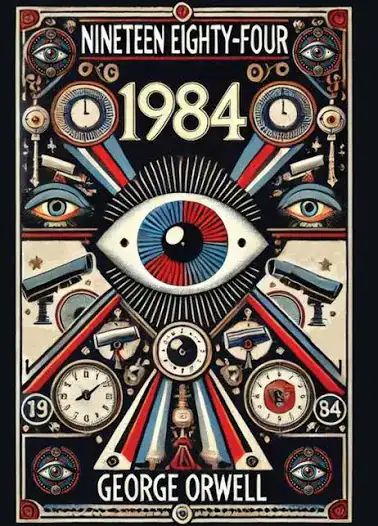
George Orwell published Nineteen Eighty-Four in June 1949. The novel describes the fictional state of Oceania, where the Party, led by Big Brother, exercises control through surveillance, censorship, propaganda and the manipulation of language. Orwell wrote the novel after the Second World War, drawing upon his experiences of totalitarianism, political propaganda and the erosion of civil liberties in Europe.
Concepts introduced in the novel, including Big Brother, Thought Police, Newspeak and doublethink, entered everyday language and continue to be referenced in political, literary and popular culture.
David Bowie Discovers Orwell
During the early 1970s David Bowie read Nineteen Eighty-Four while developing ideas for a new theatrical stage production. Bowie later explained in interviews that he intended to adapt Orwell’s novel as a musical presentation combining music, theatre and visual design. Work on songs for the project had already begun before permission to use the novel was formally requested from Orwell’s estate.
“Now I’m doing Orwell’s 1984 on television; that’s a political thesis and an impression of the way in another country.”
— David Bowie
Speaking with William S. Burroughs in Rolling Stone, published 28 February 1974.
The Planned Nineteen Eighty-Four Musical
By 1973, David Bowie had begun developing an ambitious stage production based on George Orwell‘s Nineteen Eighty-Four. His intention was to combine music, theatre and visual design into a dramatic adaptation of the novel. Songs were already being written while his management sought permission from Orwell’s literary estate.
In a February 1974 interview with writer William S. Burroughs for Rolling Stone, Bowie confirmed that he was working on a television adaptation of Nineteen Eighty-Four. Although the project evolved during its development, the interview demonstrates that Orwell’s novel had become the central focus of Bowie’s next major creative work.
“My office approached Mrs. Orwell, because I said, ‘Office, I want to do 1984 as a musical, go get me the rights.’ And they duly trooped off to see Mrs. Orwell, who in so many words said, ‘You’ve got to be out of your gourd. Do you think I’m turning this over to that as a musical?'”
— David Bowie
Quoted in David Buckley, Strange Fascination: David Bowie – The Definitive Story (1999), recalling the events of 1973–1974.
Sonia Orwell Refuses Permission
Permission to adapt Nineteen Eighty-Four was controlled by Sonia Orwell (1918–1980), George Orwell‘s widow and literary executor. She declined Bowie’s request for the dramatic rights, preventing the project from proceeding as an official adaptation.
Although the rights were refused, Bowie had already completed work on several songs and had begun developing ideas for the production. Rather than abandoning the material, he decided to reshape it into a new project that no longer depended upon Orwell’s novel.
From Nineteen Eighty-Four to Diamond Dogs
The rejection of the adaptation rights marked a turning point in the creation of Diamond Dogs. Bowie retained several songs directly inspired by Orwell’s novel, while expanding the project into an original dystopian world of his own. The resulting album, released in May 1974, combined Orwellian themes with Bowie’s own characters, settings and narrative ideas.
Songs including 1984, Big Brother and We Are the Dead remained closely connected to Orwell’s novel, while the opening piece Future Legend introduced Bowie’s fictional “Hunger City”, establishing a setting that extended beyond Orwell’s original story.
Diamond Dogs: An Original Dystopia
Released on 24 May 1974, Diamond Dogs became David Bowie’s eighth studio album. Although originally conceived as an adaptation of George Orwell‘s Nineteen Eighty-Four, the refusal of the dramatic rights required Bowie to reshape the project into an original concept album.
Rather than abandoning the material he had already written, Bowie incorporated Orwellian themes into a new fictional setting centred on Hunger City and the character Halloween Jack. The result was neither a direct adaptation of Orwell’s novel nor an entirely unrelated work, but a combination of literary inspiration and Bowie’s own imagination.
Several songs retained explicit connections with Orwell’s novel. We Are the Dead takes its title directly from Winston Smith’s words in Nineteen Eighty-Four, while 1984 explores surveillance, psychological control and state violence. Big Brother refers to the novel’s omnipresent ruler, and Future Legend introduces the dystopian environment that links the album together.
Although Diamond Dogs grew out of Bowie’s interest in Orwell, the finished album was also influenced by the writings of William S. Burroughs. Bowie combined Orwell’s political dystopia with Burroughs’ fragmented narrative style and his own theatrical vision, creating a work that stands as an original Bowie concept rather than a musical version of Nineteen Eighty-Four.
Diamond Dogs: From Orwell to an Original Concept
Released on 24 May 1974, Diamond Dogs was David Bowie’s eighth studio album. The project began as an adaptation of George Orwell‘s Nineteen Eighty-Four, but after permission to dramatise the novel was refused, Bowie reworked the material into an original concept album.
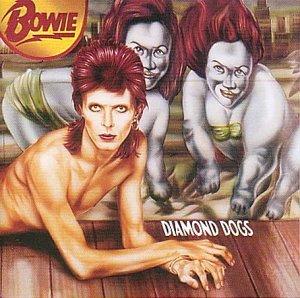
The completed album combined songs directly inspired by Orwell with newly developed characters and locations created by Bowie. Central to this new setting were Hunger City and its self-proclaimed survivor Halloween Jack, allowing Bowie to develop his own dystopian narrative rather than retelling Orwell’s novel.
Several songs retained clear links to Nineteen Eighty-Four. We Are the Dead takes its title from Winston Smith’s words in Orwell’s novel. 1984 reflects themes of surveillance, violence and political control, while Big Brother refers directly to the ruler of Orwell’s fictional state of Oceania.
The album was also shaped by other literary influences, particularly the work of William S. Burroughs. Rather than producing a straightforward adaptation of Orwell’s novel, Bowie combined Orwell’s dystopian ideas with Burroughs’ experimental techniques and his own theatrical imagination to create an original work.
The Songs Inspired by Nineteen Eighty-Four
Although the planned adaptation of Nineteen Eighty-Four was abandoned, several songs originally written for the project remained part of Diamond Dogs. Some retained direct references to Orwell’s novel, while others became part of Bowie’s newly created dystopian world.
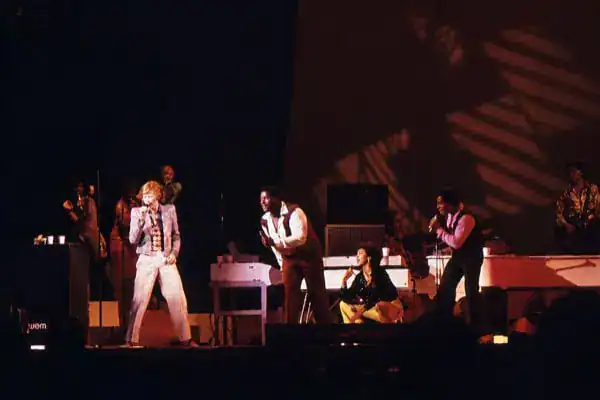
We Are the Dead takes its title directly from a pivotal scene in Nineteen Eighty-Four, when Winston Smith and Julia realise that the Thought Police have discovered their relationship. The phrase became one of the clearest literary references on Diamond Dogs.
1984 reflects several of the novel’s central themes, including surveillance, psychological manipulation and state violence. Rather than retelling Orwell’s story, Bowie transformed these ideas into a dramatic soul-influenced composition that formed part of the album’s second side.
Big Brother refers directly to the supreme ruler of Orwell’s fictional state of Oceania. The song explores political authority, mass loyalty and the cult of leadership that stands at the centre of Orwell’s novel.
Although Future Legend was not based directly on a specific passage from Nineteen Eighty-Four, it introduces the dystopian setting of Hunger City, providing the narrative framework for Bowie’s own concept that developed after the Orwell adaptation was abandoned.
George Orwell and William S. Burroughs
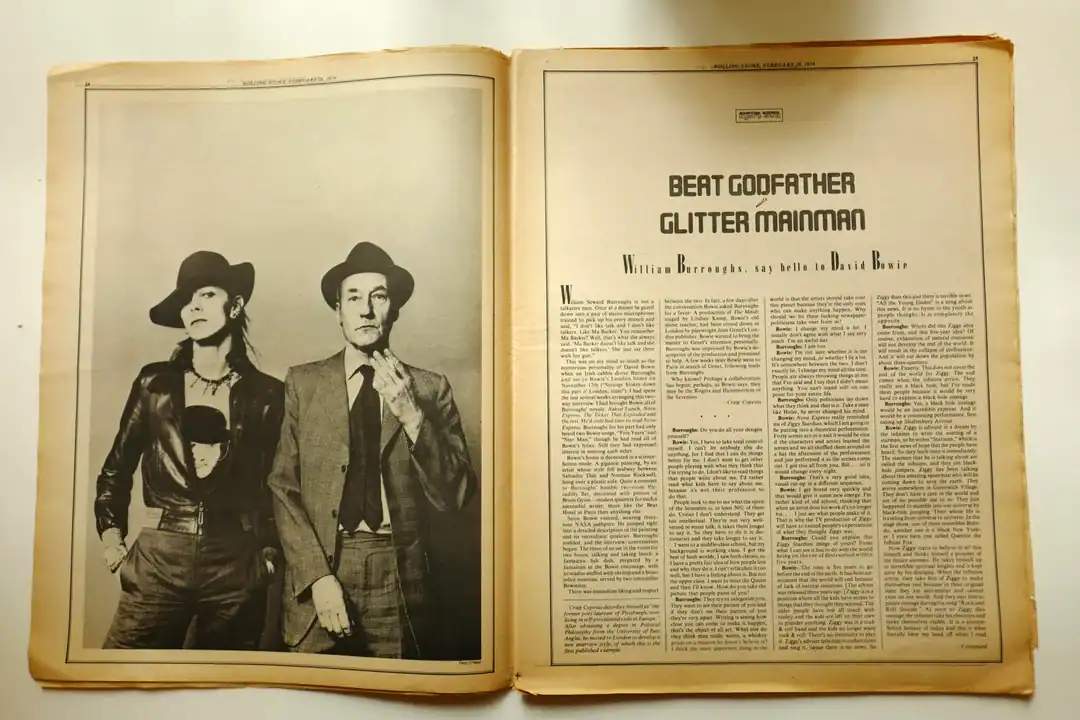
Diamond Dogs was shaped by more than one literary influence. While George Orwell‘s Nineteen Eighty-Four provided the foundation for the abandoned stage adaptation, Bowie also drew upon the work of American writer William S. Burroughs. Burroughs’ experimental writing techniques and fragmented narratives encouraged Bowie to move beyond a straightforward adaptation and develop an original dystopian world of his own.
The completed album therefore combines Orwell’s political dystopia with Bowie’s own characters and settings, while also reflecting Burroughs’ influence on structure and narrative. Rather than adapting a single novel, Bowie created a new fictional universe inspired by several literary sources.
The Legacy of an Unmade Musical
Although David Bowie’s adaptation of Nineteen Eighty-Four was never realised, the project became one of the most significant turning points in his creative career. Rather than abandoning months of work after the refusal of the adaptation rights, Bowie transformed the material into Diamond Dogs, one of the most ambitious concept albums of the 1970s.
The surviving songs demonstrate how literary ideas could be reinterpreted through popular music. Instead of presenting Orwell’s novel on stage, Bowie absorbed its themes into an original work that combined music, theatre, costume design and visual storytelling.
The abandoned production also illustrates Bowie’s willingness to engage with literature in a serious and creative way. Throughout his career he drew inspiration from novels, theatre, philosophy and fine art, often transforming these influences into original musical works rather than direct adaptations.
George Orwell‘s Place in David Bowie’s Creative World
George Orwell occupies a unique position among David Bowie’s literary influences. Unlike musicians, producers or performers who worked directly with Bowie, Orwell’s contribution was entirely indirect. Nevertheless, the ideas contained in Nineteen Eighty-Four helped shape one of Bowie’s most important albums and influenced the direction of his work during the early 1970s.
The relationship between Orwell and Bowie demonstrates how literature could become part of Bowie’s creative process. Although the two men never met and never collaborated, Orwell’s novel provided the foundation for a project that ultimately evolved into Diamond Dogs, ensuring that his influence remains permanently connected with Bowie’s artistic history.
Video
A documentary discussing the relationship between George Orwell‘s Nineteen Eighty-Four, David Bowie’s abandoned stage adaptation and the creation of Diamond Dogs.
David Bowie’s fascination with George Orwell‘s Nineteen Eighty-Four remains one of the best documented literary influences on his career. Although Bowie never obtained the dramatic rights to adapt the novel, the surviving songs and interviews provide a detailed record of how the project developed into Diamond Dogs.
The story of the abandoned musical has become an important chapter in Bowie’s creative history, illustrating how an unrealised idea ultimately produced one of his most distinctive and influential albums.
Further Information
Readers interested in George Orwell‘s life and literary legacy can explore the work of the Orwell Foundation, which preserves Orwell’s writings, essays, letters and historical archive. Together with Bowie’s interviews from the period, these sources help document one of the most fascinating connections between literature and popular music.
Continue Exploring the Diamond Dogs Story
George Orwell‘s influence on David Bowie extended far beyond a single song. To explore how Nineteen Eighty-Four shaped the creation of Diamond Dogs, and to discover the remarkable story behind one of Bowie’s most controversial album covers, continue with these in-depth articles on DavidBowieWorld:
- The Making Of Diamond Dogs (1974) – Discover how David Bowie transformed his abandoned Nineteen Eighty-Four musical into one of the most ambitious concept albums of the 1970s, from the recording sessions to the finished masterpiece.
- Diamond Dogs (1974) – The Story Behind the Album Cover – Explore the creation of Guy Peellaert‘s legendary artwork, the original uncensored cover, Terry O’Neill’s photographs and the visual world that introduced Bowie’s dystopian vision.
