
Freddie Mercury & David Bowie | Under Pressure and Queen Collaboration

Image: David Bowie World collection / editorial use.
Freddie Mercury was the lead vocalist, frontman and one of the principal songwriters of Queen. David Bowie was one of the most influential solo artists of the same generation. Their careers followed different paths, but in 1981 they came together at Mountain Studios in Montreux, Switzerland, to create Under Pressure, one of the most famous collaborations in rock history.
The recording brought together two of British music’s most theatrical and distinctive voices. Mercury’s extraordinary vocal power and instinct for dramatic performance met Bowie’s colder, more narrative style, while Queen supplied the instrumental foundation, including John Deacon‘s instantly recognisable bass line, Brian May‘s guitar textures, Roger Taylor‘s drums and the band’s powerful studio chemistry.
Although Freddie Mercury and David Bowie were never long-term collaborators, Under Pressure remains one of the most important moments in both artists’ catalogues. It was written and recorded quickly, under creative tension, but the result became a number one single in the United Kingdom and a lasting anthem about fear, compassion, human pressure and emotional responsibility.
- Name: Freddie Mercury
- Birth name: Farrokh Bulsara
- Born: September 5, 1946, Stone Town, Zanzibar
- Died: November 24, 1991, London, England
- Profession: Singer, songwriter, pianist and performer
- Band: Queen
- Bowie connection: Co-writer and co-vocalist with David Bowie and Queen on Under Pressure
- Recorded: 1981, Mountain Studios, Montreux, Switzerland
- Released: 1981 as a single by Queen and David Bowie
- Album appearance: Later included on Queen‘s 1982 album Hot Space
- Important live fact: Freddie Mercury and David Bowie never performed Under Pressure together live.
Two Singular British Rock Figures
Freddie Mercury and David Bowie emerged as major figures during the same broad period of British rock music, but they approached performance from different directions. Mercury became famous as the flamboyant, physically commanding frontman of Queen, using his voice, body language and theatrical confidence to dominate large concert stages. Bowie developed a more shape-shifting form of performance, using characters, costumes and changing musical identities to challenge the expectations of rock audiences.
Both artists understood that rock music could be more than sound alone. It could be image, gesture, identity, drama and emotional release. Mercury’s approach was often direct, passionate and physically explosive, while Bowie’s was more conceptual, cool and transformative. Those differences made their collaboration on Under Pressure especially powerful.
By 1981, both Queen and Bowie were internationally established. Queen had already achieved enormous success with albums such as A Night at the Opera, News of the World, Jazz and The Game. Bowie had moved through glam rock, soul, the Berlin period and the post-punk edge of Scary Monsters. When they met in Montreux, neither side needed the collaboration for credibility. That gave the session its unusual creative tension: it was a meeting of equals.
Queen, Bowie and Montreux
The setting for the collaboration was Mountain Studios in Montreux, Switzerland. Queen had a long association with the studio and eventually owned it. Bowie was also living nearby in Switzerland during this period. The proximity made the meeting possible, but the song itself came from a spontaneous studio encounter rather than from a carefully planned commercial project.

Photo: Mountain Studios, Montreux. Safe image from Wikimedia Commons: Wikimedia file page (editorial use).
Brian May later recalled that Bowie came by while Queen were recording. The musicians decided that the best way to get to know one another was to play together. What began as a relaxed studio meeting developed into a jam session, then into a new song. The atmosphere was creative, competitive and intense, bringing together Queen’s internal band chemistry with Bowie’s forceful artistic instincts.
Before Under Pressure took shape, Bowie had also tried adding backing vocals to Queen‘s song Cool Cat. Those vocals were not used on the final release. The more important result of the encounter was the new composition that grew from Queen‘s existing musical ideas, spontaneous improvisation and Bowie’s lyrical direction.
Freddie Mercury on the Montreux session
“We were jamming to some of his songs and some of ours. We had a few bottles of wine and things.”
From Feel Like to Under Pressure
The song that became Under Pressure did not begin with that title. Queen had been working on an earlier idea often identified as Feel Like. Some musical elements from that unfinished piece helped form the basis of the later collaboration, but the finished recording became something much more ambitious once Bowie entered the process.
The famous bass line is most closely associated with John Deacon. Accounts differ slightly over the exact moment of its creation and development, and even the musicians later remembered the details differently. What is clear is that the riff became the central foundation of the track. Bowie, Queen and the studio team shaped the surrounding arrangement around that instantly memorable pattern.
Brian May later described a moment after a meal and drinks when the musicians returned to the studio and had to reconstruct the riff. Bowie corrected Deacon’s memory of the line, creating a moment that was both humorous and tense. That mixture of instinct, disagreement and musical discipline became part of the song’s unusual energy.
The Writing of Under Pressure
Unlike most Queen recordings, Under Pressure evolved almost entirely through improvisation. Rather than arriving with a completed composition, the musicians began by jamming together in Mountain Studios. Brian May contributed guitar ideas, Roger Taylor developed rhythmic patterns, John Deacon played the bass line that would become the song’s musical foundation, while David Bowie encouraged the group to continue developing ideas instinctively rather than stopping to analyse them.
As the instrumental backing gradually took shape, Bowie suggested an unusual method for creating the vocal melody. Instead of writing lyrics first, each singer entered the vocal booth separately without listening to the others’ ideas. Every participant improvised melodies, sounds and occasional words while listening only to the backing track. The most successful moments from each performance were then combined into a single guide vocal.

VIDEO: Under Pressure (Official Video)
-
VIDEO: Under Pressure (Official Video)
The official 'Under Pressure' music video. Taken from Queen - 'Greatest Video Hits 2'
This experimental technique produced many of the song’s most memorable vocal passages. Freddie Mercury‘s spontaneous vocal improvisations, including the famous “de da day” phrases, survived almost unchanged into the finished recording. Bowie recognised that the developing song carried far greater emotional potential than the original working idea and proposed a completely new lyrical direction.
The earliest working title became People on Streets, reflecting fragments that had emerged during the improvised vocal sessions. Overnight Bowie developed the concept further, returning the following day with a much more focused lyric built around the phrase Under Pressure. Queen agreed that Bowie’s new words transformed the song into something far more powerful than they had originally imagined.
Creative Tension Inside the Studio
The collaboration succeeded partly because none of the musicians was willing to compromise easily. Queen already consisted of four exceptionally strong musical personalities, each accustomed to contributing ideas and defending them vigorously. Bowie’s arrival added another equally confident creative force to the room.
Brian May later recalled that the sessions were both exciting and challenging because everyone involved possessed strong opinions. Bowie often pushed the group to continue working instinctively instead of following Queen‘s more structured songwriting process. At times this created genuine disagreement, but it also encouraged the musicians to explore ideas they might otherwise have abandoned.
Engineer Reinhold Mack later remembered that Bowie became deeply involved in shaping both the lyrics and the final direction of the recording. Bowie was particularly determined that the song should communicate emotional urgency rather than simply function as another rock performance. His lyrical contribution shifted the subject away from personal relationships towards wider themes of fear, social pressure, compassion and human connection.
The mixing sessions also generated disagreement. Freddie Mercury and David Bowie each held strong views about how the finished record should sound, while Brian May later admitted that the final mix represented a compromise between several competing artistic opinions. Despite those tensions—or perhaps because of them—the finished recording retained an energy and spontaneity that have remained central to its enduring appeal.
Release and International Success
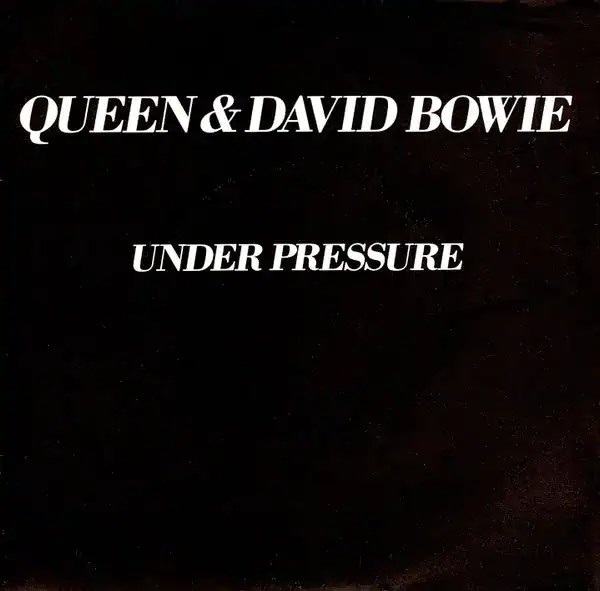
Under Pressure was released as a stand-alone single in October 1981, credited jointly to Queen and David Bowie. The record quickly reached number one on the UK Singles Chart and became an international success, introducing one of the most recognisable bass lines in popular music and pairing two of Britain’s greatest vocalists on a single recording.
When Queen released Hot Space in 1982, Under Pressure was included as the album’s closing track. Although Hot Space divided critics because of its strong funk and dance influences, Under Pressure immediately stood apart as one of the album’s undisputed highlights and has remained one of Queen‘s most celebrated recordings ever since.
The song has since become a permanent part of both Queen‘s and David Bowie’s musical legacy. Its influence extends far beyond its original release, inspiring countless cover versions, live performances and later reinterpretations while continuing to be recognised as one of the defining rock collaborations of the twentieth century.
Why Bowie and Freddie Mercury Never Performed Under Pressure Together
One of the most persistent myths surrounding Under Pressure is that David Bowie and Freddie Mercury performed the song together on stage. Despite the enormous success of the single and the close attention it has received ever since its release, this never happened.
Following the recording sessions in Montreux during July 1981, both artists returned to their own careers. Queen incorporated Under Pressure into their live repertoire, first performing it during the Hot Space Tour in 1982. Freddie Mercury sang the song live with Queen on numerous occasions throughout the 1980s, but David Bowie never appeared as a guest performer.

VIDEO: Under Pressure Live 1981
-
VIDEO: Under Pressure Live 1981
Queen - Under Pressure (Single Queen with David Bowie 1981, Album Hot Space 1982) "Queen Rock Montreal" Live Concert 1981, Canada Freddie Mercury - Vocals Brian May - Guitars Roger Taylor - Drums John Deacon - Bass
Likewise, Bowie did not include Under Pressure in his own concert programmes during Mercury’s lifetime. Although both artists occasionally appeared at the same major events and shared mutual friends within the music industry, circumstances never brought them together on stage to perform their celebrated collaboration.
As a result, the original studio recording remains the only officially released performance featuring both Freddie Mercury and David Bowie together.
The Freddie Mercury Tribute Concert (1992)
Freddie Mercury died on 24 November 1991 following complications arising from AIDS. Less than five months later, Queen organised the Freddie Mercury Tribute Concert for AIDS Awareness, held at Wembley Stadium on 20 April 1992. The event brought together many of the world’s leading rock performers to celebrate Mercury’s life while raising awareness of the global AIDS epidemic.
David Bowie accepted Queen‘s invitation to participate. His appearance became one of the most memorable moments of the concert. Before performing, Bowie surprised both the audience and many of the musicians by kneeling on stage and reciting the Lord’s Prayer, creating an atmosphere of reflection rarely experienced at a major rock concert.

VIDEO: Under pressure (Live)
-
VIDEO: Under pressure (Live)
David Bowie with Annie Lennox and Queen - Under pressure (live at Wembley Stadium in London)
Later in the programme Bowie joined Annie Lennox for a powerful performance of Under Pressure. Although many viewers remember the occasion as Bowie’s live performance of the famous collaboration, it is important to note that Freddie Mercury was no longer alive. Bowie and Mercury therefore never performed the song together in concert.
The Wembley performance nevertheless became one of the defining interpretations of Under Pressure. Annie Lennox approached Mercury’s vocal lines with respect rather than imitation, while Bowie revisited his own parts with remarkable emotional restraint. The performance has since become one of the most widely viewed moments from the tribute concert.
Mutual Respect Between Two Exceptional Performers
Although their personalities and working methods differed considerably, Freddie Mercury and David Bowie shared enormous respect for one another’s musical abilities. Both possessed exceptional vocal range, commanding stage presence and an instinctive understanding of theatrical performance, yet they expressed those qualities in very different ways.
Brian May has often recalled that the Under Pressure sessions were challenging precisely because every participant brought strong creative ideas into the studio. Rather than weakening the finished recording, those competing viewpoints helped produce a song whose tension, emotional intensity and dramatic structure continue to distinguish it more than four decades later.
The Legacy of Under Pressure
More than four decades after its release, Under Pressure remains one of the defining recordings in the catalogues of both Queen and David Bowie. The song has become a permanent fixture on classic rock radio, streaming services and compilation albums, while its message of compassion, humanity and resilience continues to resonate with new generations of listeners.
Musically, the recording stands as a remarkable example of how two very different artistic personalities could combine their strengths without sacrificing their individual identities. Freddie Mercury‘s extraordinary vocal power, David Bowie’s lyrical vision and Queen‘s exceptional musicianship created a recording that sounds as distinctive today as it did in 1981.
John Deacon‘s unforgettable bass line has become one of the best-known instrumental passages in popular music. It has been analysed by musicians, celebrated by critics and referenced in countless discussions of great rock recordings. Together with Mercury’s soaring vocals and Bowie’s reflective verses, it forms one of the most recognisable introductions in rock history.
The Song’s Continuing Influence
Under Pressure has inspired generations of musicians across rock, pop, soul and alternative music. Numerous artists have performed the song live, while its central message has allowed it to remain relevant during periods of political uncertainty, humanitarian crises and social change.
The recording also gained renewed public attention after the bass line was sampled by Vanilla Ice for the 1990 hit Ice Ice Baby. Following legal discussions, David Bowie and the members of Queen received official songwriting credit, reinforcing the importance of protecting the intellectual ownership of one of rock music’s most famous musical ideas.
Despite countless reinterpretations, the original recording continues to be regarded as the definitive version. Critics frequently cite its balance between spontaneity and precision, its emotional honesty and the remarkable chemistry created by six musicians who challenged one another throughout the recording process.
Freddie Mercury in David Bowie’s Creative Universe
Among the many musicians who crossed David Bowie’s path, Freddie Mercury occupies a unique position. Unlike many of Bowie’s collaborators, Mercury was already one of the world’s most recognisable performers before they entered the studio together. Their partnership therefore represented not the meeting of mentor and newcomer, but the collaboration of two established artists working as equals.
Although their professional collaboration resulted in only one completed and officially released recording, its significance has never diminished. Under Pressure remains one of the greatest collaborations in the history of British popular music and stands as lasting evidence of what could happen when exceptional musicians allowed creativity, instinct and mutual respect to guide the recording process.
Article Origin
This article has been researched and written using historically reliable sources, including documented interviews with Brian May, Roger Taylor, David Bowie and engineer Reinhold Mack, together with official Queen and David Bowie archive material and recognised Bowie reference works. Every effort has been made to present the collaboration between Freddie Mercury, Queen and David Bowie as accurately and completely as possible.
© DavidBowieWorld.com — David Bowie Collaborations & Creative Circle Archive.
