
Dave Grohl – Foo Fighters Frontman and David Bowie Collaborator
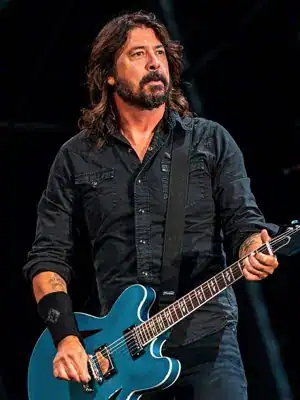
Photo: Raph_PH / Wikimedia Commons / CC BY 2.0 (editorial use)
Dave Grohl is one of the most influential rock musicians of the modern era, known first as the drummer of Nirvana and later as the founder, singer and guitarist of the Foo Fighters. Throughout his career, Grohl has repeatedly cited David Bowie as one of his musical heroes, and over time their mutual admiration developed into a genuine friendship.
Unlike some figures in Bowie’s world whose connection was based on a single project, Grohl’s relationship with Bowie grew from decades of admiration, occasional collaboration and shared respect between two artists from different generations.
- Born: January 14, 1969, Warren, Ohio, USA
- Known for: Nirvana, Foo Fighters
- Instruments: Drums, guitar, vocals
- Bowie connection: Collaborator, admirer and friend
- Notable link: Bowie 50th Birthday Concert (1997)
From punk rock to global success
Dave Grohl emerged from the American punk and hardcore scene during the 1980s before joining Nirvana in 1990. His powerful drumming became an essential element of the band’s breakthrough success, helping define the sound of the grunge era.
Following Kurt Cobain’s death in 1994, Grohl reinvented himself as a songwriter, vocalist and bandleader by founding Foo Fighters. The group would go on to become one of the most successful rock acts of the following decades.
Throughout these transformations, Grohl often cited artists who continually evolved their creative identity. Among those influences, David Bowie occupied a special place.
Nirvana and The Man Who Sold The World
One of the strongest links between Dave Grohl and David Bowie came through Nirvana’s celebrated interpretation of Bowie’s song The Man Who Sold The World.
Originally released by Bowie in 1970, the song gained a new generation of listeners when Nirvana performed it during their legendary MTV Unplugged in New York concert in 1993.
The performance became one of the most memorable moments of the entire programme and introduced many younger fans to Bowie’s songwriting. Years later, Grohl would continue to speak openly about the importance of Bowie’s music and the influence it had on his own artistic development.
Bowie himself appreciated the renewed attention the song received, although he later joked that younger listeners often assumed it was originally a Nirvana composition.
David Bowie’s 50th Birthday Concert
A major milestone in the relationship between Bowie and Grohl came on 9 January 1997, when David Bowie celebrated his 50th birthday with a special concert at Madison Square Garden in New York City.
The event featured an extraordinary line-up of artists including Lou Reed, Frank Black, Sonic Youth, Billy Corgan, Robert Smith and Foo Fighters. For Grohl, appearing at a concert honouring one of his lifelong heroes was both a personal and professional highlight.
The show demonstrated Bowie’s unique ability to unite artists from different musical generations. By the late 1990s, Grohl had become one of the most recognisable figures in alternative rock, yet he still viewed Bowie with the awe of a devoted fan.
Years later, Grohl continued to describe Bowie’s presence as almost otherworldly, recalling how people instinctively reacted whenever he entered a room.
Working with Reeves Gabrels and Bowie
The most direct musical collaboration between Dave Grohl and David Bowie emerged through guitarist Reeves Gabrels, Bowie’s longtime creative partner during the late 1980s and 1990s.
In 1999, Gabrels released his solo album Ulysses (Della Notte). One of its standout tracks, Jewel, featured contributions from both David Bowie and Dave Grohl, bringing together three musicians whose careers had developed in very different directions.
Although Bowie and Grohl were not working together in a traditional band setting, the recording remains one of the few officially released projects to feature both artists.
Grohl later recalled being astonished by Bowie’s professionalism in the studio. According to him, Bowie’s voice required little effort or correction, delivering exactly the authority and character listeners expected.
Mutual admiration
What makes the Bowie–Grohl connection particularly interesting is that it developed from genuine admiration rather than industry networking. Grohl had been a Bowie fan long before becoming famous himself.
After meeting Bowie, that admiration only increased. Grohl repeatedly described Bowie as one of the most charismatic people he had ever met, someone whose influence extended beyond music into culture, fashion, art and personal identity.
Bowie, meanwhile, appreciated artists who followed their own creative path. Grohl’s journey from punk drummer to major songwriter and bandleader reflected the kind of artistic evolution Bowie respected throughout his life.
“I’m Not Made For These Times”
One of the most famous stories linking Dave Grohl and David Bowie emerged during the final years of Bowie’s life. Around 2014, Grohl was approached to create music for a film project and considered inviting Bowie to sing on one of the tracks.
Bowie politely declined. His response became legendary among fans:
“I’m not made for these times.”
Grohl respected the decision, understanding that Bowie had become increasingly selective about the projects he chose to pursue. Yet the exchange did not end there.
After further correspondence, Bowie sent another message that perfectly reflected his dry sense of humour:
“Alright, well that’s settled then. Now, fuck off.”
Grohl later recalled the story with great affection, recognising it as a classic example of Bowie’s wit and personality.
Meeting a hero
Dave Grohl has often spoken openly about the impact Bowie had on him. Unlike many musicians who become accustomed to fame, Grohl never lost the sense of wonder he felt around artists he admired.
He described seeing Bowie perform live as an almost spiritual experience, recalling how Bowie seemed to command attention simply by walking into a room. According to Grohl, Bowie possessed a level of charisma unlike anyone else he had ever encountered.
One of Grohl’s favourite memories involved working with Bowie in a recording studio. Despite Bowie’s legendary status, he remained approachable, professional and surprisingly relaxed. The experience reinforced Grohl’s admiration and left him with lasting memories of one of rock music’s most influential figures.
David Bowie and the next generation
Bowie’s relationship with Dave Grohl illustrates something important about his later career. Rather than becoming isolated from newer musical movements, Bowie remained curious about younger artists and actively engaged with them.
Through musicians such as Grohl, Bowie’s influence reached a generation that had grown up after the classic Ziggy Stardust years. The connection between Nirvana, Foo Fighters and Bowie demonstrates how his songwriting and artistic philosophy continued to inspire musicians decades after his breakthrough.
Legacy within Bowie’s universe
Within David Bowie’s extended creative universe, Dave Grohl occupies a unique place. He was not a long-term band member or a major recording collaborator, yet his relationship with Bowie reveals the enormous respect Bowie commanded among musicians who followed him.
Their shared history encompasses admiration, friendship, collaboration and mutual respect. From Nirvana’s celebrated interpretation of The Man Who Sold The World to their work with Reeves Gabrels and the famous “I’m not made for these times” exchange, Grohl’s story provides a fascinating glimpse into Bowie’s influence on modern rock music.
