
Jacques Brel – Belgian Chansonnier and a Major Influence on David Bowie

Photo: Jack de Nijs / Anefo / Wikimedia Commons / CC BY-SA 3.0 (editorial use)
Jacques Brel was one of the most influential singer-songwriters of the twentieth century. Through an extraordinary combination of poetic lyricism, theatrical intensity and emotional honesty, the Belgian chansonnier transformed the possibilities of popular song. His performances blurred the boundary between concert and theatre, creating fully realised dramatic characters whose emotions unfolded in front of the audience with remarkable conviction.
Among the many artists inspired by Brel’s work was David Bowie. Long before Bowie became internationally famous, he discovered Brel through Scott Walker‘s recordings and later through the London production of Jacques Brel Is Alive and Well and Living in Paris. Those discoveries fundamentally altered Bowie’s understanding of what a singer could become on stage. Rather than simply performing songs, Bowie realised that music could also become theatre, storytelling and character acting.
Although Bowie and Brel never worked together, the Belgian singer’s artistic influence can be traced throughout Bowie’s career. From his early performances of Amsterdam and My Death to the theatrical presentation of Ziggy Stardust and later live performances during the 1990s and 2000s, Brel remained one of the defining artistic figures behind Bowie’s development as a performer.
Key Facts
- Full name: Jacques Romain Georges Brel
- Born: 8 April 1929, Schaerbeek (Schaarbeek), Brussels, Belgium
- Died: 9 October 1978, Bobigny, France (buried on Hiva Oa, French Polynesia)
- Occupation: Singer-songwriter, actor, filmmaker and poet
- Genres: French chanson, theatrical song
- Associated with: François Rauber, Gérard Jouannest, Les Trois Baudets
- David Bowie connection: One of David Bowie’s most significant artistic and theatrical influences
One of David Bowie’s Greatest Artistic Influences
Few artists shaped David Bowie’s artistic outlook as profoundly as Jacques Brel. While Bowie drew inspiration from American rhythm and blues, British theatre, mime, Japanese performance traditions and avant-garde art throughout his career, Brel demonstrated something uniquely powerful: that a popular singer could completely inhabit a song as an actor inhabits a dramatic role.
Brel’s concerts were never simple recitals. Every gesture, facial expression and vocal inflection served the narrative. His performances were physically exhausting, emotionally uncompromising and entirely committed to the characters inside each song. Watching Brel meant witnessing theatre expressed through music rather than conventional entertainment.
For the young David Bowie, still searching for his own artistic identity during the second half of the 1960s, this approach proved revelatory. It offered a blueprint that differed radically from the restrained presentation favoured by many contemporary pop singers and instead suggested that performance itself could become a complete artistic discipline.
“By way of Brel, I discovered French chanson — a revelation.”
David Bowie
Vanity Fair, November 2003
Bowie later explained that Scott Walker‘s recordings first introduced him to Jacques Brel’s songs. Wanting to learn more about the songwriter behind those remarkable performances, Bowie attended the London production of Jacques Brel Is Alive and Well and Living in Paris during 1968. The experience opened an entirely new musical world and introduced him to the rich tradition of French chanson, where literature, poetry and dramatic storytelling occupied a central place within popular music.
Early Life in Brussels
Jacques Romain Georges Brel was born on 8 April 1929 in Schaerbeek (Schaarbeek), a municipality of Brussels, into a prosperous Roman Catholic family of industrialists. His father, Romain Brel, was a partner in the family cardboard manufacturing business, while his mother, Elisabeth Lambertine Vanneste, came from a Flemish family with deep roots in West Flanders. Although the family lived in Brussels, French was the principal language spoken at home, reflecting the linguistic and cultural identity of much of the Belgian middle class during the first half of the twentieth century.
Brel later described himself as a French-speaking Fleming, acknowledging both sides of his heritage. This dual cultural identity remained an important aspect of his life, even after he became internationally recognised as one of the leading figures of French chanson. Although almost all of his songs were written and performed in French, he also recorded several Dutch-language versions of his work, many translated by the Dutch writer Ernst van Altena.
His childhood was comfortable but disciplined. The Brel family expected Jacques eventually to enter the family business, and his education reflected those expectations. He attended Catholic schools in Brussels, where academic achievement was considered less important than discipline, responsibility and religious values. During these years he developed an interest in reading, writing and storytelling, although there was little indication that he would eventually become one of Europe’s greatest singer-songwriters.
Outside school, Brel became actively involved with the Catholic youth organisation La Franche Cordée. The organisation encouraged theatre, music, public speaking and charitable work, providing opportunities that differed greatly from the structured environment of school and family life. It was here that Brel first discovered the enjoyment of performing before an audience and began developing the confidence that would later define his stage career.
Equally significant was his growing interest in writing. Rather than composing polished poetry, the young Brel preferred creating short stories, sketches and humorous observations inspired by everyday life. These early experiments revealed an ability to observe ordinary people with both affection and honesty, qualities that would later become central to songs such as Les Bourgeois, Les Vieux, Jef and Amsterdam.
While participating in activities organised by La Franche Cordée, Brel met Thérèse “Miche” Michielsen. Their friendship gradually developed into a relationship, and the couple married in 1950. They would eventually have three daughters. During the earliest years of his career, Miche provided stability while Brel pursued an increasingly uncertain future in music, often enduring long periods apart as he travelled between Belgium and France seeking professional opportunities.
Early Musical Career
Although Jacques Brel had begun writing songs while working in the family cardboard business, his ambitions increasingly centred on music rather than commerce. In 1953 he recorded his first songs in Belgium, but the response was modest. Convinced that greater opportunities lay across the border, Brel travelled regularly to Paris, where he performed in small cabarets and struggled to establish himself within the highly competitive world of French chanson.
The early years demanded considerable perseverance. Financial success remained elusive, and Brel often lived apart from his young family while pursuing engagements in Paris. Encouragement from influential figures within the chanson community, including Jacques Canetti, gradually brought wider exposure through radio, theatre and live performances. His passionate stage presence quickly distinguished him from many contemporary singers, whose performances tended to be far more restrained.
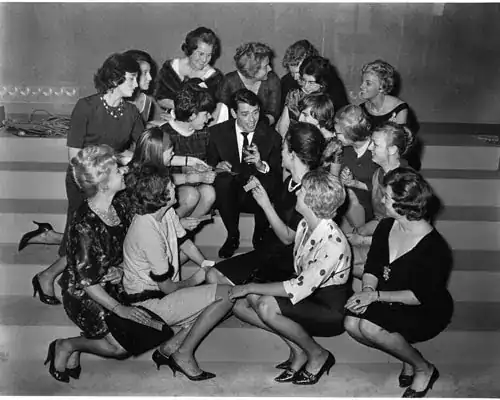
This photograph was taken on 22 March 1962 after the recording of the Dutch television programme Domino at the Marcanti Theatre in Amsterdam. Surrounded by enthusiastic admirers, Brel is shown at a time when his reputation was expanding rapidly beyond France and Belgium. Television appearances and concert tours introduced his emotionally charged performances to wider audiences and helped establish him as one of Europe’s leading chanson artists.
By the early 1960s, Brel’s popularity had grown significantly across Western Europe. His increasingly successful recordings, combined with unforgettable live performances, laid the foundations for an international career that would later influence performers far beyond the world of French chanson, including David Bowie.
As his audience continued to grow, Brel developed the intensely theatrical performance style that became his trademark. Every concert combined dramatic storytelling with extraordinary emotional commitment, qualities that transformed his songs into miniature stage productions and set new artistic standards within the chanson tradition.
From the Family Business to the Paris Stage
By the mid-1950s, Jacques Brel had reached a decisive point in his life. Although he remained employed in the family cardboard business, music had become far more than a personal interest. Every opportunity to perform reinforced his conviction that his future lay on the stage rather than behind a desk. The security offered by the family company could not compete with his growing ambition to become a professional songwriter and performer.
Leaving Brussels for Paris demanded considerable courage. Success was far from guaranteed, and the French capital was already home to many established chanson artists competing for the same theatres, cabarets and recording opportunities. Brel accepted modest engagements wherever they could be found, gradually building a reputation through determination rather than immediate commercial success.
His wife, Miche, remained in Belgium with their young family during much of this difficult period. The long separations placed considerable strain on family life, yet they also reflected the sacrifices required to pursue an artistic career. Brel later acknowledged that these early years of uncertainty shaped both his outlook and the emotional honesty that became such a defining feature of his songwriting.
Paris also exposed Brel to a vibrant artistic community in which lyricists, composers and performers continually challenged one another to raise the standards of French chanson. Instead of adapting his style to follow popular trends, Brel became increasingly determined to write songs that reflected his own observations of ordinary life, human relationships and social behaviour. That independence gradually distinguished him from many of his contemporaries and prepared the way for the breakthrough that would soon follow.
Finding Success in Paris
Jacques Brel’s first years in Paris were difficult. He arrived in the French capital without an established audience and entered a competitive world of cabarets, theatres and music halls. His early performances did not immediately bring widespread recognition, but they allowed him to develop the direct and intensely theatrical style that would later distinguish him from almost every other singer of his generation.
An important supporter during this period was Jacques Canetti, the artistic director associated with Philips Records and the Paris cabaret Les Trois Baudets. Canetti had played an important role in the careers of several French-language performers and recognised that Brel possessed unusual dramatic ability. Appearances at Les Trois Baudets helped Brel gain experience and introduced his songs to audiences beyond Belgium.
Brel also travelled extensively, performing in provincial theatres and music halls throughout France and Belgium. These demanding tours became an essential part of his artistic development. Repeated performances allowed him to refine the timing, gestures and physical expression through which he communicated the emotional meaning of his songs.
His breakthrough developed gradually during the second half of the 1950s. In 1956, Quand on n’a que l’amour became one of the first songs to bring him widespread attention. Its success helped establish Brel as a significant new figure within French chanson and marked the beginning of a period in which his reputation expanded rapidly.
Songs including La Valse à Mille Temps, Ne Me Quitte Pas, Les Flamandes and La Colombe demonstrated the growing range of his writing. Brel could move from love and longing to social observation, satire, war and mortality. Rather than presenting idealised characters, he frequently wrote about people shaped by disappointment, ageing, loneliness, fear and unfulfilled ambition.
Transforming the Art of Live Performance
By the early 1960s, Jacques Brel had become recognised not only for the quality of his songwriting but also for a style of performance unlike anything audiences had previously experienced. Rather than presenting songs as polished vocal performances, Brel treated every composition as a dramatic scene. Each lyric was interpreted through movement, facial expression and gesture, creating performances that were as theatrical as they were musical.
Brel rarely remained still on stage. He leaned towards the audience, stretched his arms, clenched his fists and constantly altered his posture to reflect the emotions within a song. Love, anger, humour, despair and irony were communicated not only through his voice but through every aspect of his physical performance. Even audience members unfamiliar with French could often understand the emotional narrative simply by watching him perform.
Unlike many popular singers of the period, Brel made little attempt to maintain an elegant or carefully controlled appearance. Concerts frequently ended with him visibly exhausted, his shirt soaked with perspiration after giving himself completely to each performance. That total commitment became one of his defining characteristics and earned admiration from fellow musicians, actors and critics throughout Europe.
His performances also reflected the literary quality of his songwriting. Every song introduced believable characters whose emotions and experiences unfolded before the audience like short theatrical productions. Sailors, lovers, ageing couples, soldiers and ordinary citizens all became central figures within Brel’s work, allowing audiences to recognise elements of their own lives within his stories.
This uncompromising approach fundamentally changed expectations of what a popular concert could be. Jacques Brel demonstrated that a singer could combine music, theatre and storytelling into a single artistic experience, establishing a standard that would influence generations of performers long after he had left the concert stage.
International Recognition and Lasting Masterpieces
By the beginning of the 1960s, Jacques Brel had established himself as one of the foremost voices of French chanson. Years of relentless touring, constant refinement of his performances and an uncompromising dedication to his craft had transformed him from an ambitious Belgian newcomer into an artist admired throughout Europe. His concerts regularly sold out, while his recordings reached audiences far beyond France and Belgium.
Unlike many popular performers, Brel refused to repeat successful formulas simply to satisfy commercial expectations. Every new collection of songs explored different aspects of the human condition. Love, friendship, betrayal, ageing, religion, war, death and social convention all became subjects of remarkable emotional honesty. His lyrics combined literary sophistication with an ability to capture the lives of ordinary people, making his work both deeply personal and universally recognisable.
Among his greatest achievements are songs such as Ne Me Quitte Pas, Amsterdam, Le Plat Pays, Ces Gens-Là, Madeleine, Mathilde, Les Bourgeois, Le Moribond and La Chanson des Vieux Amants. Many have since been translated into dozens of languages and interpreted by artists around the world, confirming their place within the international songbook.
Brel’s influence extended far beyond the French-speaking world. Performers from Europe, North America and elsewhere admired his ability to combine poetic writing with dramatic interpretation. His work demonstrated that popular music could address complex emotions and difficult subjects without sacrificing accessibility, inspiring generations of singers, songwriters and actors who followed.
Today Jacques Brel is widely regarded as one of the greatest singer-songwriters of the twentieth century. His recordings remain central to the history of chanson, while his stage performances continue to be studied as examples of complete artistic commitment. More than half a century after their creation, his songs retain the emotional power and humanity that first made them extraordinary.
Leaving the Concert Stage
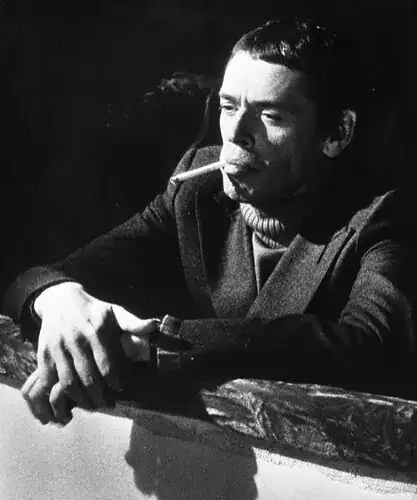
Despite remaining at the height of his popularity, Jacques Brel made the remarkable decision to retire from live performance in 1967. He was only thirty-eight years old. Unlike many artists who left the stage because of declining audiences or health problems, Brel stepped away while still enjoying enormous success. He believed that he had achieved everything he wished to accomplish as a concert performer and preferred to explore new creative challenges rather than repeat himself indefinitely.
His final farewell tour attracted considerable attention throughout Europe. Audiences recognised that they were witnessing the conclusion of one of the most extraordinary performing careers in modern popular music. Although Brel would continue recording for several more years, his retirement marked the end of the intense live performances that had become legendary for their emotional commitment and theatrical power.
After leaving the concert stage, Brel increasingly devoted his attention to acting, filmmaking and travel. He appeared in several films, directed two feature films of his own and later fulfilled a lifelong ambition by learning to fly. Eventually he settled on the Marquesas island of Hiva Oa in French Polynesia, where he sought a quieter life far removed from the pressures of international fame.
Jacques Brel Is Alive and Well and Living in Paris
One of the most successful introductions to Jacques Brel’s work outside the French-speaking world came through the musical revue Jacques Brel Is Alive and Well and Living in Paris. Premiering Off-Broadway in New York in 1968 before transferring to London later that year, the production introduced English-speaking audiences to Brel’s extraordinary catalogue through carefully crafted translations rather than a conventional biography.
Created by Eric Blau and Mort Shuman with Brel’s approval, the production presented a sequence of songs exploring love, humour, ageing, friendship, loneliness, war and mortality. Instead of telling the story of Brel’s own life, the revue allowed each composition to stand as a dramatic scene in its own right. The result demonstrated that Brel’s writing possessed a universal quality capable of crossing both linguistic and cultural boundaries.
The London production featured Elly Stone, Jennie Stoller, Joe Masiell and Shawn Elliott, whose performances introduced British audiences to songs such as Amsterdam, My Death, Jackie and many other works that had already become classics within the French chanson tradition. Although Brel himself never appeared in the production, his artistic personality remained present through the emotional intensity and theatrical nature of the performances.
Among those who attended the London production was the young David Bowie. Having already discovered Jacques Brel through Scott Walker‘s recordings, Bowie now experienced an entire evening devoted to Brel’s songwriting and dramatic approach to performance. The production reinforced his growing belief that popular music could successfully combine theatre, literature and characterisation, ideas that would later become central to his own artistic development.
The importance of the production remained evident throughout Bowie’s career. He later included the original cast recording among the albums that had shaped his musical life, while his own performances of Amsterdam and My Death reflected a lasting admiration for both Jacques Brel’s songwriting and the theatrical tradition through which those songs first reached him.
David Bowie Performs Amsterdam
David Bowie performing Amsterdam live in 1972.
David Bowie’s admiration for Jacques Brel eventually developed beyond appreciation into performance. The first Brel song that Bowie chose to record was Amsterdam, one of Brel’s most celebrated compositions. Rather than translating directly from the original French lyrics, Bowie based his version on the English adaptation created by Mort Shuman. This approach reflected the route through which he had first encountered Brel’s work: via Scott Walker‘s recordings and the English-language stage production Jacques Brel Is Alive and Well and Living in Paris.
Bowie recorded Amsterdam on 16 November 1971 during sessions at Trident Studios in London. Although the recording remained unreleased for almost two years, it eventually appeared on 23 November 1973 as the B-side of the single Sorrow. By then Bowie had achieved international success through The Rise and Fall of Ziggy Stardust and the Spiders from Mars and Aladdin Sane, introducing many listeners to Brel’s songwriting for the first time.
Unlike the dramatic orchestral arrangements associated with several earlier interpretations, Bowie’s recording remained comparatively restrained. His vocal performance allowed the narrative to unfold naturally while preserving the emotional tension that characterises Brel’s original composition. Rather than attempting to imitate Brel’s distinctive delivery, Bowie interpreted the song in his own style, demonstrating respect for the original while allowing his own artistic personality to remain unmistakable.
David Bowie on Jacques Brel
“By way of Brel, I discovered French chanson — a revelation.”
— David Bowie, Vanity Fair, November 2003
For Bowie, recording Amsterdam represented more than the revival of an admired chanson. It acknowledged one of the artists who had fundamentally influenced his understanding of performance during the late 1960s. By interpreting the song himself, Bowie introduced Brel’s work to a new generation of rock audiences who may never previously have encountered French chanson.
Although Amsterdam was never intended as a major commercial release, it has become one of the most respected recordings in Bowie’s catalogue. Critics and fans have frequently praised the performance for balancing faithfulness to Brel’s dramatic storytelling with Bowie’s own distinctive vocal interpretation. The recording remains one of the clearest demonstrations of the artistic connection between the two performers.
My Death – One of Bowie’s Most Dramatic Concert Performances
David Bowie performing My Death live in 1973.
Bowie’s relationship with Jacques Brel’s music did not end with Amsterdam. During the early 1970s he also added My Death to his live repertoire, performing the English-language adaptation by Mort Shuman. While Amsterdam introduced many of David Bowie’s listeners to Brel’s songwriting through a studio recording, My Death became the work through which Bowie most fully embraced Brel’s theatrical approach on stage.
Unlike many songs within Bowie’s catalogue, My Death depended almost entirely upon vocal interpretation and emotional control. The sparse musical accompaniment focused attention upon the lyrics and their gradual progression towards the song’s powerful conclusion. Rather than relying upon elaborate staging, Bowie’s performances reflected elements of Jacques Brel’s dramatic approach while remaining unmistakably his own.
Bowie first introduced My Death during the Ziggy Stardust era, where it contrasted sharply with the science-fiction imagery and energetic rock performances that surrounded it. Concert audiences were confronted with a solitary figure delivering a deeply personal meditation on mortality, regret and acceptance. The dramatic shift in atmosphere demonstrated Bowie’s understanding that silence, restraint and storytelling could be just as powerful as spectacle.
Throughout the 1970s Bowie continued to perform the song on selected occasions, but it achieved renewed significance during the 1995 Outside Tour. Accompanied primarily by pianist Mike Garson, Bowie presented My Death with remarkable emotional control. Rather than attempting to imitate Jacques Brel’s original interpretation, he allowed the song to become entirely his own while preserving the dramatic intensity that had first attracted him to Brel’s work decades earlier.
David Bowie on Jacques Brel
“By way of Brel, I discovered French chanson — a revelation.”
— David Bowie, Vanity Fair, November 2003
The influence extended beyond the songs themselves. Brel demonstrated that a performer could inhabit a character completely without relying upon elaborate staging or visual effects. During performances of My Death, Bowie employed precisely that philosophy. The emotional impact came from voice, interpretation and presence rather than theatrical production, revealing how deeply Brel’s approach had become embedded within Bowie’s own performance style.
Beyond Individual Songs
Although Amsterdam and My Death remain the clearest examples of Jacques Brel’s influence on David Bowie, their artistic connection reached much further. Brel showed that popular music could accommodate literary storytelling, complex characters and genuine emotional vulnerability without sacrificing entertainment. Those principles resonated strongly with Bowie, who consistently sought to expand the boundaries of what rock music could communicate.
From the late 1960s onwards Bowie increasingly incorporated theatrical techniques into his own performances. His studies with mime artist Lindsay Kemp, his fascination with German Expressionism and Kabuki theatre, and his admiration for performers such as Jacques Brel combined to create a highly individual stage language. Rather than copying any one influence, Bowie absorbed ideas from many disciplines and transformed them into something uniquely his own.
This approach became evident throughout his career. Ziggy Stardust, Halloween Jack, the Thin White Duke and the many other characters Bowie portrayed were never intended as disguises. Like the figures within Brel’s chansons, they functioned as dramatic personalities through which broader themes could be explored. Identity, fame, isolation, mortality and human ambition became recurring subjects presented through carefully constructed theatrical narratives.
For that reason, Jacques Brel should not be viewed solely as an artist whose songs Bowie admired. He was one of the key figures who helped shape Bowie’s understanding of performance itself. Long before Bowie became recognised as one of rock music’s greatest innovators, Brel had demonstrated that music, theatre, literature and character could exist together within a single performance. Bowie carried that lesson throughout his own career, adapting it to a new generation and introducing its principles to millions of listeners around the world.

Jacques Brel - La Mer (Dead)

David Bowie - My Death (La Mort)

Jacques Brel - Amsterdam

David Bowie - Amsterdam
-
Jacques Brel - La Mer (Dead)
-
David Bowie - My Death (La Mort)
-
Jacques Brel - Amsterdam
-
David Bowie - Amsterdam
Later Years and Life on Hiva Oa
Following his retirement from concert touring in 1967, Jacques Brel deliberately chose a life very different from that of an international recording star. Rather than remaining at the centre of the entertainment industry, he devoted his energy to new creative interests. He continued recording until the early 1970s, appeared in several feature films and directed two of his own, demonstrating that his artistic ambitions extended well beyond songwriting.
Another lifelong ambition was aviation. Brel qualified as a pilot and developed a genuine passion for flying, often undertaking long journeys himself. Flying represented the same sense of freedom and independence that had characterised many of his artistic decisions throughout his career. Having spent years travelling constantly as a performer, he now travelled on his own terms.
In the mid-1970s, Brel and his companion Maddly Bamy settled on the island of Hiva Oa in the Marquesas Islands, French Polynesia. Far removed from the pressures of European celebrity life, Brel became closely involved with the local community. He frequently used his aircraft to transport medical supplies, mail and residents between islands, making practical contributions to everyday life rather than seeking public attention.
Although he had largely withdrawn from public performance, Brel’s creative drive remained undiminished. In 1977 he returned to the recording studio to make what would become his final album, Les Marquises. Released after years of silence, the album was greeted with enormous public interest and confirmed that his songwriting retained its emotional depth and literary quality. It proved to be his final major artistic statement.
Jacques Brel on life
“The only real failure is not to dare.”
— Jacques Brel
By the time Les Marquises appeared, Brel’s health had already begun to decline. A heavy smoker for much of his adult life, he had been diagnosed with lung cancer. Despite treatment, his condition gradually worsened during the following year.
Jacques Brel died on 9 October 1978 at the Avicenne Hospital in Bobigny, near Paris, aged forty-nine. In accordance with his wishes, he was buried on Hiva Oa, the island that had become his home during his final years. His grave lies only a short distance from that of the French painter Paul Gauguin, another artist who had sought inspiration in the Marquesas Islands.
Legacy
Jacques Brel left one of the most distinctive legacies in twentieth-century European popular music. Although he usually performed in French, the emotional force of his songs allowed his work to reach audiences far beyond the French-speaking world. His reputation was built not only upon the quality of his writing, but also upon the extraordinary intensity with which he presented each song on stage.
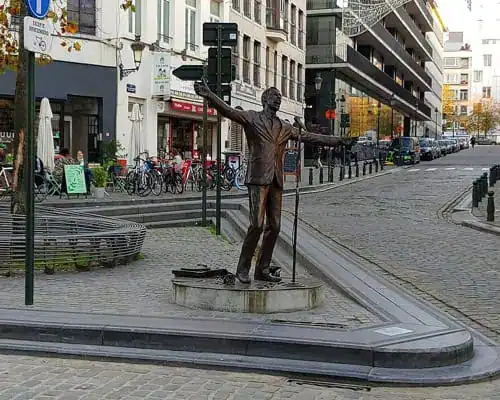
Brel approached the chanson as a complete dramatic form. His songs could contain love, cruelty, loneliness, humour, desperation and social observation within only a few minutes. Rather than treating the singer as a detached narrator, he entered fully into the characters and situations he described. His facial expressions, physical movements and changes in vocal tone became inseparable from the meaning of the performance.
Songs including Ne me quitte pas, Amsterdam, La chanson des vieux amants, Le Moribond and La Valse à mille temps became central works within the modern chanson tradition. English-language interpretations by artists such as Scott Walker, Judy Collins, Nina Simone and others helped introduce his writing to listeners who did not understand the original French lyrics.
The English adaptations created by Mort Shuman and Eric Blau were especially important in extending Brel’s influence throughout Britain and the United States. Their musical Jacques Brel Is Alive and Well and Living in Paris presented his work to a new theatrical audience and demonstrated that his songs could retain their dramatic power when carefully translated and reinterpreted.
Brel’s influence can be heard in later generations of singers and songwriters who treated popular music as a form of theatre, character study and emotional confession. His work showed that a song did not need to offer comfort or easy sentiment. It could instead confront the listener with jealousy, ageing, failure, desire, hypocrisy or death.
His relatively early retirement from concert performance strengthened the sense that his recorded and filmed appearances belonged to a specific artistic period. Brel did not remain on stage simply to repeat his greatest successes. He moved toward cinema, directing and other creative interests while his songs continued to be recorded and performed by artists around the world.
Following his death on 9 October 1978, Brel’s international reputation continued to grow. New translations, tribute performances, theatrical productions and recordings introduced his work to successive generations. His songs remain part of both the French-language cultural tradition and the wider history of international popular music.
For David Bowie, Brel represented an artist who proved that popular song could be theatrical without becoming superficial and emotionally direct without losing literary depth. Bowie’s performances of Amsterdam and My Death became the most visible expressions of that influence, but the deeper connection lay in their shared understanding of performance as a complete dramatic act.
Influence on Later Generations
Jacques Brel’s influence has continued to grow since his death in 1978. Although his recordings remain firmly rooted in the tradition of French chanson, the emotional honesty and theatrical intensity of his performances have inspired artists working across a wide range of musical genres. His songs have been translated into numerous languages and interpreted by performers from Europe, North America and beyond, demonstrating that the human experiences explored in his work transcend both language and nationality.
Among the artists who acknowledged Brel’s importance are Scott Walker, David Bowie, Marc Almond, Leonard Cohen and many others who admired his ability to unite literature, theatre and music. Rather than simply covering his songs, these performers absorbed elements of his artistic philosophy, recognising that a live performance could become a dramatic experience in which every movement, pause and expression contributed to the story being told.
Scott Walker played a particularly significant role in introducing Brel to English-speaking audiences. His recordings of songs including Jackie, Amsterdam, My Death and Next inspired many musicians who had little or no knowledge of the original French recordings. David Bowie was among those listeners. Walker’s interpretations encouraged Bowie to explore Brel’s catalogue more deeply, ultimately leading him to the original recordings and to the London production of Jacques Brel Is Alive and Well and Living in Paris.
David Bowie on discovering Jacques Brel
“By way of Brel, I discovered French chanson — a revelation.”
— David Bowie, Vanity Fair, November 2003
Unlike many musical influences that are reflected only in melody or songwriting, Brel’s legacy within Bowie’s work can also be seen in the way he approached performance itself. Bowie understood that a concert could become a theatrical event in which music, character and visual presentation formed a unified artistic statement. Although he developed his own distinctive style through influences ranging from mime and Kabuki theatre to German Expressionism, Brel remained one of the artists who first demonstrated those possibilities.
Jacques Brel and David Bowie
David Bowie’s connection with Jacques Brel was based upon artistic influence rather than personal collaboration. There is no documented evidence that Bowie and Brel worked together or developed a personal relationship. Their connection instead emerged through Bowie’s admiration for Brel’s songwriting, theatrical performance style and willingness to explore emotionally difficult subjects.
Bowie encountered Brel’s work principally through the English-language adaptations created by Mort Shuman and Eric Blau. These translations made Brel’s songs accessible to British and American performers while preserving much of their dramatic intensity. Bowie adopted two of those adaptations, Amsterdam and My Death, and incorporated them into important stages of his own performing career.
Amsterdam became part of Bowie’s live repertoire during the early 1970s. The song’s descriptions of sailors, drinking, violence, hunger and physical desire suited Bowie’s interest in songs that created complete worlds through character and atmosphere. Rather than presenting the piece as conventional popular entertainment, Bowie approached it as a theatrical narrative that increased in emotional and musical intensity.
Bowie recorded Amsterdam during the Ziggy Stardust period. Although the recording was not included on the original The Rise and Fall of Ziggy Stardust and the Spiders from Mars album, it was later released as the B-side of Sorrow in 1973. The recording became one of the clearest surviving examples of Bowie’s early engagement with Brel’s work.
My Death, adapted from Brel’s La Mort, occupied an even more intimate place within Bowie’s stage performances. Bowie performed the song during the Ziggy Stardust concerts of 1972 and 1973, often presenting it with restrained accompaniment. The arrangement allowed the words, silences and changes in vocal emphasis to carry the emotional weight of the performance.
One of the best-known performances of My Death took place during The 1980 Floor Show at the Marquee Club in London in October 1973. Bowie later returned to the song during the Outside Tour in 1995 and 1996. Its reappearance more than two decades after the Ziggy Stardust period demonstrated that Brel’s influence was not confined to Bowie’s early career.
Bowie did not simply imitate Brel’s original performances. He used the English adaptations as material through which he could develop his own approach to character, gesture, vocal control and dramatic tension. The songs became part of Bowie’s artistic vocabulary while retaining their identity as works written by Brel.
The wider influence of Brel can also be recognised in Bowie’s understanding of the concert stage as a theatrical space. Both artists rejected the idea that a singer should remain emotionally detached from a song. Facial expression, movement, costume, silence and vocal phrasing could all contribute to the meaning of a performance.
Their artistic connection is therefore best understood through shared principles rather than direct stylistic similarity. Brel came from the European chanson tradition, while Bowie moved through rock, pop, soul, electronic music and experimental theatre. Nevertheless, both treated songs as dramatic structures populated by characters, conflicts and emotional extremes.
Within David Bowie’s creative development, Jacques Brel stands alongside figures such as Anthony Newley, Scott Walker, Bertolt Brecht and the European cabaret tradition. Brel’s importance lies not only in the two songs Bowie performed, but also in the example he provided of an artist who united songwriting, acting and physical performance into a single expressive form.
Official Website & Further Information
There is no official Jacques Brel website maintained by his estate. However, several organisations and archives continue to preserve and document his artistic legacy.
- Fondation Jacques Brel – The Brussels-based foundation is dedicated to preserving Brel’s life, work and cultural heritage through exhibitions, educational projects and archival activities.
- Jacques Brel Museum (Zandvoorde) – A museum in West Flanders devoted to Brel’s family roots and lasting cultural influence.
- Discographies and archives – Comprehensive documentation of Jacques Brel’s recordings, concerts and film career is available through recognised international music archives and specialist publications.
DavidBowieWorld.com is dedicated to documenting the artists, musicians, actors and creative figures who influenced David Bowie throughout his life and career. This page is based upon carefully researched historical sources and will continue to be updated as new verified information becomes available.
Article Origin
This article has been researched and written by Diedrich Streuper for DavidBowieWorld.com as part of the ongoing David Bowie Collaborators, Influences & Creative Circle Archive. The page documents Jacques Brel’s life, career and lasting influence on David Bowie through verified historical sources, contemporary publications, interviews and documented performances. Every effort has been made to present an accurate historical overview while clearly distinguishing documented facts from later interpretation. As with all pages within the archive, this article will continue to be reviewed and expanded whenever new verified information becomes available.
© DavidBowieWorld.com – Researched and written by Diedrich Streuper. All original research, page design and editorial content are copyright DavidBowieWorld.com.
