The Konrads – David Jones‘ First Serious Band
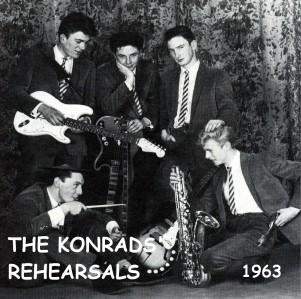
The Konrads occupy a fundamental place in the early history of David Bowie. When the teenage David Jones joined the group in 1962, he was still years away from adopting the Bowie name and developing the musical identity that would eventually make him famous.
The Konrads gave Jones something essential: sustained experience as a working musician. He played tenor saxophone, sang, rehearsed intensively and performed at local venues around south-east London and Kent.
The group also took him into recording studios. During 1963, two versions of I Never Dreamed documented different stages of Jones’ development: an early demo on which he sang lead, followed later by a professional Decca audition at which Roger Ferris took the lead vocal and Jones supplied backing harmonies.
- Band: The Konrads
- David Jones joined: 1962
- David Jones left: 1963
- Base: Bromley and south-east London
- Bowie’s role: Tenor saxophone, vocals
- Stage name used: Dave Jay
- Important recording: I Never Dreamed
- Decca audition: 29 August 1963
- Historical significance: David Jones‘ first serious experience in a working band
Before The Konrads
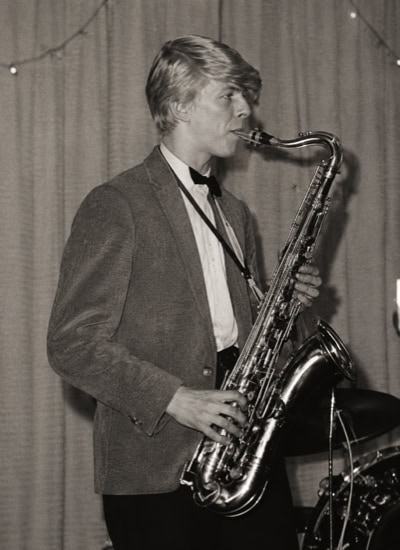
David Jones‘ fascination with music had begun well before The Konrads. As a schoolboy he listened closely to American rock and roll and jazz and developed a particular fascination with the saxophone.
His friendship with George Underwood was central to these early musical years. The two shared records, musical ambitions and an enthusiasm for performers whose music seemed far removed from conventional British popular entertainment.
Jones was therefore not beginning from nothing when he entered The Konrads. What changed was the scale of his involvement. The group gave him a regular musical environment in which rehearsals, performances and ambition became increasingly serious.
Formation of The Konrads
The origins of The Konrads pre-date David Jones‘ membership. The group developed around young musicians in the Bromley area, with drummer Dave Crook and guitarist Neville Wills among its earliest members.
George Underwood joined as a singer and subsequently brought his friend David Jones into the group. Jones joined in June 1962, playing tenor saxophone and also contributing vocals.
At this stage The Konrads were still a relatively small group. Their music reflected the sounds surrounding British teenagers in the early 1960s, including rock and roll, pop and instrumental music.
The early line-up
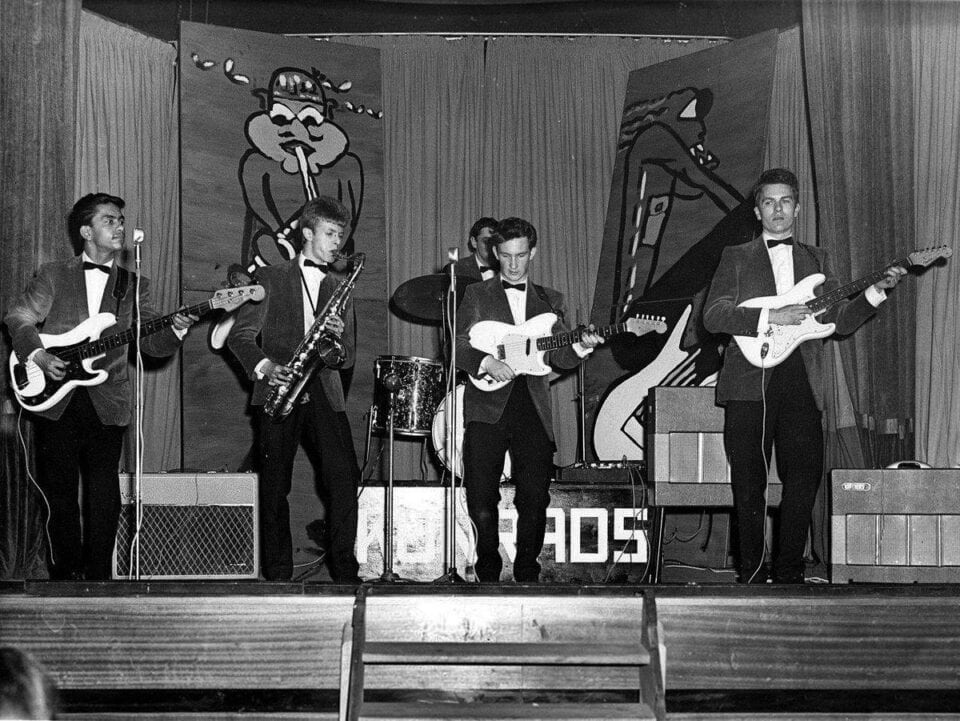
The best-documented early line-up around the time Jones joined included:
David Jones – tenor saxophone, vocals
George Underwood – lead vocals
Neville Wills – lead guitar
Dave Crook – drums
Membership changed as the group developed, something entirely typical of young local bands at the time.
Jones was not yet the dominant figure. He was one young musician among several, learning how to function within a group while becoming increasingly ambitious about what music might offer him.
16 June 1962 – Bromley Technical High School
One of the earliest documented appearances by David Jones with The Konrads took place at a Bromley Technical High School PTA fête in June 1962.
The performance is generally dated to 16 June 1962. A contemporary report in the Kentish Times described thousands of people attending the fête and referred to a group of young instrumentalists called “The Conrads” playing guitars, saxophone and drums.
The report is valuable because it provides contemporary evidence of Jones performing publicly with a saxophone at the beginning of his period with the group.
Learning on the local circuit
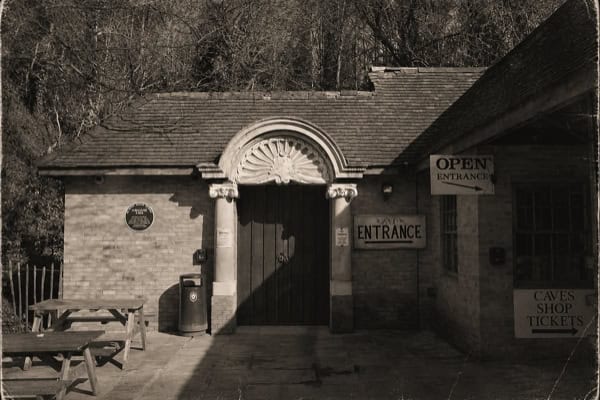
The Konrads‘ world was built around local performance rather than record-company glamour.
They rehearsed and performed at halls, youth venues, pubs, dances and private functions around Bromley and the surrounding area.
Among the venues associated with The Konrads was Chislehurst Caves in Kent, an unusual underground location that became well known for hosting live music during the 1960s.
These appearances gave Jones practical experience. He learned how songs worked before an audience, how musicians interacted on stage and how a group developed an identity beyond the rehearsal room.
The Konrads expand
By late 1962 the group was changing substantially.
Dave Hadfield replaced Dave Crook on drums. Older than most of the teenage musicians around him, Hadfield assumed an important organisational role and became the group’s drummer and manager.
The Konrads developed into a considerably larger ensemble. Musicians associated with this expanded period included:
David Jones – tenor saxophone, vocals
Neville Wills – lead guitar
Alan Dodds – rhythm guitar
Rocky Shahan – bass guitar
Dave Hadfield – drums
Roger Ferris – vocals
Christine Patton – vocals
Stella Patton – vocals
Membership was fluid, and not every musician necessarily appeared at every engagement. The expanded group nevertheless offered Jones a very different experience from the small line-up he had originally joined.
David Jones becomes Dave Jay
Even at this early stage, Jones was experimenting with how he presented himself.
During his time with The Konrads he used the name Dave Jay, a name associated with his admiration for Peter Jay and the Jaywalkers.
The name was short-lived, but in retrospect it is intriguing. Years before David Jones became David Bowie, he was already experimenting with a performing identity that differed from his birth name.
A changing musical repertoire
The Konrads performed a broad selection of material rather than pursuing the rhythm-and-blues identity Jones would increasingly favour.
Their repertoire drew from rock and roll, contemporary pop, dance music and instrumentals. This variety made sense for a working local band expected to entertain different audiences.
Jones’ own interests, however, were moving increasingly towards American rhythm and blues and towards the possibility of creating original material.
Writing and recording original material
By 1963 The Konrads were attempting to move beyond simply performing other people’s songs.
Members of the group experimented with original material as they searched for a way into the professional music business. The most historically important surviving example is I Never Dreamed.
The history of the song is particularly interesting because two different 1963 recordings are known, with David Jones taking a different vocal role on each.
The first I Never Dreamed demo
The Konrads – I Never Dreamed, early 1963 demo featuring David Jones on lead vocal
Earlier in 1963, The Konrads recorded a demonstration session at RG Jones Studios in Morden, south London.
Drummer and manager Dave Hadfield later recalled that the session was arranged after the group was asked to prepare a demo. The musicians planned to record instrumental material together with an original song.
Hadfield selected I Never Dreamed as the strongest song available and chose David Jones to sing the lead vocal.
This early version is historically significant because it preserves the sixteen-year-old Jones as a lead singer before his first commercial release.
The recording remained virtually unknown for decades. Hadfield later rediscovered the tape among material he had stored away, bringing an extraordinary document of Jones’ teenage musical career back to public attention.
Rediscovery of the 1963 demo
Omega Auctions presents the rediscovered 1963 Konrads demo featuring David Jones on lead vocal, 2018
The rediscovered tape attracted international attention in 2018.
Hadfield had kept the recording together with photographs, documents and other material relating to The Konrads. Its survival made it possible to hear a very different version of I Never Dreamed from the later Decca recording.
The tape was subsequently offered at auction and sold for £39,360, reflecting its importance as one of the earliest surviving studio recordings of David Jones as a singer.
29 August 1963 – the Decca audition
Later that year, on 29 August 1963, The Konrads entered Decca Studios in West Hampstead for a professional audition.
Once again the group recorded I Never Dreamed, but the vocal arrangement had changed.
This time Roger Ferris sang the lead vocal, while David Jones contributed backing harmonies.
The distinction between the two recordings is important: the earlier RG Jones demo preserves Jones as lead singer, while the later Decca audition documents him as part of the vocal ensemble.
Decca declined to sign The Konrads. Other professional interest surrounding the group also failed to produce the breakthrough its members hoped for.
I Never Dreamed and its historical importance
Neither version of I Never Dreamed resulted in a commercial record at the time.
Their significance lies instead in documenting David Jones at sixteen, actively attempting to move from local performance into the professional recording industry.
The recordings also demonstrate that his position within The Konrads was not fixed. On one version he was selected to sing lead; on the Decca recording Roger Ferris occupied that role while Jones supplied harmonies.
Bowie history is often viewed backwards through the fame that followed. These recordings belong to a period when there was no guarantee that David Jones would become a professional recording artist at all.
Growing dissatisfaction
During 1963 Jones was becoming increasingly dissatisfied with his position in The Konrads.
His musical interests were moving towards rhythm and blues, while his ambitions extended beyond the mixture of material required of a working local band.
He wanted professional management, records and a route into the wider music industry. The failure to secure a deal therefore encouraged him to search for another musical setting rather than abandon those ambitions.
Leaving The Konrads
By the end of 1963, Jones’ time with The Konrads had come to an end. Sources differ over the precise point at which he effectively left the group, although documented concert chronologies place him at Konrads performances through the closing months of the year.
His departure reflected a growing difference in musical ambition. Jones wanted to pursue rhythm and blues more seriously and was increasingly determined to find professional management and a recording career.
The Konrads continued without him. This distinction is important: the band’s history extends beyond David Jones‘ membership, and recordings made by The Konrads after his departure should not automatically be regarded as Bowie recordings.
Jones continued searching for a musical setting closer to his developing interests. His next steps included short-lived rhythm-and-blues ventures before he formed The King Bees with George Underwood in 1964.
From The Konrads to The King Bees
Leaving The Konrads did not take Jones directly into The King Bees. During 1963 he also performed briefly with his old friend George Underwood and drummer Viv Andrews in a small rhythm-and-blues trio known as The Hooker Brothers and, for some engagements, Dave’s Reds and Blues.
The trio was short-lived, but its name reflected Jones’ growing fascination with American blues: The Hooker Brothers were named in tribute to bluesman John Lee Hooker.
The Konrads had already given Jones the practical foundations of working in a band: rehearsing, performing before audiences and entering recording studios. The Hooker Brothers brought him closer to the blues and rhythm-and-blues music that increasingly interested him.
In 1964, Jones and Underwood became part of The King Bees. With Jones now more clearly established as lead vocalist and saxophonist, the group gave him something The Konrads had not achieved: his first commercially released record, Liza Jane.
There was a remarkable coincidence when Davie Jones and The King Bees appeared on Ready Steady Go! in June 1964: John Lee Hooker, the blues musician who had inspired the name of Jones’ previous Hooker Brothers trio, also appeared on the programme.
Why The Konrads matter
The Konrads did not make David Jones famous, and they did not release a commercial record featuring him. Their importance lies instead in the experience they gave him during a crucial formative period.
Within the group, Jones learned the realities of regular rehearsal and live performance, developed as a saxophonist and singer, experimented with original material and experienced both the excitement and disappointment of trying to attract the attention of the record industry.
The period also reveals qualities that would remain visible throughout his career: ambition, restlessness and a determination to move on when his musical interests began to outgrow his surroundings.
Even his brief use of the name Dave Jay offers an early glimpse of a young performer experimenting with identity, years before David Jones adopted the name David Bowie.
Most importantly, The Konrads show him before success made his career appear inevitable: a teenager from Bromley playing saxophone, performing local engagements, making his first studio recordings and searching for a way into the professional music business.
The extraordinary career came later. The Konrads were one of the places where David Jones began learning how to build it.
Article origin
This article was researched and compiled for the David Bowie Collaborations & Creative Circle Archive at DavidBowieWorld.com, documenting David Jones‘ formative period with The Konrads and the earliest stages of his development as a working musician.
© DavidBowieWorld.com — David Bowie Collaborations & Creative Circle Archive.
Chronology
1962
1963
🏛️ R.G. Jones Studios
🎧 Event: First Studio Session
🎤 Artist: The Konrads
🗒️ Notes: The Konrads record the demo ‘I Never Dreamed’. Roger Ferris sings lead, with David Jones on harmony vocals. The tape was rediscovered in 2018.
🏛️ Hillsiders Youth Club, W.I. Hall
🎤 Artist: The Konrads
🗒️ Notes: One of the final documented gigs featuring David Jones.
