
Pete De Somogyl – Bass Guitar with Arnold Corns
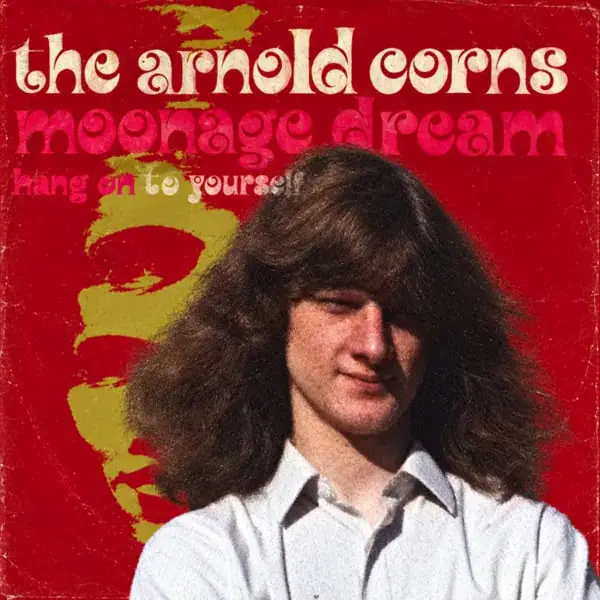
Pete De Somogyl played bass guitar on recordings made by Arnold Corns, David Bowie’s short-lived project of 1971. His contribution can be heard on the early versions of Moonage Daydream and Hang On to Yourself, recorded before Bowie remade both songs for The Rise and Fall of Ziggy Stardust and the Spiders from Mars.
De Somogyl came from Rungk, the group that also included guitarist Mark Pritchett and drummer Tim Broadbent. Their involvement gave the first Arnold Corns recordings a musical line-up distinct from the Spiders from Mars. Bowie supplied the songs and sang the lead vocals, while designer Freddie Burretti was presented as the project’s prospective frontman under the name Rudi Valentino.
- Name used on this page: Pete De Somogyl
- Also documented as: Peter De Somogyl
- Date of birth: Not reliably established
- Place of birth: Not reliably established
- Current life status: Not independently verified
- Instrument: Bass guitar
- Earlier group: Rungk
- Bowie connection: Arnold Corns, 1971
- Principal documented recordings: Moonage Daydream and Hang On to Yourself, Arnold Corns versions
- Original single: Moonage Daydream / Hang On to Yourself, B&C, 1971
- Later archival context: Five Years (1969–1973) and Rock ’n’ Roll Star!
Early life and the limits of the surviving biography
Pete De Somogyl’s documented musical history is considerably clearer than his personal biography. A reliable birth date, birthplace and account of his childhood or musical education have not been established for this article.
Rungk: the group before Arnold Corns
Before the Arnold Corns recordings, De Somogyl played bass in Rungk, a group associated with Dulwich College. Guitarist Mark Pritchett and drummer Tim Broadbent were the other musicians from this group who became involved in the project with Bowie.
Mark Pritchett and the Beckenham connection
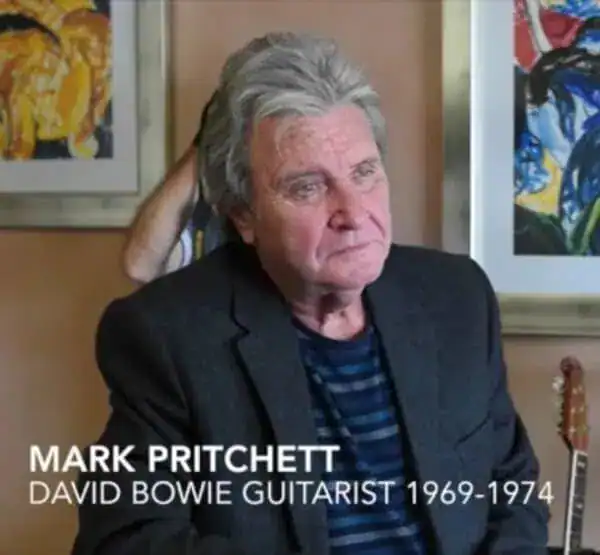
Mark Pritchett’s relationship with Bowie developed through the Beckenham Arts Lab environment. In his published recollections, Pritchett described encountering an invitation to a meeting at the Three Tuns while on his way to rehearse with Rungk. He remembered that meeting as the beginning of his acquaintance with Bowie.
Pritchett also recalled becoming friendly with Bowie through playing guitars and sharing equipment. His account describes the informal local relationships surrounding the later recordings. It provides a participant’s perspective on the group’s route into Bowie’s circle, although it does not establish a separate date for De Somogyl’s own first meeting with him.
Mark Pritchett on becoming friends with Bowie
“And over the next year we just got matey really and he learnt more about my life”
— Mark Pritchett, recollection included in Tris Penna’s Rock ’n’ Roll Star! notes and reproduced by DavidBowie.com, 13 June 2024. Excerpt.
Arnold Corns: songs, identity and presentation
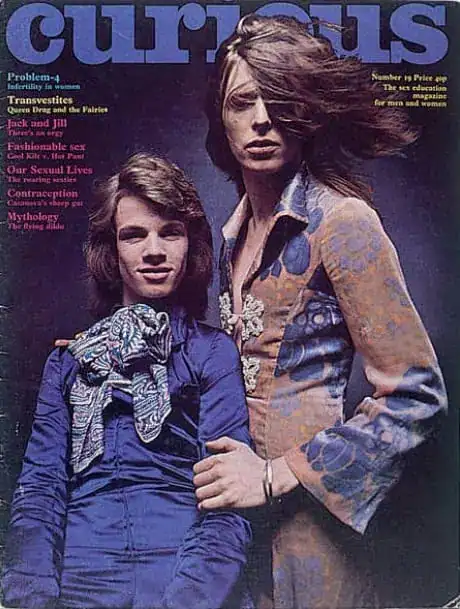
Arnold Corns brought together a recording project and an experiment in presentation. Bowie was writing new material while also developing ideas about performers, characters and the relationship between a singer’s public identity and the music released under that identity.
The project was associated publicly with Freddie Burretti, a designer who would become an important figure in Bowie’s stage clothing. Burretti was presented as Rudi Valentino. On the original Moonage Daydream and Hang On to Yourself recordings, however, the lead voice is Bowie’s.
Recording with Bowie in 1971
The principal musicians associated with the first Arnold Corns single were David Bowie on vocals and guitar, Mark Pritchett on guitar, Pete De Somogyl on bass and Tim Broadbent on drums. Pritchett also appears in accounts of this period under the name Mark Carr-Pritchard.
The early Arnold Corns recordings were made during the first part of 1971, before the familiar Ziggy Stardust album versions. Their history is associated with Radio Luxembourg Studios in London and Bowie’s publisher Bob Grace.
The two songs selected for the single were Moonage Daydream and Hang On to Yourself. They document a stage of Bowie’s work between the release of The Man Who Sold the World and the emergence of the Ziggy Stardust album.
Moonage Daydream: the original Arnold Corns recording
Arnold Corns – Moonage Daydream (1971). Original recording featuring Pete De Somogyl on bass.
Moonage Daydream was the A-side of the first Arnold Corns single. Bowie wrote the song and sang the lead vocal, with De Somogyl playing bass in the accompanying group.
The original single offers a different arrangement from the later album recording. Its historical interest lies in hearing the composition in an earlier setting, before the guitar and rhythm-section performances familiar from the Ziggy Stardust version.
Hang On to Yourself: the original B-side
Arnold Corns – Hang On to Yourself (1971). Original recording featuring Pete De Somogyl on bass.
Hang On to Yourself appeared on the other side of the same single. Its recording likewise features De Somogyl on bass, Broadbent on drums, Pritchett on guitar and Bowie on vocals and guitar.
The title also appears as Hang Onto Yourself in the song’s release history. Both spellings refer to the same composition.
The subsequent album remake was faster and more forceful. Comparing it with the original B-side reveals changes in pace and arrangement as Bowie developed the song beyond its first released form.
The 1971 single on B&C
Moonage Daydream / Hang On to Yourself was released in Britain on B&C in May 1971, under the Arnold Corns name. The catalogue number was CB 149.
The single did not establish Arnold Corns as a commercially successful group. Its later importance came from the subsequent history of the songs and their connection with Bowie’s development towards Ziggy Stardust.
A Dutch Philips issue presented the A-side as Moonage Dream. Its picture sleeve forms part of the visual history of the release, while the British issue and its label remain central reference points for identifying the original coupling.
Later Arnold Corns recordings and changing line-ups
The Arnold Corns name was also associated with Looking for a Friend and Man in the Middle. These later recordings involved musicians from Bowie’s changing circle, including the players associated with the emerging Spiders from Mars.
In 1972, Hang On to Yourself was issued as an A-side with Man in the Middle on the reverse. That pairing brought recordings from the project’s history together in a new release context; it did not establish a new De Somogyl recording session in 1972.
The songs move into Ziggy Stardust
Bowie subsequently recorded Moonage Daydream and Hang On to Yourself again for The Rise and Fall of Ziggy Stardust and the Spiders from Mars, released in 1972. Trevor Bolder played bass on those album recordings.
Arnold Corns remains relevant to the album’s background without being an alternative name for an unchanged Spiders line-up. The development involved new performances and a different rhythm section, as well as Bowie’s increasingly focused presentation of the Ziggy Stardust character.
Archival releases and the return of Arnold Corns
The Arnold Corns recordings have remained accessible through later Bowie reissues and archival collections. The 2015 Five Years (1969–1973) collection included the two original single recordings on Re:Call 1.
In 2024, Rock ’n’ Roll Star! placed them within a broader account of the creation of Ziggy Stardust. Its first disc included the Arnold Corns versions of Moonage Daydream and Hang On to Yourself, together with a rough mix of Looking for a Friend.
Later career and the surviving record
The documented account becomes much less detailed after the early Arnold Corns recordings. Further bands, recording projects and a subsequent professional biography have not been reliably established for Pete De Somogyl.
Pete De Somogyl in Bowie’s collaborative universe
Pete De Somogyl belongs to the history of Bowie’s early-1970s collaborators through a small but identifiable body of recorded work. His bass playing documents the Rungk musicians’ involvement in Arnold Corns and the first released versions of two future Ziggy Stardust songs.
The value of those performances extends beyond the success of the single itself. They preserve an early stage in the development of Bowie’s repertoire and identify the musicians who helped give those songs their first released form.
Official Website & Further Information
No personal official website or social-media account has been reliably identified for Pete De Somogyl. Accounts and biographies belonging to people with similar names are not presented as his official channels.
For the wider project, visit the Arnold Corns page on DavidBowieWorld.com.
First-Hand Contributions
This page includes a published first-hand recollection by Mark Pritchett, guitarist in Rungk and Arnold Corns. His account provides context for his own relationship with Bowie and is not presented as a statement by Pete De Somogyl.
No direct interview, correspondence or personal contribution from De Somogyl has been used. No independently verified quotation from him has been identified for this version.
Article Origin
This article has been researched and written for DavidBowieWorld.com as part of its David Bowie Collaborations & Creative Circle Archive. It focuses on Pete De Somogyl’s documented work with Arnold Corns, the original single recordings and their subsequent archival release history.
© DavidBowieWorld.com — David Bowie Collaborations & Creative Circle Archive.
