
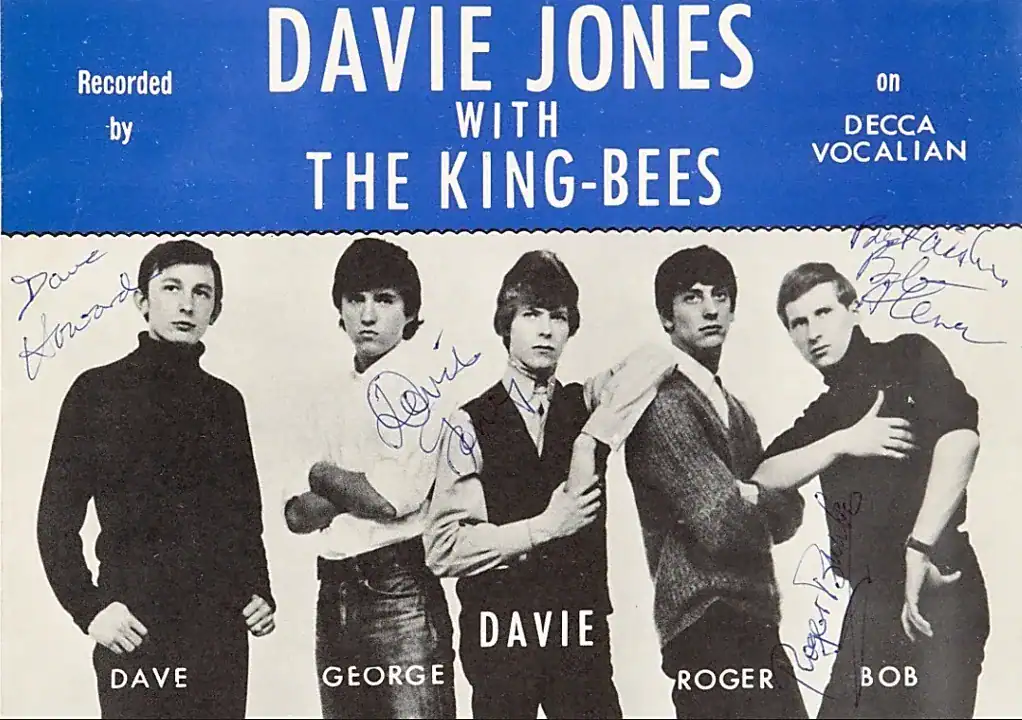
Francis “Dave” Howard was the bassist of The King Bees, the rhythm and blues group that provided David Bowie’s first commercially released recording. At the time Bowie was still performing under the name Davie Jones and was only beginning the long journey that would eventually transform him into one of the most influential and innovative artists in modern music.
Although Howard never achieved the fame later associated with Bowie, his place in music history is secure. He was a member of the band that recorded and promoted Liza Jane, the first official single ever released by Bowie. As a result, Howard occupies a unique position within Bowie’s story: he was present at the exact moment Bowie entered the public record as a recording artist.
Very little verified biographical information survives about Howard himself. Unlike several later Bowie collaborators, he remained largely outside the spotlight and did not become a public figure. Nevertheless, his contribution remains historically significant because he participated in one of the most important recordings in the entire Bowie catalogue — not because of its musical impact, but because it marked the beginning of everything that followed.
- Known as: Dave Howard (sometimes Francis Howard)
- Role: Bass guitar
- Band: The King Bees
- With Bowie: 1964
- Recording debut: Liza Jane
- Historic importance: Member of Bowie’s first recording band
Where Dave Howard Fits In Bowie’s Story
Dave Howard belongs to the earliest chapter of David Bowie’s professional career. In 1964 Bowie was still known publicly as Davie Jones, years before he adopted the name David Bowie and long before the creation of Ziggy Stardust, Aladdin Sane, the Thin White Duke or any of the personas that would later make him famous.
At the time Bowie was an ambitious teenager attempting to establish himself within London’s rapidly growing rhythm and blues scene. The British Invasion was beginning to transform popular music, and young musicians throughout the country were forming bands inspired by American blues, rock and soul records.
Bowie had recently left The Kon-rads, the first group in which he had gained practical experience as a performer. Frustrated by what he considered a lack of ambition among some of his bandmates, he sought a new opportunity that could move him closer to becoming a professional musician.
That opportunity arrived in the form of The King Bees. The band would become the launching pad for Bowie’s first professional recording and, consequently, the place where Dave Howard entered Bowie history.
The King Bees
The King Bees were a London rhythm and blues group operating during the height of the British R&B boom. Like many bands of the era, they drew inspiration from American artists such as Muddy Waters, Howlin’ Wolf, Bo Diddley, Chuck Berry and Jimmy Reed.
Their sound reflected the musical environment that had already produced groups such as The Rolling Stones, The Yardbirds, The Animals and countless smaller club bands performing in London and throughout Britain.
Dave Howard became the group’s bassist, providing the low-end foundation that supported both the band’s live performances and their future recording sessions. Although The King Bees would only exist for a relatively short period, they occupied an important place within Bowie’s development because they offered him his first genuine opportunity to break into the music business.
While Bowie would later become associated with experimentation, art rock, soul, electronic music and theatrical performance, The King Bees represented something much simpler: a hard-working young rhythm and blues band trying to make a name for itself in a highly competitive scene.
Playing Alongside Davie Jones
During his time with The King Bees, Bowie was still performing under his birth name, Davie Jones. He sang lead vocals, played alto saxophone and increasingly emerged as the most ambitious member of the group.
Howard therefore belonged to a small circle of musicians who witnessed Bowie before fame, before major record deals and before any of the mythology that would later surround his career.
This period captures Bowie at a fascinating stage of development. He was learning how professional bands functioned, how managers operated, how bookings were arranged, how records were made and how publicity worked.
Every later success can ultimately be traced back to experiences gained during these formative years. Dave Howard and the rest of The King Bees were therefore participants in Bowie’s musical apprenticeship.
The King Bees Line-Up
The most widely documented King Bees line-up consisted of:
Davie Jones – vocals, alto saxophone
George Underwood – rhythm guitar, harmonica, backing vocals
Roger Bluck – lead guitar
Francis “Dave” Howard – bass guitar
Bob Allen – drums
In some historical references the bassist is identified as Francis Howard, while others refer to him simply as Dave Howard. Both names refer to the same musician.
Together, these five musicians formed the line-up responsible for Bowie’s first commercial recording.
The Leslie Conn Period
An important figure in the King Bees story was manager and promoter Leslie Conn. Conn became involved after Bowie attempted to attract attention from businessman John Bloom and eventually secured professional representation through contacts connected to Bloom’s organisation.
Conn recognised Bowie’s determination and quickly began promoting both Bowie and The King Bees. For the first time, Bowie was operating within a professional framework that included management, recording opportunities, publicity campaigns and commercial ambitions.
Howard and the rest of The King Bees therefore became part of Bowie’s first serious attempt to establish himself as a professional recording artist rather than simply a local musician playing club dates.
Recording “Liza Jane”
The most important event of Dave Howard’s documented career came in the spring of 1964 when The King Bees entered Decca Studios at 165 Broadhurst Gardens, West Hampstead, London.
The session represented a major step forward for the group. For the first time, Bowie and his bandmates were working in a professional recording environment rather than rehearsing in local halls or performing in small clubs.
The recording session took place during May 1964 and reportedly lasted approximately seven hours. Under the supervision of manager and producer Leslie Conn, the band recorded two songs that would become Bowie’s first commercial release.
For Dave Howard, the session placed him at the exact point where Bowie’s recording career began. While none of the musicians could have predicted Bowie’s future success, they were creating a record that would eventually become one of the most historically significant debut recordings in popular music history.
“Liza Jane”
The A-side chosen for release was “Liza Jane”, an arrangement of the traditional American folk song Li’l Liza Jane.
The recording reflected the rhythm and blues influences that dominated the British club scene in 1964. Bowie’s energetic lead vocal was supported by a straightforward band arrangement built around guitar, drums and Howard’s bass playing.
Although the composition itself was based on a traditional song, manager Leslie Conn controversially received the songwriting credit on the single.
Musically, the record bears little resemblance to the innovative work Bowie would later create. Nevertheless, it remains enormously important because it documents the first officially released recording of Bowie’s voice.
“Louie, Louie Go Home”
The B-side of the single was “Louie, Louie Go Home”, originally recorded by Paul Revere and the Raiders.
The choice reflected the group’s enthusiasm for contemporary American rhythm and blues and rock and roll. Like many British bands of the era, The King Bees built much of their repertoire around imported American material.
Together, “Liza Jane” and “Louie, Louie Go Home” provide a valuable snapshot of Bowie’s earliest professional musical environment and preserve Dave Howard’s contribution within Bowie’s first official recording project.
Bowie’s First Commercial Single
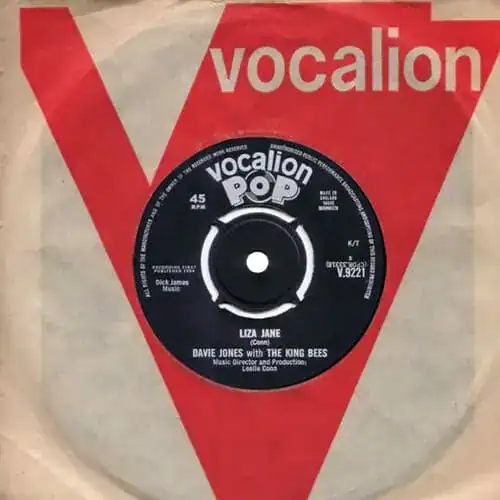
Released on 5 June 1964 by Vocalion Pop, a subsidiary of Decca Records, the single “Liza Jane”, backed with “Louie, Louie Go Home”, appeared under the name:
Davie Jones with The King Bees
Although the single failed to enter the UK charts, its historical importance cannot be overstated. It marked the beginning of Bowie’s recording career and provided the first commercially released recording of Bowie’s voice.
Years later Bowie would jokingly refer to Liza Jane as a rather primitive recording, but he also recognised its significance as the starting point of everything that followed.
Today the record is regarded less as a major artistic statement and more as a historical milestone. Collectors and Bowie historians consider it one of the most important artefacts from Bowie’s earliest years.
For Dave Howard, it remains the recording through which his name became permanently connected to Bowie history.
Promotion and Media Exposure
Leslie Conn mounted an energetic promotional campaign around the release of the single. For a brief period, The King Bees received considerably more attention than many comparable London rhythm and blues groups.
Music publications including NME, Record Mirror and Record Retailer carried positive notices and reviews of the record.
The single also received airplay on Radio Luxembourg, one of the most influential radio outlets available to British pop acts at the time.
Although none of this exposure translated into commercial success, it provided valuable experience for Bowie and his bandmates and demonstrated how professional record promotion operated during the 1960s.
Television Appearances and Early Publicity
During the promotional campaign, Bowie and The King Bees became associated with some of Bowie’s earliest television exposure.
Programmes connected with the promotion of the single included appearances and activities linked to shows such as Juke Box Jury, Ready! Steady! Go! and The Beat Room.
These opportunities exposed Bowie and the band to a wider audience than they could have reached through club performances alone.
For Dave Howard, these appearances formed part of a brief but historically significant period during which The King Bees stood at the forefront of Bowie’s earliest professional ambitions.
The End of The King Bees
Despite the effort invested in promoting Liza Jane, the single failed to generate significant sales. Although the record received some positive press coverage and radio exposure, it was unable to break through commercially in the highly competitive British music market of 1964.
The King Bees continued performing for a short time after the release, but the lack of commercial momentum quickly became apparent. Bowie was already looking beyond the group and searching for new opportunities that might bring greater success.
As would happen repeatedly throughout his early career, Bowie refused to remain tied to a project that he felt had reached its limits. His determination to move forward became one of the defining characteristics of his career.
For Dave Howard and the rest of the band, the end of The King Bees marked the conclusion of a brief but important chapter in British rhythm and blues history.
The Move to The Manish Boys
Shortly after the release of Liza Jane, Bowie left The King Bees and joined The Manish Boys, another London-based rhythm and blues outfit.
The move reflected Bowie’s growing ambition. He wanted to work with stronger musicians, secure better opportunities and continue developing his identity as a performer and songwriter.
The Manish Boys would soon record I Pity The Fool, continuing Bowie’s progression through the British R&B scene. Although that record also failed to chart, it represented another step forward in his musical development.
Dave Howard’s documented association with Bowie effectively ends with The King Bees period. Unlike George Underwood, who remained a lifelong friend of Bowie, Howard disappeared from the public Bowie narrative after 1964.
Why Dave Howard Still Matters
Francis “Dave” Howard was never a celebrity and never became one of Bowie’s long-term collaborators. Nevertheless, his place in Bowie history remains secure because of timing.
Every major career has a beginning. Howard happened to be one of the musicians standing beside Bowie at the moment that beginning entered the public record.
While later collaborators would help create albums such as Hunky Dory, Ziggy Stardust, Young Americans, Low or Blackstar, Howard belongs to a different category of collaborator altogether: the musicians who helped Bowie take his very first professional steps.
Without those early experiences, later achievements would not have been possible. The King Bees provided Bowie with lessons in recording, promotion, management and professionalism that he carried forward throughout his career.
Legacy
Today, The King Bees occupy a unique place in Bowie history. Their musical legacy may consist of only a single release, but that release marks the starting point of one of the most extraordinary careers in popular music.
What once seemed like an obscure rhythm and blues record has become a valuable historical document. Collectors and historians continue to study the single because it captures Bowie at the very beginning of his professional journey.
Dave Howard’s bass playing is permanently preserved on that recording. As a result, his contribution remains part of Bowie’s recorded legacy.
While much about Howard’s life remains unknown, his role in Bowie’s story is clear. He was a member of the band that introduced Bowie to the world as a recording artist.
Francis (Dave) Howard in Bowie’s Collaborative Universe
Francis “Dave” Howard belongs to the earliest generation of Bowie collaborators. He was present before the fame, before the reinventions, before the hit records and before the mythology.
He represents Bowie’s apprenticeship years: the small clubs, the rhythm and blues circuit, the first management contracts, the first studio sessions and the first attempts to build a professional career.
Within Bowie’s vast collaborative universe, Dave Howard occupies a modest but historically important position. He was there at the beginning.
Davie Jones With The King Bees – Liza Jane (1964)
Chronology
The complete King Bees chronology should be placed here, including recording sessions, BBC appearances, television appearances, live performances and release dates collected for the project.
These events document the earliest phase of Bowie’s professional career and provide important historical context for Dave Howard’s involvement in the group.
