

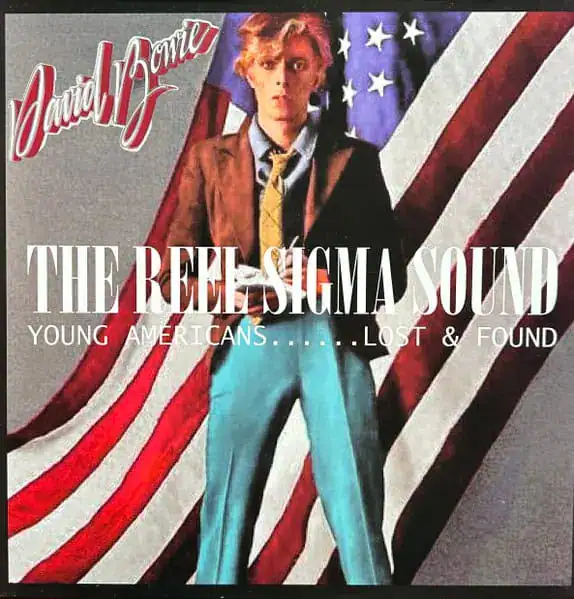
David Bowie The Reel Sigma Sound (Young Americans ...... Lost & Found) – SQ 9.
Label: Not On Label (David Bowie) – none
Audio Source: Studio recordings and acetate-sourced material
Lineage: Unknown
Total running time: Unknown
Sound Quality: Excellent quality! Equals record or radio.
Artwork: Yes
Recorded at: Sigma Sound Studios, Philadelphia (principal recording location; individual sources vary)
Note 1: Black vinyl, LP, Unofficial Release
David Bowie The Reel Sigma Sound (Young Americans ...... Lost & Found)
Sound Quality Rating
David Bowie – The Reel Sigma Sound (Young Americans ...... Lost & Found) is an unofficial vinyl compilation devoted to rare recordings from the period surrounding David Bowie's Young Americans album. Its nine tracks bring together early studio takes, previously unreleased compositions, recordings associated with Ava Cherry and an alternative mix of one of Bowie's most remarkable soul ballads.
The collection concentrates on Bowie's transformation during 1974, when he moved away from the theatrical rock of Diamond Dogs and immersed himself in American soul music. At the centre of this change were Philadelphia's Sigma Sound Studios, a new group of musicians and a series of recordings that reveal how the songs developed before reaching their familiar released versions.
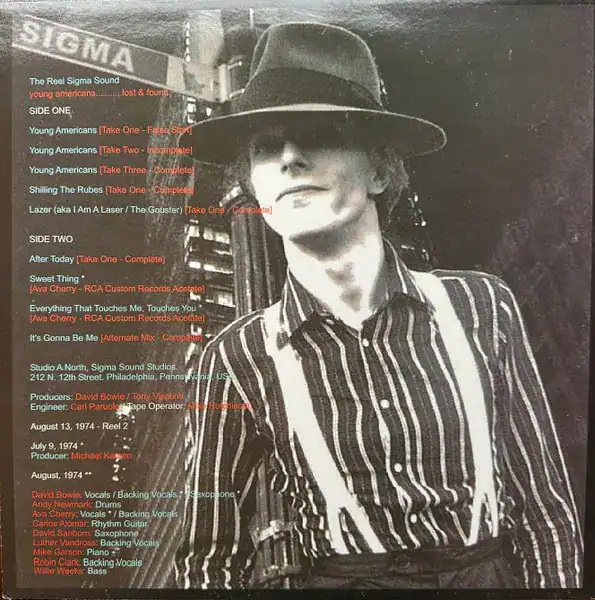
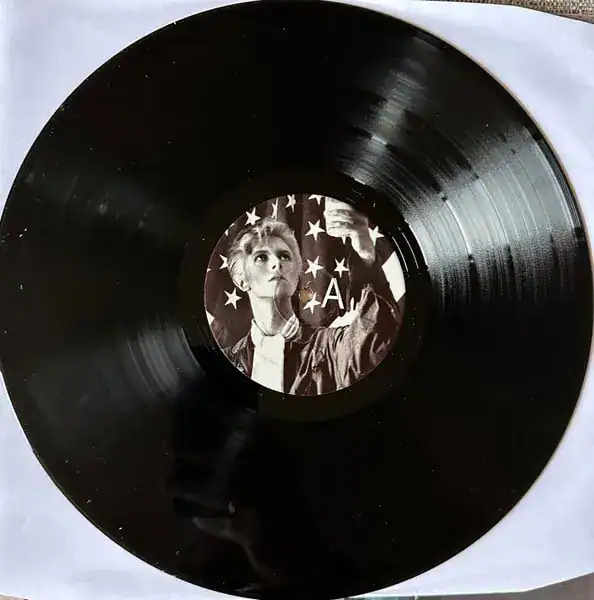
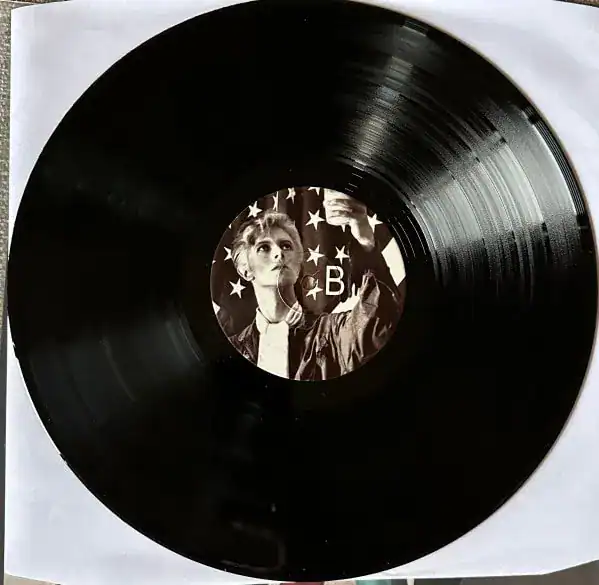
Tracklisting
Side A
A1. Young Americans (Take One – False Start)
A2. Young Americans (Take Two – Incomplete)
A3. Young Americans (Take Three – Complete)
A4. Shilling The Rubes (Take One – Complete)
A5. Lazer (Aka I Am A Laser / The Gouster) (Take One – Complete)
Side B
B1. After Today (Take One – Complete)
B2. Ava Cherry – Sweet Thing (RCA Custom Records Acetate)
B3. Ava Cherry – Everything That Touches You, Touches Me (RCA Custom Records Acetate)
B4. It's Gonna Be Me (Alternate Mix – Complete)
From Diamond Dogs to Young Americans
During 1974, David Bowie was undergoing one of the most dramatic musical changes of his career. The futuristic theatrical world of Diamond Dogs was gradually giving way to a fascination with American rhythm and blues, gospel harmonies and the sophisticated soul music being produced in Philadelphia.
The transformation was already visible during the Diamond Dogs Tour. As the concerts progressed, Bowie began introducing new arrangements, additional singers and a more rhythmically driven approach to his music. His interest in American soul was no longer simply an influence on individual songs; it was becoming the foundation of an entirely new recording project.
The resulting album, Young Americans, would be released in March 1975. Its development, however, began months earlier, when Bowie assembled musicians in Philadelphia to explore material that was still changing from one performance to the next.
Sigma Sound Studios – The Philadelphia Connection
Founded by recording engineer Joe Tarsia in 1968, Sigma Sound Studios became one of the principal recording centres of the Philadelphia soul movement. The studio was closely associated with the polished arrangements and distinctive rhythmic sound developed by producers and musicians working around Philadelphia International Records.
Artists associated with the city's recording scene helped establish a sound built around expressive lead vocals, carefully arranged backing harmonies, prominent bass lines and sophisticated orchestration. Bowie was attracted to this musical environment as he searched for a direction beyond glam rock.
In August 1974, Bowie began recording at Sigma Sound with producer Tony Visconti. Rather than simply reproducing the methods of his earlier British sessions, he worked with musicians experienced in American soul and funk, allowing their playing to influence the arrangements as the songs took shape.
The studio became the setting for much of the material that would form Young Americans. The surviving rehearsal tapes and alternative takes are especially valuable because they preserve the recording process before the songs were refined, overdubbed and mixed for commercial release.
The August 1974 Recording Sessions
The earliest documented Sigma sessions included recordings made on 13 and 14 August 1974. The surviving reel documentation identifies several songs that would become central to the album, alongside compositions that remained unreleased or were subsequently developed under different titles.
One reel dated 13 August contains early versions of Young Americans, Shilling The Rubes, Lazer and After Today. Other reels from the same period include work on John, I'm Only Dancing (Again), Can You Hear Me and It's Gonna Be Me.
These recordings reveal a working band exploring arrangements rather than merely performing finished compositions. False starts, incomplete takes and studio discussions provide evidence of how Bowie and the musicians developed the material together.
Young Americans – Three Stages of a Song
Side A begins with three successive takes of Young Americans, providing an unusually direct view of the development of the album's title track. The sequence moves from an initial false start through an incomplete performance to a take identified on this release as complete.
The first two takes are important because they preserve the process of establishing the arrangement. Instead of presenting the song as a finished recording, they document musicians finding their way through its structure, rhythmic accents and transitions.
The third take offers a more sustained performance. Although the underlying composition is recognisable, the early arrangement differs from the familiar 1975 single, demonstrating how much the recording could change during subsequent sessions and production work.
The Musical Evolution of Young Americans
The finished Young Americans became one of Bowie's defining recordings of the mid-1970s. Its combination of driving rhythm, prominent saxophone, gospel-influenced backing vocals and rapidly delivered lyrics established a musical identity far removed from the sound of the Spiders from Mars.
The early Sigma performances show the foundations of that arrangement before its final details were established. They also demonstrate the importance of recording with a band capable of responding immediately to changes in tempo, phrasing and musical direction.
For listeners familiar with the released single, the appeal of these takes lies in their differences. They make it possible to hear a celebrated composition as a developing piece of music rather than as the fixed recording that later became part of Bowie's catalogue.
Shilling The Rubes – A Long-Lost Composition
Shilling The Rubes is one of the most intriguing titles associated with the Young Americans sessions. For many years, its exact identity remained uncertain, and some accounts treated it as a possible working title rather than a separate recorded composition.
The discovery of a Sigma Sound reel dated 13 August 1974 provided important evidence that Shilling The Rubes existed as a recording in its own right. Its appearance alongside early takes of Young Americans, Lazer and After Today placed the song directly within the first phase of the Philadelphia sessions.
The version included on The Reel Sigma Sound is identified as Take One – Complete. Its significance lies not only in its rarity but also in the fact that it documents a composition that did not become part of the commercially released Young Americans album.
The song illustrates how much material Bowie was exploring during this period. The final album represented a selection from a wider body of work, including experiments and compositions that took very different paths.
Lazer – From the Astronettes to The Gouster
The fifth track, Lazer, has a history extending beyond the Philadelphia recording sessions. The composition is connected with I Am A Laser, a song associated with the recordings Bowie produced for Ava Cherry and the Astronettes during the preceding period.
Its appearance on the Sigma reel demonstrates Bowie's willingness to revisit existing material while developing his new soul-oriented sound. Rather than treating earlier compositions as finished or abandoned, he could return to them and explore how they might work with different musicians and arrangements.
The name The Gouster is also associated with Bowie's abandoned working concept for the album that eventually became Young Americans. It is important, however, to distinguish the song Lazer from the wider album project: they are related through the recording period and its terminology, but they are not interchangeable titles for the same thing.
The version presented here is identified as Take One – Complete, making it another important document of the music Bowie was considering during the early Sigma sessions.
After Today – An Unreleased Direction
Side B opens with After Today, another composition developed during the Philadelphia sessions. The song is particularly interesting because surviving recordings reveal different approaches to its arrangement and performance.
Bowie experimented with a vocal style that drew strongly on American soul, including the use of falsetto. The song also gave the musicians considerable rhythmic freedom, demonstrating the influence of the American players involved in the sessions.
Although After Today was not included on the original Young Americans album, a version was eventually released on the Sound + Vision box set in 1989. That later appearance helped establish the song as an important part of the surviving material from the period.
The take on The Reel Sigma Sound is identified as the first complete take. It provides another opportunity to examine the experimental nature of the sessions before decisions were made about which recordings would appear on the finished album.
Ava Cherry – An Important Creative Connection
Ava Cherry was an important figure in Bowie's personal and musical life during the early 1970s. Their association developed during the period in which Bowie was becoming increasingly interested in American music, and she subsequently participated in the vocal arrangements surrounding his transition towards soul.
Cherry was also associated with the Astronettes project, for which Bowie produced recordings that remained largely unreleased at the time. Those sessions provide valuable context for the two Ava Cherry tracks included on Side B of this compilation.
Her involvement in the broader musical circle surrounding Bowie connects the Philadelphia sessions with earlier experiments in soul, rhythm and blues and vocal harmony. The inclusion of her acetate recordings therefore expands the historical scope of this album beyond Bowie's own studio takes.
Sweet Thing – The Ava Cherry Acetate
The second track on Side B is credited to Ava Cherry and identified as a recording sourced from an RCA Custom Records acetate. The song title, Sweet Thing, is immediately familiar to Bowie listeners because of its association with the Diamond Dogs album.
The acetate designation is important. Acetates were commonly used for reference listening, demonstration or evaluation before a recording received a conventional commercial release. They could preserve performances or mixes that were never subsequently issued in that form.
Cherry's recording provides a different perspective on material associated with Bowie during this transitional period. Its inclusion also illustrates how the boundaries between Bowie's own recordings and projects involving musicians in his circle could overlap.
Everything That Touches You, Touches Me
The following track, Everything That Touches You, Touches Me, is another Ava Cherry recording identified as originating from an RCA Custom Records acetate.
Unlike the familiar compositions on the original Young Americans album, this recording belongs to the less widely documented material associated with Cherry and Bowie's musical circle. Its appearance on the compilation is therefore of particular interest to collectors researching the recordings made around this period.
The inclusion of both acetate tracks makes Side B more than a straightforward continuation of the Sigma Sound session reel. It places Bowie's studio work alongside related recordings and demonstrates the broader range of material circulating among collectors.
It's Gonna Be Me – The Alternate Mix
The final track is an alternative mix of It's Gonna Be Me, one of the most significant songs recorded during the Young Americans sessions but omitted from the original 1975 album.
The composition reveals Bowie's growing interest in the emotional intensity and vocal expression of American soul music. Its arrangement and vocal performance belong firmly to the musical direction he was pursuing in Philadelphia.
It's Gonna Be Me later became available through expanded editions of Young Americans, allowing listeners to appreciate a composition that had remained outside the original album sequence.
The alternate mix included here provides another view of the recording. Differences between mixes can reveal changes in instrumental balance, vocal presentation and production decisions, all of which are important when examining how a studio performance developed.
The Musicians Behind the Sigma Sound
The Philadelphia recordings brought together a remarkable group of musicians whose experience in soul, funk and jazz contributed directly to Bowie's new sound.
David Bowie – Lead vocals, guitar and other instruments
Carlos Alomar – Guitar
Mike Garson – Piano and keyboards
David Sanborn – Saxophone
Willie Weeks – Bass guitar
Andy Newmark – Drums
Larry Washington – Percussion
Robin Clark – Backing vocals
Ava Cherry – Backing vocals
Luther Vandross – Backing vocals
Tony Visconti – Producer
These credits describe key participants in the wider Philadelphia recording project; they should not be interpreted as confirmation that every musician appears on every track of this particular unofficial LP.
The contribution of the backing singers was especially important. Their harmonies helped create the gospel-influenced vocal sound that distinguished the finished album from Bowie's earlier recordings.
Equally significant was the relationship between the rhythm section and the lead instruments. The musicians brought a level of flexibility and rhythmic sophistication that allowed Bowie to explore arrangements very different from those of his previous touring and recording groups.
Tony Visconti and the Recording Process
Producer Tony Visconti played a central role in translating Bowie's new musical direction into studio recordings. Having already worked with Bowie during earlier phases of his career, Visconti was familiar with his willingness to change styles and experiment with unfamiliar arrangements.
At Sigma Sound, the emphasis was on recording musicians performing together and developing songs through repeated takes. This approach preserved the interaction between the players and helped establish the spontaneous rhythmic character of the sessions.
The early reels are particularly revealing because they contain performances from before the final production decisions were made. They document the musical process itself, including incomplete takes and arrangements that could change substantially during subsequent recording.
The finished Young Americans album would also involve later recording and mixing work, including sessions in New York. The original Sigma material therefore represents a crucial stage in a project that continued to evolve after Bowie left Philadelphia.
The Rediscovery of the Sigma Sound Reels
The history of the early Sigma recordings became especially interesting in 2009, when a reel associated with Bowie's August 1974 sessions reportedly appeared for sale in Philadelphia.
The tape was identified with recordings made on 13 August and included early performances of Young Americans, Shilling The Rubes, Lazer and After Today. The discovery attracted attention because it appeared to preserve material that had not been widely available to collectors.
Reports at the time described the reel being offered for sale and short samples of several tracks circulating publicly. The surviving documentation was important because it provided further evidence of compositions and takes that had previously been known primarily through recording-session research.
The precise history of the reel before its reported appearance remains uncertain. Nevertheless, its existence contributed to renewed interest in the surviving Sigma Sound recordings and the possibility that further material from the sessions could eventually be studied.
The Drexel University Sigma Sound Archive
A substantial part of the historical Sigma Sound recording archive became associated with Drexel University in Philadelphia. The archive preserves recordings and documentation connected with the studio's long history, including material from Bowie's 1974 sessions.
Researchers who have examined the surviving tapes have described performances that differ considerably from the familiar released versions. In some cases, the arrangements were still developing, while the musicians were learning the material and Bowie was experimenting with his vocal delivery.
The distinction between archive recordings and unofficial vinyl releases is important. The presence of material in an institutional archive does not mean that the recordings have received an authorised commercial release, nor does it establish the precise source of every version circulating among collectors.
For Bowie historians, however, the archive provides an important opportunity to study the development of Young Americans through surviving recordings rather than relying entirely on recollections and later accounts.
The Gouster and the Album That Changed
Before Young Americans reached its final form, Bowie considered a different album configuration associated with the title The Gouster. The project represented an earlier stage in the development of his American soul recordings.
The eventual album underwent important changes as additional material was recorded and decisions were made about the final selection of songs. Recordings such as It's Gonna Be Me and Who Can I Be Now? illustrate how substantial compositions could be excluded from the commercially released LP.
An official presentation of The Gouster was eventually included in the Who Can I Be Now? (1974–1976) box set in 2016. That release gave listeners an opportunity to explore an earlier version of the album project within Bowie's officially documented recording history.
The Reel Sigma Sound approaches the same creative period from a different direction, concentrating on studio takes and related recordings rather than presenting an alternative album sequence.
About The Reel Sigma Sound (Young Americans ...... Lost & Found)
The Reel Sigma Sound (Young Americans ...... Lost & Found) is an unofficial black-vinyl LP issued without a named record label. Its nine tracks combine early Sigma Sound recordings, two Ava Cherry acetate selections and an alternative mix of It's Gonna Be Me.
The album's principal attraction is its concentration on the creative process behind Young Americans. The opening sequence of three takes of the title song is followed by rare material including Shilling The Rubes and Lazer, both of which illuminate the wider body of compositions Bowie was exploring in August 1974.
The two Ava Cherry tracks broaden the collection's perspective, connecting the Philadelphia sessions with related recordings from Bowie's musical circle. The closing alternative mix of It's Gonna Be Me then returns the listener to one of the most substantial compositions omitted from the original album.
Although the release is unofficial and its complete source history has not been independently established, the recordings represented on the LP are closely connected with an exceptionally important moment in Bowie's career. They document the transition from the theatrical rock of the early 1970s to the soul-influenced musical direction that would define Young Americans.
For collectors and researchers, The Reel Sigma Sound offers a fascinating companion to the official album. Its value lies in the opportunity to hear compositions in development, examine rare surviving performances and explore the wider recording history behind one of David Bowie's most significant stylistic transformations.
