
Gene Vincent – Rockabilly Pioneer and a Major Influence on David Bowie
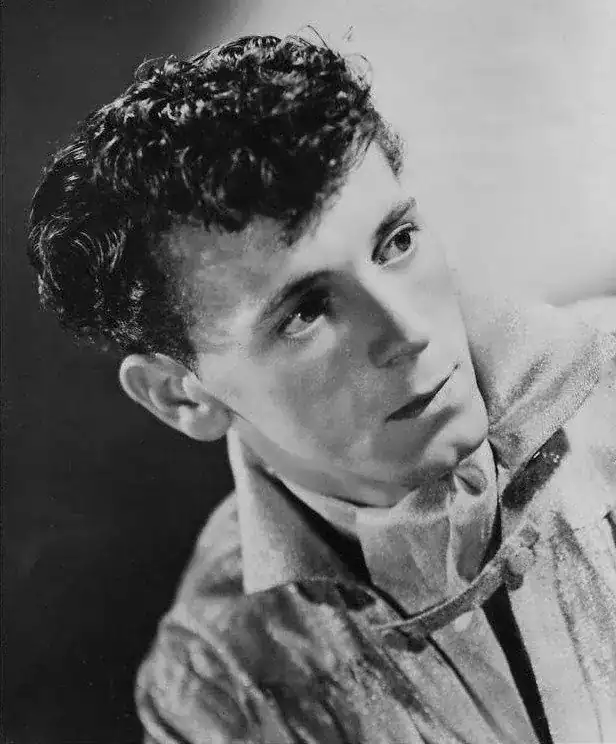
Photograph: Wikimedia Commons (publicly licensed). Editorial use.
Gene Vincent was one of the most influential figures of the original rock and roll era. Although he and David Bowie worked together only briefly, Vincent’s impact on Bowie’s artistic development was profound. His explosive stage presence, distinctive appearance and emotionally charged performances helped inspire elements of the Ziggy Stardust character that would transform Bowie’s career in the early 1970s.
Best known for the rockabilly classic Be-Bop-A-Lula, Vincent became one of the defining voices of 1950s American rock and roll. His combination of vulnerability, danger and theatrical performance left a lasting impression on countless musicians, including David Bowie, who openly acknowledged Vincent as one of the artists who shaped his own stage persona.
While Gene Vincent should not be regarded as a traditional Bowie collaborator, he occupies an important place within Bowie’s wider creative universe. Their meeting in Los Angeles during Bowie’s first visit to the United States in 1971 came at a pivotal moment, just as Bowie was developing the ideas that would soon become The Rise and Fall of Ziggy Stardust and the Spiders from Mars.
- Full name: Vincent Eugene Craddock
- Born: 11 February 1935, Norfolk, Virginia, USA
- Died: 12 October 1971, Newhall, California, USA
- Profession: Singer, songwriter and rockabilly pioneer
- Best known for: Be-Bop-A-Lula and Gene Vincent & The Blue Caps
- David Bowie connection: Major musical influence and personal meeting during Bowie’s first American visit in 1971
Early Life
Gene Vincent was born Vincent Eugene Craddock on 11 February 1935 in Norfolk, Virginia. Raised in a working-class family, he developed an early love for both country music and rhythm and blues, influences that would later combine to create the energetic rockabilly sound for which he became famous.
At the age of seventeen Vincent enlisted in the United States Navy. Military service appeared to offer stability and a promising future, but his life changed dramatically in 1955 when he was involved in a serious motorcycle accident. The crash shattered his left leg, leaving him with permanent injuries that required a metal brace and caused chronic pain for the rest of his life.
Doctors even considered amputating the damaged leg, but Vincent refused. Although he recovered sufficiently to walk, the injury permanently affected his mobility. Ironically, the distinctive stance he developed on stage because of his damaged leg would later become one of the visual characteristics that inspired David Bowie during the creation of Ziggy Stardust.
The Birth of a Rock and Roll Star
While recovering from his injuries, Vincent devoted himself to music. During this period he wrote songs, refined his vocal style and began performing with a group of talented young musicians who became known as The Blue Caps. Their exceptional guitarist, Cliff Gallup, helped create one of the most distinctive guitar sounds of the 1950s.
In 1956 Gene Vincent signed with Capitol Records and recorded Be-Bop-A-Lula, a song that rapidly became one of the defining recordings of early rock and roll. The single sold millions of copies, reached the American and British charts and established Vincent as one of the leading figures of the new musical movement alongside Elvis Presley, Little Richard, Chuck Berry and Jerry Lee Lewis.
Unlike many of his contemporaries, Vincent projected a darker, more dangerous image. Dressed in black leather and moving carefully across the stage because of his injured leg, he appeared simultaneously vulnerable and intimidating. This combination of physical limitation and theatrical confidence fascinated audiences and would later make a lasting impression on David Bowie.
“This rock stance became position number one for the embryonic Ziggy.”
David Bowie’s First Visit to America
On 27 January 1971 David Bowie travelled to the United States for the first time, embarking on a promotional tour for The Man Who Sold the World. Although the album had attracted positive reviews, Bowie was still largely unknown in America. The trip nevertheless proved to be one of the most important journeys of his career, exposing him to new music, new ideas and a rapidly changing cultural landscape that would profoundly influence his future work.
During his travels Bowie visited Washington D.C., New York, Chicago, San Francisco and Los Angeles. He immersed himself in American popular culture, met record executives and musicians, discovered new artists and filled notebooks with ideas that would eventually evolve into the characters and songs of the Ziggy Stardust period.
Los Angeles proved especially significant. Through Mercury Records producer Tom Ayers, Bowie was introduced to several musicians whose work he had admired for years, among them one of his rock and roll heroes, Gene Vincent.
Meeting Gene Vincent
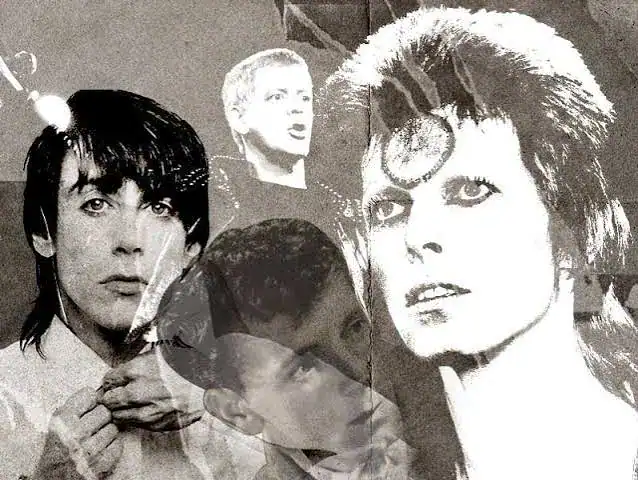
Although their meeting was relatively brief, it left a lasting impression on Bowie. Gene Vincent had long been one of his musical heroes, admired not only for his pioneering rockabilly recordings but also for the dramatic way he overcame the physical limitations caused by his injured leg.
Accounts differ regarding exactly what happened during Bowie’s Los Angeles recording sessions in February 1971. Several sources state that Vincent attended an early demo session for Hang On to Yourself, while others suggest he simply visited the studio without participating in the recording. No definitive evidence confirms that Gene Vincent actually performed on the session, and the extent of his direct involvement remains uncertain.
What is well documented, however, is that Bowie and Vincent met during this period and that Bowie greatly admired him. Only a few months later, as Bowie developed the Ziggy Stardust stage character, elements of Vincent’s appearance and stage movement became part of Ziggy’s visual identity.
David Bowie on Gene Vincent
“It meant that to crouch at the mike, as was his habit, he had to shove his injured leg out behind him to what I thought was great theatrical effect.”
— David Bowie
Hang On to Yourself and the Gene Vincent Connection
The first known demo of Hang On to Yourself was recorded in Los Angeles during Bowie’s American visit in February 1971. Although the song would later become one of the defining tracks on The Rise and Fall of Ziggy Stardust and the Spiders from Mars, its earliest version was little more than a rough framework, containing the basic riff, chorus and central lyrical ideas.
The circumstances surrounding this recording have become part of Bowie folklore because of Gene Vincent‘s reported presence. While some writers have suggested that Vincent joined Bowie during the session, others believe he was simply visiting the studio. No surviving session documentation confirms his participation as a performer, and historians generally treat the story with caution.
Regardless of whether Vincent actually appeared on the recording, the timing is significant. Bowie had finally met one of his musical heroes at precisely the moment he was beginning to shape the musical and visual ideas that would soon become Ziggy Stardust.
When Hang On to Yourself was later re-recorded with the Spiders from Mars, it evolved into one of Bowie’s most explosive rock and roll performances. The finished version combined American rockabilly energy with British glam rock, reflecting many of the influences Bowie had absorbed during his first journey across the United States.
The Beginning of Ziggy Stardust
Gene Vincent‘s influence on David Bowie extended beyond music alone. Bowie admired Vincent’s ability to transform a physical disability into an unforgettable stage presence. Rather than attempting to hide his injured leg, Vincent incorporated it into his performance style, creating dramatic poses that audiences immediately recognised.
Bowie later acknowledged borrowing one of these characteristic poses for Ziggy Stardust. Vincent’s habit of crouching at the microphone while extending his injured leg behind him became one of the earliest visual elements adopted by Bowie as he developed Ziggy during 1971 and 1972. It demonstrated Bowie’s remarkable ability to absorb inspiration from earlier performers while transforming it into something entirely original.
Gene Vincent‘s Last Year
By 1971 Gene Vincent‘s health had deteriorated significantly. Years of chronic pain resulting from his motorcycle accident, combined with heavy alcohol consumption and the lasting emotional impact of losing his close friend Eddie Cochran in 1960, had taken a severe toll on both his physical and mental wellbeing.
Although he continued to perform and record, Vincent struggled with recurring health problems. His powerful voice remained instantly recognisable, but the energetic young rockabilly star who had captivated audiences during the 1950s was now a man battling constant pain while still trying to entertain his devoted fans.
On 12 October 1971, only a few months after David Bowie’s visit to Los Angeles and several weeks before Bowie began recording much of The Rise and Fall of Ziggy Stardust and the Spiders from Mars, Gene Vincent died in Newhall, California, at the age of just thirty-six. His death marked the end of one of rock and roll’s most influential careers.
Gene Vincent‘s Legacy in David Bowie’s Music
Although David Bowie drew inspiration from an extraordinary range of artists, Gene Vincent occupied a unique place among his early influences. Bowie admired Vincent not simply as a pioneering rock and roll singer but as a performer who transformed personal adversity into unforgettable theatre.
The influence extended beyond the famous Ziggy stance. Vincent’s intense stage presence, black leather image, emotional vocal delivery and uncompromising attitude all helped shape Bowie’s understanding of what a rock performer could become. Rather than merely singing songs, Vincent created a complete character on stage—an approach Bowie would later elevate into one of the defining features of his own career.
Bowie rarely copied his heroes directly. Instead, he absorbed ideas from many different sources and transformed them into something entirely new. Gene Vincent‘s influence became one element within the broader artistic language that eventually produced Ziggy Stardust—a character that also drew inspiration from Japanese theatre, science fiction, fashion, mime, avant-garde art and numerous other musical influences.
For Bowie, Gene Vincent represented the emotional honesty and raw excitement of early rock and roll. Those qualities remained embedded in Bowie’s performances throughout his career, even as his music evolved far beyond traditional rockabilly.
David Bowie on Gene Vincent
“This rock stance became position number one for the embryonic Ziggy.”
— David Bowie
Rockabilly Lives On
Gene Vincent‘s influence extended far beyond the 1950s. His recordings inspired generations of musicians including The Beatles, The Rolling Stones, Led Zeppelin, Status Quo, Robert Gordon, Matchbox, Stray Cats and countless rockabilly revival artists. His partnership with guitarist Cliff Gallup also helped redefine the possibilities of lead guitar in rock music, influencing players for decades to come.
David Bowie remained one of many artists who openly acknowledged Vincent’s importance. Rather than simply admiring Gene Vincent‘s records, Bowie recognised how Vincent combined vulnerability, physical presence and theatrical performance into something that transcended traditional rock and roll. That lesson remained with Bowie throughout his career.
Place within Bowie’s Creative Universe
Gene Vincent occupies a distinctive position within David Bowie’s creative universe. He was not a long-term collaborator, producer or band member, but one of the pioneering artists whose work helped shape Bowie’s understanding of performance itself. Their meeting in Los Angeles during 1971 linked two generations of rock music at a moment when Bowie was preparing to reinvent himself as Ziggy Stardust.
Although the documented collaboration between the two men was brief, Vincent’s artistic influence proved lasting. Bowie transformed inspiration into innovation, taking elements of Gene Vincent‘s stagecraft and incorporating them into a completely original theatrical vision that would become one of the defining images of twentieth-century popular music.
Essential Gene Vincent Albums
Although Gene Vincent recorded throughout the 1950s, 1960s and early 1970s, several albums stand out as particularly important in understanding his influence on the development of rock and roll and, ultimately, on artists such as David Bowie.
Gene Vincent and the Blue Caps (1957) expanded upon the success of his debut and featured many of the performances that secured his reputation as one of the most exciting figures of early rock and roll.

Gene Vincent Rocks! And the Blue Caps Roll (1958) demonstrated the continuing musical chemistry between Vincent and the Blue Caps, showcasing the powerful guitar work, Cliff Gallup’s influential guitar playing and the energetic performances that became hallmarks of Vincent’s recordings.
Although his later albums explored different musical directions, these early recordings remain the foundation of Gene Vincent‘s enduring reputation. They also represent the body of work that most influenced future generations of rock musicians, including David Bowie, whose admiration for Vincent’s music and stage presence can be traced directly to this formative period of rock and roll.
Legacy
Gene Vincent‘s influence extends far beyond the commercial success of Be-Bop-A-Lula. Together with artists such as Elvis Presley, Little Richard, Jerry Lee Lewis, Buddy Holly and Chuck Berry, he helped establish the foundations upon which modern rock music was built. His emotionally charged performances, unmistakable voice and dramatic stage presence inspired countless musicians across several generations.
David Bowie frequently drew inspiration from artists who challenged convention, and Gene Vincent was one of the earliest performers to demonstrate that rock and roll could be theatrical, emotional and visually distinctive. Rather than simply entertaining an audience, Vincent created an unforgettable stage personality that left a lasting impression on the young Bowie.
Although their documented connection was brief, Gene Vincent‘s artistic legacy lived on through Bowie’s own work. Elements of Vincent’s stagecraft became part of Ziggy Stardust, while his fearless commitment to performance echoed throughout Bowie’s career as he continually reinvented himself for new audiences.
David Bowie on Gene Vincent
“This rock stance became position number one for the embryonic Ziggy.”
— David Bowie
Place within David Bowie’s Creative Universe
Gene Vincent occupies a unique place within David Bowie’s creative universe. While not a long-term collaborator in the traditional sense, he was one of the pioneering rock and roll artists whose music, image and stagecraft helped shape Bowie’s artistic imagination during the formative years of his career.
Bowie’s admiration for Vincent was based not only on his music but also on his remarkable ability to transform personal hardship into compelling performance. Vincent’s famous stage stance, developed as a result of his leg injury, became one of the visual building blocks from which Bowie created Ziggy Stardust. It remains one of the clearest examples of Bowie absorbing inspiration from an earlier artist and transforming it into something entirely original.
Today Gene Vincent is remembered as one of rock and roll’s true pioneers. His influence can be heard not only in the music of David Bowie but also in generations of performers who followed, ensuring that his contribution to popular music continues to be celebrated long after his untimely death.
Article Origin
This article has been researched and written for DavidBowieWorld.com as part of the site’s ongoing series documenting the musicians, artists and creative figures who influenced David Bowie throughout his life and career. It is based on documented historical research and contemporary accounts, presenting Gene Vincent‘s place within Bowie’s creative development with an emphasis on historical accuracy and context.
