
The Famous Bowie Eyepatch – Toppop 1974
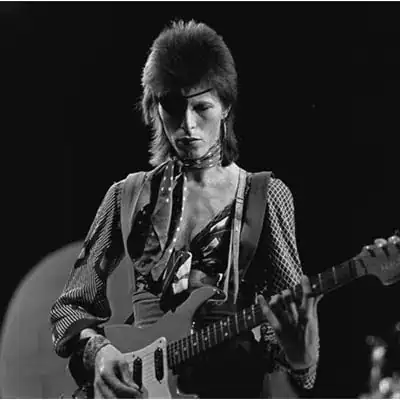
Photo: David Bowie World archive / editorial use
David Bowie’s famous eyepatch appearance during his Dutch television visit in 1974 became one of the most memorable visual moments of his mid-1970s career. Over time the striking image became part of Bowie mythology, although many people misunderstood the real story behind it.
Connected to Bowie’s appearances on Dutch television programmes including Toppop, the eyepatch period combined theatrical presentation, practical necessity and the mysterious visual identity that had already made Bowie one of the most recognisable artists of the era.
- Main subject: Bowie’s eyepatch appearance
- Location: Netherlands
- Period: 1974
- Connected programme: Toppop
- Historical theme: Bowie myths and visual identity
The image that became Bowie mythology
Among the countless visual transformations associated with David Bowie, one image has remained particularly striking: Bowie wearing a black eyepatch during his 1974 visit to the Netherlands. The photographs and television appearances from that period created an instantly recognisable image that many fans later connected to the already legendary appearance of Bowie’s eyes.
For years people assumed the eyepatch had something to do with the famous difference in Bowie’s pupils, a feature that had already become part of his public identity. In reality, the eyepatch story belonged to an entirely different incident.
The earlier eye injury
Long before Ziggy Stardust, Aladdin Sane and Diamond Dogs, Bowie had suffered an injury during his school years after a fight with his friend George Underwood. The incident left one of Bowie’s pupils permanently dilated, creating the illusion that he had two different coloured eyes.
In truth, Bowie’s eyes were the same colour, but the permanently enlarged pupil reacted differently to light. Over time this became one of the most famous visual characteristics in rock history and contributed enormously to Bowie’s mysterious appearance on stage and in photographs.
A very different problem in 1974
In February 1974, Bowie was in the Netherlands to record a Toppop video and to receive an Edison award. During preparations, Bowie had an eye infection that Toppop makeup artist Arjen van der Grijn couldn’t conceal. Van der Grijn suggested that Bowie wear an eyepatch he still had from his work on the Dutch TV series Kunt U Mij De Weg Naar Hamelen Vertellen, Mijnheer? Bowie loved the idea immediately and performed “Rebel Rebel” on Toppop wearing the eyepatch. Two days later, at the Grand Gala du Disque, he wore it again. The images spread worldwide, and the eyepatch became one of the most iconic — and brief — style moments of Bowie’s career. Although he rarely wore it afterwards, the look became legendary and even appears on T-shirts today..
The result was unexpectedly powerful. The black eyepatch gave Bowie yet another unforgettable visual identity during one of the most theatrical periods of his career. Combined with the sharply styled hair, dramatic clothing and increasingly elegant presentation of the Diamond Dogs era, the look immediately attracted attention.
Bowie in the Netherlands
By 1974 Bowie was already a major international figure. The Ziggy Stardust years had transformed him from cult performer into one of the most talked-about artists in popular music. Every television appearance, interview and public appearance generated excitement.
Dutch audiences were especially fascinated by Bowie’s changing personas and theatrical presentation. His appearances connected to Dutch television, including Toppop, became part of Bowie history in the Netherlands and remain widely remembered by fans decades later.
The Toppop connection
The Dutch music programme Toppop occupied a special place in European pop culture during the 1970s. International stars regularly appeared on the programme, but Bowie always stood apart because he treated television not merely as promotion, but as performance art.
Even a practical problem such as an inflamed eye became transformed into visual theatre. The eyepatch was not presented dramatically at the time, yet photographs from the visit quickly spread and became part of Bowie iconography.
The role of image in Bowie’s career
Bowie understood better than almost any artist of his era that imagery could become inseparable from music. Hairstyles, makeup, costumes, gestures and even accidental moments often evolved into cultural symbols. The eyepatch period lasted only briefly, but the image itself endured for decades.
Part of Bowie’s power came from his ability to absorb unexpected situations and turn them into something memorable. What might have been an awkward inconvenience for another performer became another visually unforgettable Bowie moment.
Myths and misunderstandings
Over time the story surrounding the eyepatch became mixed together with the earlier George Underwood eye injury. Many later retellings incorrectly suggested the eyepatch was connected to Bowie’s permanently enlarged pupil, even though the two incidents were entirely separate.
The confusion itself became part of Bowie mythology. Because his appearance was already so unusual and theatrical, audiences naturally connected different visual stories into a single legend surrounding Bowie’s eyes.
A brief moment that became iconic
The actual eyepatch period was relatively short, yet the surviving photographs remain among the most memorable Bowie images from the mid-1970s. They captured a moment when Bowie was evolving beyond Ziggy Stardust into a more sophisticated and elegant stage presence, while still maintaining the mystery and unpredictability that defined his career.
For Dutch fans especially, the Toppop appearances and related television moments became lasting memories of Bowie’s connection with the Netherlands during one of the most visually creative phases of his life.
Editor’s note
This page was created from material already preserved on David Bowie World concerning Bowie’s famous 1974 eyepatch appearances in the Netherlands. The story is included in Biography → Events & Stories → Eyewitness Stories because it represents a historical Bowie moment that later developed into part of the wider mythology surrounding his appearance and career.
The page also clarifies the important distinction between Bowie’s permanent pupil condition, caused by the earlier George Underwood incident, and the temporary inflamed eye that resulted in the eyepatch during his Dutch appearances in 1974.
Historical context
During 1974 Bowie was transitioning artistically between the theatrical glam-rock years and the darker, more sophisticated direction that would eventually lead toward Young Americans and the later Berlin period. Even brief visual moments from this era became deeply embedded in Bowie history.
