
Goldie – Drum & Bass Pioneer and David Bowie Collaborator
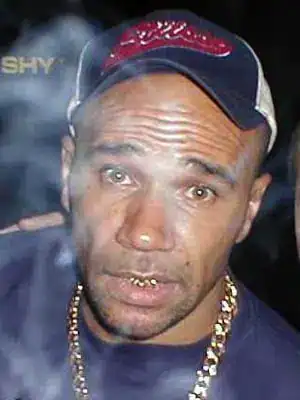
Photo: Alkivar / Wikimedia Commons / CC0 1.0 (editorial use)
Goldie (born Clifford Joseph Price MBE, 19 September 1965) is one of the most influential figures in the history of British electronic music. As a pioneering producer, DJ, visual artist and actor, he helped transform drum & bass from an underground movement into an internationally recognised musical genre during the 1990s.
For David Bowie, Goldie represented far more than a successful contemporary musician. Bowie recognised him as one of the most innovative creative voices of his generation, embracing the radical energy of drum & bass at a time when many established rock artists ignored or misunderstood the movement. Their mutual admiration led to a genuine creative partnership that included the recording of “Truth” for Goldie‘s landmark album Saturnz Return, appearances together in the film Everybody Loves Sunshine, and a friendship built on artistic curiosity and mutual respect.
- Full name: Clifford Joseph Price MBE
- Born: 19 September 1965, Walsall, Staffordshire, England
- Profession: Producer, composer, DJ, visual artist and actor
- David Bowie connection: Collaborator, creative contemporary and friend during Bowie’s Earthling era
- Major collaborations: “Truth” (1998), Everybody Loves Sunshine (1999)
- Associated Bowie period: Earthling, 1996–1999
Where Goldie fits in David Bowie’s story
During the mid-1990s David Bowie once again immersed himself in the newest developments in contemporary music. Rather than looking backwards, he became fascinated by the rapidly evolving British drum & bass scene, recognising in it the same spirit of innovation that had driven punk, krautrock and electronic music during earlier stages of his own career.
No artist represented that movement more completely than Goldie. Through his groundbreaking recordings, his Metalheadz label and the legendary Sunday sessions at London’s Blue Note club, Goldie became one of the defining figures of drum & bass. Bowie admired both his musical vision and his refusal to compromise artistically, seeing in Goldie a fellow creative explorer who constantly pushed beyond established boundaries.
Their relationship quickly developed beyond mutual admiration. Bowie became a regular visitor to the Metalheadz scene, collaborated with Goldie on one of the most ambitious recordings of the decade, appeared alongside him in a feature film and remained a strong supporter of Goldie’s work. Although their collaboration lasted only a few years, it represents one of the most fascinating encounters between two artists from very different musical worlds who shared the same determination to keep moving forwards.
Early Life
Clifford Joseph Price was born on 19 September 1965 in Walsall, Staffordshire, England. His father, Clement Price, had emigrated from Jamaica, while his mother, Margaret, was originally from Scotland and performed as a singer in clubs and pubs throughout the West Midlands. Goldie‘s early childhood was marked by instability. At the age of three he entered foster care, spending much of his youth moving between foster families, children’s homes and local authority institutions.
Although those experiences were often difficult, they exposed him to an extraordinary variety of music. Living alongside children with different cultural backgrounds meant hearing reggae, soul, jazz, electronic music, new wave and punk from an early age. Goldie would later describe those years as chaotic but creatively formative, helping shape the wide musical vocabulary that would become one of his greatest strengths.
His artistic abilities also emerged at a young age. Before music became his primary focus, Goldie developed an exceptional talent for drawing and painting. That creativity eventually led him into the rapidly growing world of graffiti art, where he became recognised as one of Britain’s most gifted young urban artists during the early 1980s.
Graffiti, Hip-Hop and New York
Goldie‘s reputation as a graffiti artist quickly spread beyond the Midlands. His work attracted the attention of filmmaker Dick Fontaine, whose landmark documentary Bombin’ explored the emerging graffiti culture in Britain and the United States. Through the project, Goldie travelled to New York, where he experienced American hip-hop culture at first hand and met pioneering artists including Afrika Bambaataa.
The visit proved life-changing. New York exposed Goldie to an environment in which music, visual art, fashion and street culture existed as a single creative movement. Graffiti writers, DJs, breakdancers and rappers all influenced one another, and Goldie absorbed those ideas with remarkable enthusiasm.
After spending time in both New York and Miami, where he earned money selling customised gold dental grills that later became part of his own unmistakable image, Goldie returned to Britain carrying a completely new artistic outlook. Rather than seeing music, painting and performance as separate disciplines, he viewed them as different expressions of the same creative energy.
Discovering Jungle and Drum & Bass
Returning to London at the beginning of the 1990s, Goldie encountered the rapidly developing rave scene. One club in particular changed the direction of his life: Rage, where DJs Fabio and Grooverider were introducing audiences to a faster, darker and more experimental form of breakbeat music that would eventually become known as jungle and drum & bass.
Goldie immediately recognised the genre’s creative potential. Rather than simply becoming another DJ, he immersed himself in music production, experimenting with sampling, time-stretching and increasingly complex rhythmic structures. Working alongside producers at Reinforced Records, he quickly developed a distinctive style that pushed the technology of the day far beyond its conventional limits.
His early recordings under names such as Rufige Kru established him as one of the most adventurous producers in British electronic music. Tracks including Terminator (1992) fundamentally changed the sound of jungle through innovative production techniques, influencing countless artists who followed.
By the mid-1990s, Goldie was no longer simply participating in a new musical movement—he had become one of the people defining it.
Metalheadz and Timeless
In 1994 Goldie founded Metalheadz, a record label that quickly became one of the most influential forces in drum & bass. Rather than chasing commercial success, Metalheadz encouraged experimentation and musical ambition, giving producers the freedom to create complex compositions that pushed far beyond the boundaries of dance music.
The label soon became closely associated with the legendary Metalheadz Sunday Sessions at the Blue Note club in Hoxton Square, London. Every Sunday evening DJs, producers, musicians and artists gathered to hear the newest developments in drum & bass. The intimate club rapidly achieved legendary status, attracting many of the genre’s leading figures including Fabio, Grooverider, Doc Scott, Photek and numerous emerging producers who would later become internationally recognised.
Unlike many nightclub events of the period, the Sunday Sessions placed artistic exploration ahead of commercial expectations. New music was tested, ideas were exchanged and producers challenged one another to develop increasingly adventurous sounds. The Blue Note became one of the most important creative centres in British electronic music during the 1990s.

At almost the same time, Goldie completed his first full-length album, Timeless, released in 1995. The record fundamentally changed public perceptions of drum & bass. Instead of presenting the genre purely as club music, Goldie combined rapid breakbeats with orchestral textures, ambient soundscapes and deeply personal themes. The album’s twenty-one-minute title composition demonstrated that electronic music could be as emotionally ambitious and structurally complex as progressive rock or classical music.
Timeless became both a critical and commercial success, introducing countless listeners to drum & bass for the first time. More importantly, it established Goldie as one of the most innovative musicians of his generation. His willingness to ignore stylistic boundaries attracted attention far beyond the electronic music community—including that of David Bowie.
David Bowie Discovers Goldie
By the mid-1990s David Bowie was actively searching for new artistic directions. Having completed Outside with Brian Eno in 1995, he became increasingly fascinated by developments within Britain’s electronic underground. Rather than simply borrowing fashionable sounds, Bowie wanted to understand the culture that had produced them.
Among the artists who particularly impressed him was Goldie. Bowie admired Timeless for its ambition and originality, recognising that it represented far more than another successful dance record. Goldie had created a work that combined technology, atmosphere, orchestral writing and emotional storytelling in ways that echoed Bowie’s own lifelong belief that popular music should constantly reinvent itself.
Their first conversations soon followed, helped by mutual acquaintances within London’s music community. Goldie later recalled that broadcaster Pete Tong mentioned Bowie had become interested in meeting him after hearing Timeless. For Goldie, who had admired Bowie since childhood, the news seemed almost impossible to believe.
What followed was not a conventional meeting between an established rock star and a younger musician. Instead, Bowie approached Goldie with genuine curiosity, eager to understand the rapidly evolving drum & bass movement from one of its leading innovators. Their conversations quickly developed into a friendship built on shared artistic values, mutual respect and a fascination with creative experimentation.
David Bowie at the Blue Note
By 1996 the Sunday night Metalheadz sessions at London’s Blue Note had become one of the most influential gatherings in British electronic music. DJs, producers and musicians packed the small Hoxton Square venue each week to hear the latest developments in drum & bass. Although the club was relatively small, its reputation had spread far beyond London’s underground scene.
Among the visitors was David Bowie. Rather than observing from a distance, Bowie immersed himself in the atmosphere, talking with musicians, listening closely to the music and experiencing first-hand the energy that was transforming British electronic culture. Goldie later recalled Bowie sitting outside the club, rolling cigarettes, chatting with friends and enjoying the evening without attracting unnecessary attention. Regulars quickly accepted his presence, allowing him to experience the scene as naturally as possible.
For Bowie, the Blue Note was more than simply another nightclub. It offered direct access to one of the most innovative musical movements of the decade. Instead of copying drum & bass from afar, he wanted to understand the ideas, personalities and creativity that lay behind it. Goldie recognised that Bowie approached the scene with genuine curiosity rather than as someone chasing the latest musical trend.
From Mutual Respect to Collaboration
Their conversations soon developed into a genuine friendship. Goldie had admired Bowie since his teenage years, while Bowie recognised in Goldie the same restless creativity that had driven many of his own artistic reinventions. Both men moved easily between different creative disciplines, refusing to be confined by a single musical style or public image.
During the recording of Goldie‘s ambitious second album, Saturnz Return, the opportunity finally arose for them to work together. Goldie had written a new composition titled Truth and immediately imagined David Bowie’s voice bringing the lyrics to life. When the invitation was extended, Bowie accepted without hesitation.
The recording sessions took place in London during 1997 while Bowie was simultaneously preparing for the Earthling era. Goldie later remembered the surreal experience of directing one of his lifelong musical heroes in the recording studio. Standing behind the control-room glass, he found himself suggesting ideas and offering guidance while Bowie listened carefully, experimented with different vocal approaches and embraced the collaborative process with complete professionalism.
For Goldie, the experience confirmed everything he had admired about Bowie. Despite his legendary status, Bowie entered the studio not as an untouchable icon but as a creative partner who remained open to new ideas, trusted younger musicians and never stopped exploring unfamiliar musical territory.
Recording “Truth”
Truth became one of the most unusual collaborations of David Bowie’s later career. Written for Goldie‘s ambitious double album Saturnz Return, the composition deliberately avoided the heavy breakbeats that many listeners expected from a drum & bass record. Instead, Goldie envisioned an atmospheric, emotionally charged piece that would allow Bowie’s voice to become the central instrument.

The origins of the song were deeply personal. Goldie later explained that he had written many of the lyrics during an intense and turbulent period of his life. After several days without sleep, he awoke to find fragments of handwritten lyrics beside his bed. Reading them again the following morning, he immediately felt they belonged to David Bowie. Rather than producing a conventional drum & bass collaboration, Goldie wanted Bowie to perform a haunting ballad built around atmosphere, space and emotion.
When Bowie agreed to take part, Goldie found himself in the remarkable position of directing one of his lifelong heroes inside the recording studio. Rather than arriving with fixed ideas, Bowie listened carefully to Goldie’s vision for the song and adapted his vocal performance accordingly. Goldie later recalled the surreal experience of standing behind the control-room glass, suggesting phrasing and emotional emphasis while Bowie responded with complete openness and professionalism.
For Goldie, the collaboration demonstrated Bowie’s extraordinary lack of ego. Despite being one of the world’s most celebrated musicians, Bowie was entirely comfortable taking creative direction from a younger artist whose musical world differed dramatically from his own. Goldie never forgot that experience, often describing Bowie as someone whose generosity matched his immense artistic talent.
Saturnz Return
Released in February 1998, Saturnz Return was one of the most ambitious electronic albums of its era. Spanning two compact discs and combining orchestral writing, spoken word, ambient soundscapes and drum & bass, the album challenged almost every expectation of what electronic music could become.
Truth occupied a unique place within the record. Rather than functioning as a commercial duet between two famous musicians, it served as one of the album’s emotional centrepieces. Bowie’s haunting vocal performance floated above Goldie‘s atmospheric production, creating a piece that remains unlike anything else in either artist’s catalogue.
Although Saturnz Return divided critics on its initial release because of its extraordinary scale and ambition, the collaboration between Goldie and Bowie has continued to receive admiration from fans of both artists. Today, Truth is widely regarded as one of Bowie’s most intriguing guest appearances of the late 1990s and an important document of his willingness to explore new creative partnerships.
Everybody Loves Sunshine

The creative relationship between Goldie and David Bowie soon extended beyond music. In 1999 both appeared in the British crime drama Everybody Loves Sunshine, written and directed by Andrew Goth. Goldie played Terry, while Bowie appeared as Bernie, one of the film’s memorable supporting characters.
Filmed largely on the Isle of Man, the production brought the two musicians together for an extended period outside the recording studio. Between scenes they spent hours talking about music, art, creativity and life, conversations that Goldie would remember with enormous affection for many years afterwards.
The production itself encountered financial difficulties before filming had been completed. According to Goldie, Bowie quietly stepped in to help keep the project alive by contributing his own money to support the production. The gesture reflected Bowie’s loyalty to independent creative projects and his willingness to support artists he believed in, often without seeking public recognition.
Goldie on David Bowie
“He was a beautiful soul, a brilliant, brilliant man, and he always supported me.”
— Goldie
Goldie often recalled one particularly surreal moment during the filming. Sitting together in a trailer between takes, surrounded by cast members and extras, he looked across to find Bowie calmly knitting while discussing music, art and life. The image perfectly captured Bowie’s unique personality: endlessly curious, quietly creative and completely comfortable being himself, regardless of where he happened to be.
For Goldie, the film became about far more than acting. It represented another chapter in a friendship built on mutual respect, artistic freedom and a shared belief that creativity should never be limited by expectations or convention.
Goldie on David Bowie
Following Bowie’s death in January 2016, Goldie spoke publicly on numerous occasions about the influence Bowie had on both his life and career. Rather than focusing solely on Bowie’s achievements as a musician, he remembered the generosity, encouragement and openness that he had experienced first-hand.
Goldie frequently described Bowie as someone who never stopped learning. Even after decades of international success, Bowie remained eager to discover new artists, visit underground clubs and listen to unfamiliar music. That willingness to embrace change became one of the greatest lessons Goldie took from their friendship.
Goldie has often explained that Bowie’s greatest gift was his refusal to repeat himself. Every creative period opened the door to another, and each reinvention was driven by genuine curiosity rather than commercial calculation. That philosophy deeply influenced Goldie’s own approach to music, art and life, remaining one of the most enduring legacies of their friendship.
Beyond David Bowie
Although Goldie‘s direct collaboration with David Bowie lasted only a few years, it became one of the defining relationships of his career. Bowie remained someone Goldie admired enormously, often describing him as an artist who never stopped learning, questioning or reinventing himself. Those qualities continued to influence Goldie’s own work long after their final collaboration.
Following the late 1990s, Goldie continued expanding his career in remarkable directions. Alongside producing new music and developing the Metalheadz label, he became increasingly active as a visual artist, actor, broadcaster and live performer. His work with orchestras, exhibitions of his artwork and appearances on television demonstrated the same refusal to be confined to a single discipline that Bowie himself had embraced throughout his career.
Goldie has also remained an important ambassador for drum & bass, supporting younger artists while continuing to perform around the world. More than three decades after helping shape the genre, he remains one of its most recognisable and respected pioneers.
All Things Remembered
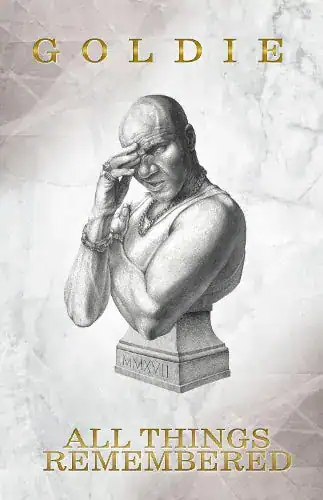
In 2017 Goldie published his autobiography All Things Remembered, an honest and often deeply personal account of his extraordinary life. The book traces his journey from a difficult childhood in foster care through the worlds of graffiti, hip-hop, jungle and drum & bass, while also reflecting on his struggles with addiction, creativity and fame.
Among its most memorable chapters are Goldie‘s recollections of David Bowie. He describes Bowie’s visits to the Metalheadz Sunday Sessions at the Blue Note, the recording of Truth, their conversations about music and creativity, and the friendship that developed between them. Rather than portraying Bowie as an untouchable icon, Goldie remembers him as a generous, curious and endlessly creative artist who treated younger musicians with genuine respect.
For Bowie historians, All Things Remembered remains one of the most valuable first-hand sources documenting Bowie’s connection with the British drum & bass movement during the late 1990s. Goldie‘s memories offer a rare glimpse into Bowie’s constant search for new ideas and his willingness to collaborate across musical boundaries.
Legacy
Goldie‘s place within David Bowie’s story extends far beyond a single recording or film appearance. Through Truth, Everybody Loves Sunshine and their enduring friendship, he became one of the artists who helped illustrate Bowie’s continuing fascination with emerging musical movements during the final decades of his career.
For Bowie, Goldie represented fearless innovation and artistic independence. For Goldie, Bowie embodied the power of constant reinvention and the importance of remaining creatively curious regardless of age or reputation. Their relationship became a meeting of two artists who shared an unwavering belief that music should always move forwards.
Looking back, Goldie has often spoken with warmth and gratitude about the years he spent working alongside Bowie. Their friendship demonstrated that genuine collaboration is built not on celebrity or reputation, but on openness, trust and a shared desire to explore new creative possibilities.
Place within David Bowie’s Collaborative Universe
Although Goldie‘s direct collaborations with David Bowie were relatively few, his significance within Bowie’s collaborative universe is considerable. He introduced Bowie to the heart of Britain’s drum & bass movement, collaborated with him on one of the most distinctive guest performances of Bowie’s later career, and remained a trusted contemporary whose creativity Bowie deeply admired. Together, they demonstrated how artists from very different musical worlds could find common ground through curiosity, innovation and mutual respect.
Official Website & Further Information
Today, Goldie continues to work internationally as a musician, producer, DJ, visual artist and actor. Through his pioneering work with Metalheadz, his solo recordings and his continued live performances, he remains one of the most influential figures in the history of drum & bass and British electronic music.
For more information about Goldie‘s career, current projects and upcoming performances, please visit his official website: www.goldie.co.uk
Article Origin
This article has been researched and written for DavidBowieWorld.com as part of the site’s ongoing project documenting the musicians, artists, producers, designers, performers, tours and creative figures who helped shape David Bowie’s extraordinary career.
