
Eric Sykes – Actor in Absolute Beginners and David Bowie’s 1980s Screen World
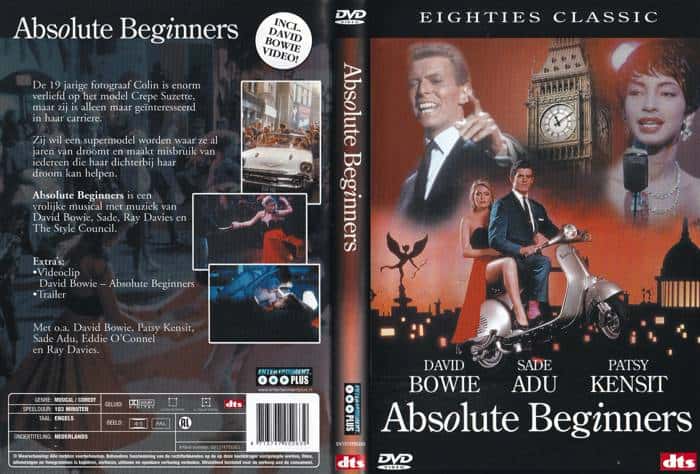
Image: David Bowie World collection / editorial use
Eric Sykes was one of Britain’s most respected comedians, actors, writers and directors. Although his connection to David Bowie was relatively brief, he became part of Bowie’s cinematic world through the ambitious 1986 film Absolute Beginners.
By the time the film was made, Sykes was already a legendary figure in British entertainment. His career stretched back to the post-war era and included radio, television, film, theatre and writing.
His appearance in Absolute Beginners placed him among a remarkable cast that included David Bowie, Patsy Kensit, Eddie O’Connell, James Fox, Ray Davies and many other familiar faces from British culture.
- Full name: Eric Sykes
- Born: 4 May 1923, Oldham, Lancashire, England
- Died: 4 July 2012, Surrey, England
- Profession: Comedian, actor, writer and director
- Bowie connection: Appeared in Absolute Beginners (1986)
- Film director: Julien Temple
- Known for: One of the most influential figures in British comedy
One of Britain’s comedy pioneers
Long before David Bowie entered the world of music, Eric Sykes had already become a major figure in British entertainment. Beginning his professional career in the 1940s, he gained recognition as a comedy writer before becoming a successful performer in his own right.
Throughout the 1950s and 1960s he established himself as one of the most popular and respected entertainers in Britain. His work combined gentle humour, observational comedy and a distinctive warmth that made him beloved by generations of audiences.
Sykes was unusual in that he excelled in several disciplines at once. He was not only an actor and comedian but also a prolific writer and director whose influence extended far beyond his own performances.
Absolute Beginners and David Bowie
In 1986, Eric Sykes became part of the cast of Absolute Beginners, director Julien Temple’s lavish adaptation of Colin MacInnes’ celebrated novel about youth culture in late-1950s London.
The production attempted to blend period atmosphere with contemporary 1980s music, fashion and visual style. It was one of the most ambitious British films of its era and attracted an unusually diverse cast of actors, musicians and television personalities.
David Bowie was cast as the charismatic advertising executive Vendice Partners, one of the film’s most memorable characters. Bowie also contributed the title song Absolute Beginners, which became a major international hit and remains one of the defining songs of his mid-1980s period.
Although Sykes did not share the same central role as Bowie, his presence reflected the film’s intention to celebrate several generations of British culture at once, bringing together established entertainment legends and contemporary stars.
A film of enormous ambition
Upon its release in 1986, Absolute Beginners attracted enormous attention. The project had been promoted as a major British cinematic event and was expected to become both a critical and commercial success.
The film attempted to capture the energy of late-1950s London, a period often viewed as the birth of modern British youth culture. Jazz clubs, coffee bars, fashion, photography, advertising and emerging social change all became part of the film’s colourful world.
Director Julien Temple approached the material with a highly stylised visual language. Rather than producing a conventional historical drama, he created a musical fantasy that blended nostalgia, satire and pop-art imagery.
The result was unlike almost anything else being produced in British cinema at the time.
For audiences expecting a traditional narrative film, the approach could be challenging. For others, however, the film’s bold visual imagination became one of its greatest strengths.
Working alongside David Bowie
Although Eric Sykes and David Bowie came from very different artistic generations, both represented distinct aspects of British popular culture.
Sykes belonged to the post-war generation that had helped shape British comedy and television, while Bowie represented the international cultural revolution that emerged during the 1960s and transformed music, fashion and performance.
Their appearance in the same production symbolised one of Absolute Beginners‘ central ideas: the collision of old Britain and new Britain.
Bowie’s character, Vendice Partners, embodied the emerging world of image-making, advertising and modern celebrity. Sykes represented an earlier generation whose influence had already become part of British cultural history.
Together they helped create the film’s unique mixture of nostalgia and modernity.
The song “Absolute Beginners”
While the film itself divided critics, Bowie’s contribution to its soundtrack was almost universally praised.
The song “Absolute Beginners” became one of the most successful singles of Bowie’s 1980s career. Combining romantic lyrics with a soaring arrangement, it reached high chart positions across Europe and remains one of the most beloved songs from his post-Let’s Dance period.
For many people, the song ultimately became more famous than the film itself.
Yet the success of the single has also helped keep interest in Absolute Beginners alive, ensuring that the film continues to attract new viewers decades after its original release.
Critical re-evaluation
In the years following its release, the reputation of Absolute Beginners gradually improved.
Many critics who initially dismissed the film later recognised its visual ambition, imaginative design and cultural significance.
Modern audiences often view it less as a failed commercial project and more as an unusually bold attempt to create a distinctly British musical film on a grand scale.
As a result, the film has developed a dedicated following among admirers of Bowie, British cinema and 1980s pop culture.
Eric Sykes and British cultural history
Eric Sykes occupied a unique position within British entertainment. Unlike many performers whose popularity faded with changing fashions, Sykes remained respected across multiple generations.
His career extended from post-war radio and television into the twenty-first century, making him one of the few entertainers whose work spanned almost the entire modern history of British broadcasting.
By the time he appeared in Absolute Beginners, he was already regarded as a national institution — a performer whose name carried decades of goodwill and recognition.
His involvement added another layer of authenticity to a film that celebrated British culture, memory and identity.
Legacy within Bowie’s universe
Eric Sykes occupies a small but interesting place within David Bowie’s extended creative universe.
Unlike many of Bowie’s collaborators, Sykes was not a musician, producer or visual artist. His connection came through cinema and through one of the most ambitious film projects associated with Bowie’s 1980s career.
Although his role in Absolute Beginners was relatively modest, his presence reflected the film’s broader attempt to bring together different eras of British culture and entertainment.
The combination of established figures such as Eric Sykes and contemporary stars such as David Bowie helped make the film a uniquely British cultural document.
Today, Absolute Beginners remains important not only because of Bowie’s memorable performance as Vendice Partners and his celebrated title song, but also because it captured a remarkable collection of British creative talent in a single production.
Through that film, Eric Sykes became part of the wider Bowie story — a respected entertainer from an earlier generation whose path briefly crossed with one of the most influential artists of the twentieth century.
David Bowie – “Absolute Beginners”
David Bowie’s title song for Absolute Beginners became one of the most acclaimed singles of his 1980s career. While the film itself generated mixed reactions upon release, the song was widely praised and achieved major chart success across Europe.
Over time, the track has become inseparable from the film and remains one of Bowie’s most loved recordings from the decade. It also serves as a lasting reminder of the project that brought Bowie and Eric Sykes into the same cinematic world.
