
Ava Cherry – Vocalist & David Bowie’s Soul Tour Collaborator
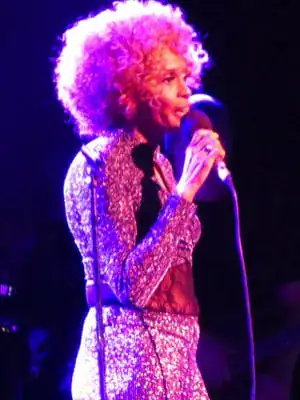
Photo: Unknown photographer / Wikimedia Commons / CC BY-SA 4.0 (editorial use)
Ava Cherry is an American singer whose collaboration with David Bowie intersects with one of the most important transitions in his career: the movement from glam theatre into soul, rhythm and vocal-driven music. She became a prominent figure around Bowie’s live ensemble during the Diamond Dogs and Soul Tour era.
Alongside figures such as Luther Vandross and Robin Clark, Cherry formed part of the wider vocal world associated with Bowie’s Young Americans period.
- Role: Singer / backing vocalist
- With Bowie: 1973–1975
- Associated eras: Astronettes, Diamond Dogs, Young Americans
- Tour role: Soul Tour vocalist
- Later solo work: Picture Me and later recordings
Early career
Ava Cherry emerged from an American soul and R&B background, developing a vocal style rooted in gospel phrasing, expressive harmony and rhythm-and-blues traditions. Before entering Bowie’s orbit she was already pursuing music and modeling, bringing both visual presence and musical instinct into the collaboration.
The Astronettes sessions
Before Bowie fully entered the Young Americans era, Cherry was central to the shelved Astronettes recordings of 1973–1974. Produced by David Bowie, these sessions explored soul, funk and experimental vocal textures that foreshadowed later developments in Bowie’s own music.
Songs such as I Am a Laser, I Am Divine and People From Bad Homes make the Astronettes historically important — not as a lost Bowie masterpiece, but as a creative laboratory in which Cherry’s voice played a major role.
Joining Bowie’s touring ensemble
Cherry’s visible role grew during the 1974 Soul Tour phase of the broader Diamond Dogs touring cycle, when Bowie’s live arrangements became increasingly shaped by soul and gospel influences. Her voice became part of a richer ensemble sound that differed markedly from the earlier glam-era stage approach.
That shift was crucial: the backing singers were no longer decorative additions, but increasingly part of the architecture of the music.
The Soul Tour and Young Americans era
During the 1974–1975 Soul Tour, Ava Cherry’s vocals formed part of a powerful ensemble that brought church-inspired harmonies and R&B textures into Bowie’s performances. This same musical language fed directly into the world surrounding Young Americans.
Young Americans and studio contributions

Cherry’s connection to Young Americans was part of a broader vocal collective, including Luther Vandross and Robin Clark, that helped define the album’s atmosphere.
Her contribution is best understood not as a singular shaping force, but as part of the ensemble energy that made Bowie’s “plastic soul” period possible.
Stage presence and visual impact
Cherry’s presence extended beyond vocals. Her stage charisma and image complemented Bowie’s changing aesthetic, reinforcing the sophisticated urban atmosphere of the mid-1970s performances.
This visual dialogue between Bowie and Cherry has become part of the mythology of the era.
Ava Cherry in Bowie’s live soul-era universe
Live footage from this period reveals how crucial the backing singers had become to Bowie’s evolving stage identity. Cherry was part of that transformation.
The move from theatrical rock toward soul performance can be heard as much in these voices as in Bowie himself.
Golden Years and Station to Station
Ava Cherry is often linked to the emotional mythology surrounding Golden Years and parts of the Station to Station era. While she did not perform on that album, her place in Bowie’s life during the period has often been discussed in relation to those songs.
After Bowie
Following her Bowie years, Cherry continued as a solo artist and collaborator, building a career that deserves recognition in its own right. Her later releases demonstrated she was far more than a footnote in another artist’s story.
Ava Cherry beyond the Bowie years
Her post-Bowie work, including material associated with Picture Me, helped confirm her identity as an artist in her own right.
That independent trajectory is essential to understanding her full legacy.
Legacy
Ava Cherry’s importance in Bowie history lies not only in backing vocals, but in embodying a turning point: from glam theatre to plastic soul. Few collaborators stand as close to that transition.
Through the Astronettes sessions, the Soul Tour, and the wider Young Americans world, she helped illuminate one of Bowie’s boldest transformations.
Her place in Bowie history is therefore not marginal, but integral to understanding the evolution of the mid-1970s.
