
David Bowie & Pat Metheny Group – “This Is Not America” (1985)

Photo: audeorama / Thierry van Dijk / Wikimedia Commons / CC BY-SA 2.0
“This Is Not America” brought David Bowie together with the Pat Metheny Group for a collaboration rooted in film music. Written by Bowie, Pat Metheny and Lyle Mays, the song appeared on the soundtrack to John Schlesinger’s 1985 film The Falcon and the Snowman.
The partnership began with a theme developed for the score. Schlesinger suggested involving Bowie, who added lyrics, further vocal writing and a layered singing performance to the existing musical foundation.
Recorded in 1984 and released as a single in early 1985, the song became an international hit. It reached number 1 in the Dutch Top 40, number 14 in the United Kingdom and number 32 on the US Billboard Hot 100.
Its history continued through group concerts, Bowie’s own live performances, later reinterpretations and the stage musical Lazarus. What began as a response to one film became a composition capable of carrying meaning in several different settings.
- Recording artists: David Bowie and the Pat Metheny Group
- Song: “This Is Not America”
- Songwriters: David Bowie, Pat Metheny and Lyle Mays
- Recorded: 1984
- Recording location: Mountain Studios, Montreux, Switzerland
- Single release: Early 1985, on EMI America
- Film: The Falcon and the Snowman, directed by John Schlesinger
- Musical foundation: The film theme associated with the instrumental “Chris”
- Bowie’s contribution: Lyrics, additional vocal writing, lead vocals and layered backing vocals
- Core instrumental personnel: Pat Metheny, Lyle Mays, Steve Rodby and Paul Wertico
- Single B-side: An instrumental version of “This Is Not America”
- Chart peaks: Dutch Top 40 number 1; UK number 14; US Billboard Hot 100 number 32
- Later Bowie performance: BBC Radio Theatre, London, 27 June 2000
Pat Metheny before the Bowie collaboration
Before working with Bowie, Pat Metheny had established a career encompassing composition, improvisation and an individual approach to guitar sound. His music could move between intimate acoustic passages, electric ensembles and extended compositions.
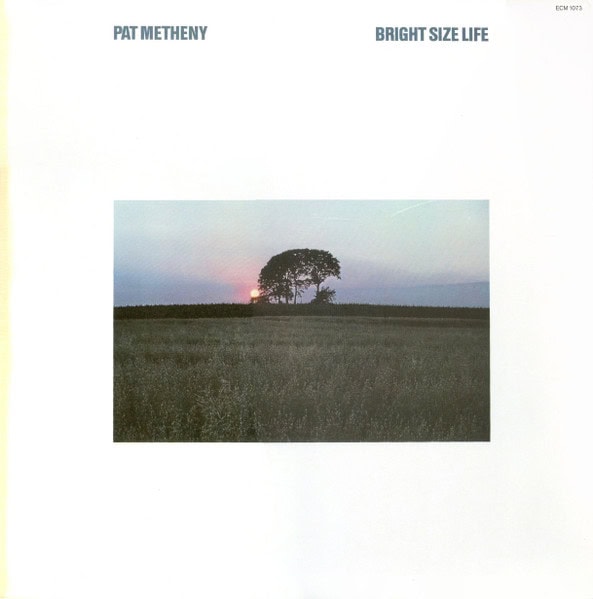
His first album as a leader, Bright Size Life, was released by ECM in 1976. With bassist Jaco Pastorius and drummer Bob Moses, it placed the guitar within an interactive trio.
Vibraphonist Gary Burton had been an important mentor. Metheny worked in Burton’s musical environment and received encouragement to develop his material before making his debut as a leader.
Composition remained central to his subsequent work. Alongside the freedom of improvisation, his recordings explored how a theme could establish atmosphere, connect contrasting passages and maintain an identity through changes of instrumentation.
The Pat Metheny Group takes shape
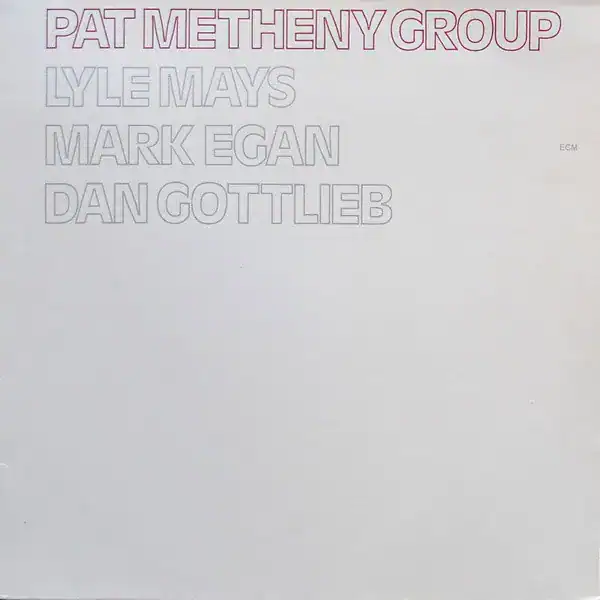
The Pat Metheny Group developed during the later 1970s around Metheny’s partnership with pianist and keyboardist Lyle Mays.
Its self-titled debut was recorded in January 1978 at Talent Studio in Oslo and released that year. Metheny and Mays were joined by bassist Mark Egan and drummer Danny Gottlieb.
Compositions including San Lorenzo and Phase Dance established the importance of the Metheny–Mays writing partnership. Guitar and keyboards occupied complementary positions within pieces that combined identifiable melodies with room for development.
The ensemble already had a musical identity years before the Bowie project. Its contribution to This Is Not America grew from that continuing work.
Lyle Mays: the essential third songwriter
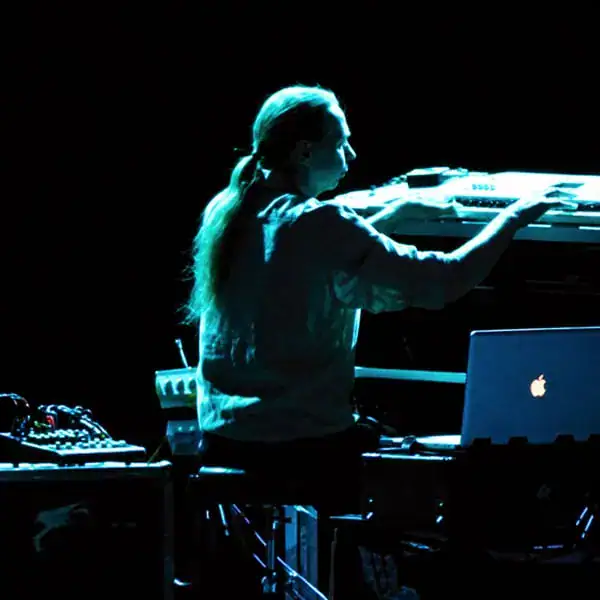
Lyle Mays is fundamental to the history of This Is Not America. The song’s writing credit belongs to three people, and its music emerged from the partnership he had developed with Metheny.
The two musicians met in 1974. Mays subsequently became a co-creator of the Pat Metheny Group, contributing compositions, arrangements and much of its harmonic and instrumental character.
His work extended across piano, synthesisers and orchestration. He was concerned with the shape of a complete composition, including the relationships between instruments and the way a piece developed over time.
Those abilities were particularly relevant to a film score. Themes had to function in different dramatic situations, sometimes through a small ensemble and elsewhere through larger instrumental or choral forces.
From Offramp to First Circle
The group’s sound expanded during the early 1980s. Offramp, recorded in 1981 and released in 1982, incorporated guitar synthesiser, keyboards, acoustic and electric bass, percussion and voice.
Steve Rodby had joined on bass, while percussionist and vocalist Naná Vasconcelos added another dimension to the ensemble.
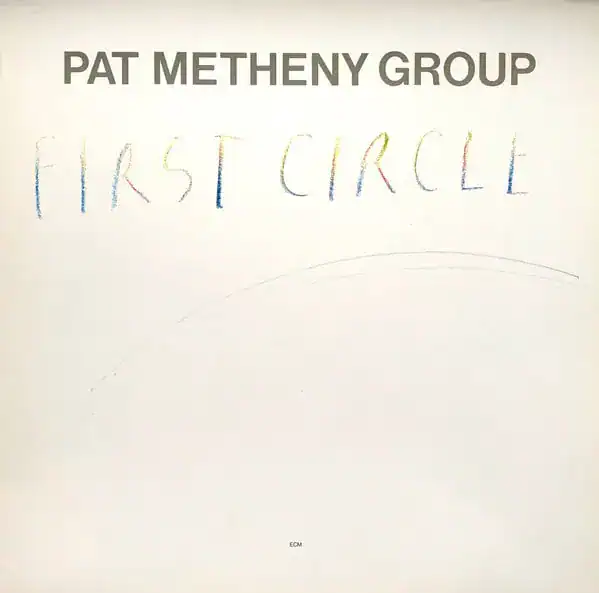
For First Circle in 1984, Metheny, Mays and Rodby worked with drummer Paul Wertico and Argentine multi-instrumentalist and vocalist Pedro Aznar.
Recorded at the Power Station in New York, the album reflected a developing interest in South American rhythms and vocal textures. The human voice was therefore already part of the group’s musical language before Bowie joined the soundtrack project.
Bowie in 1984
Bowie entered the collaboration during the period surrounding Tonight, released in September 1984 after the international success of Let’s Dance and the Serious Moonlight Tour.
The film commission gave him a different framework from another studio album. Its instrumental foundation came from Metheny and Mays, and its dramatic context had already been established by Schlesinger’s film.
Bowie could respond to both through his vocal writing. The resulting song retained an identity separate from the original Tonight album and was released under a shared artist credit.
The Falcon and the Snowman: the cinematic context
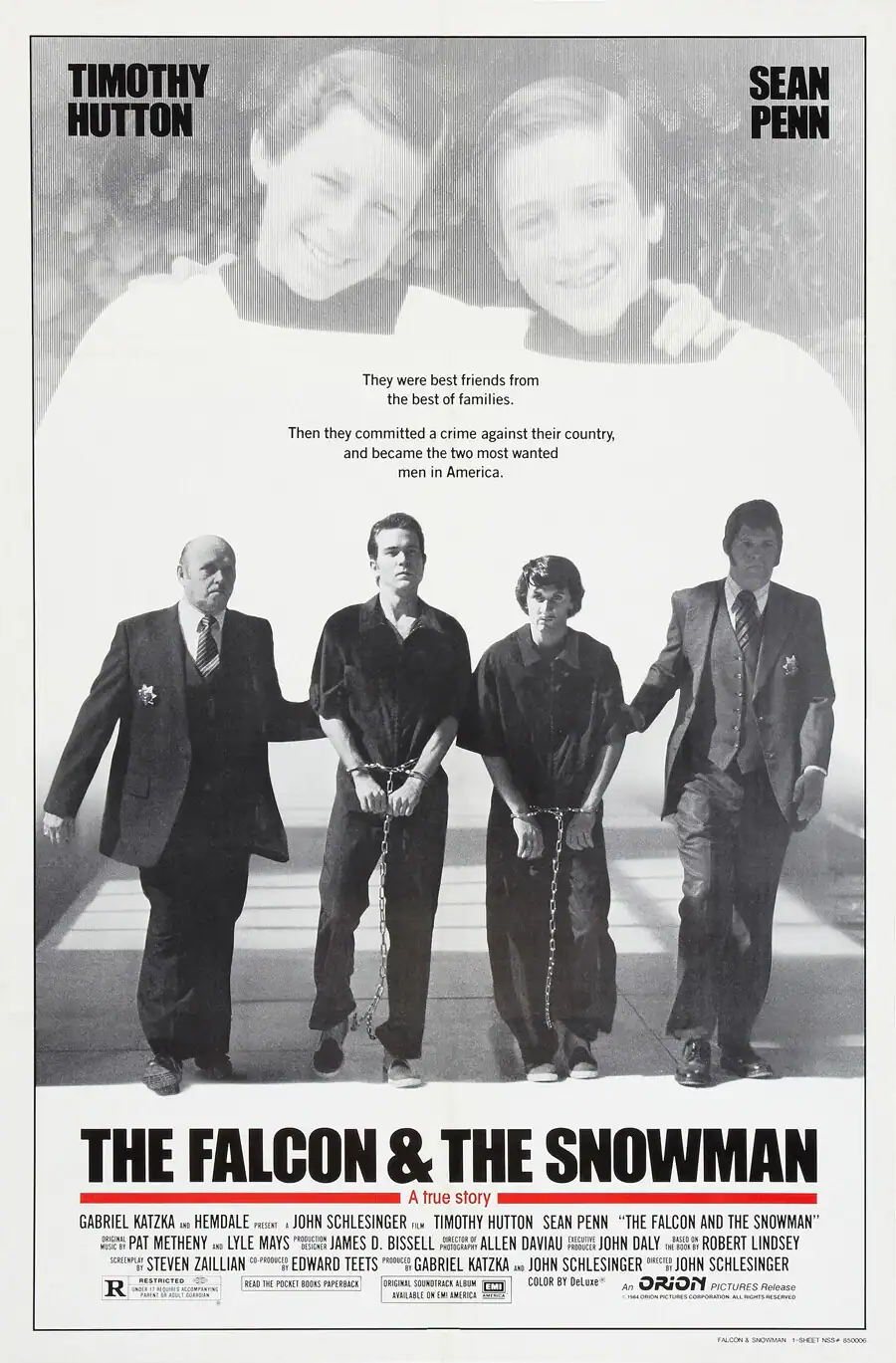
Directed by John Schlesinger, The Falcon and the Snowman starred Timothy Hutton as Christopher Boyce and Sean Penn as Andrew Daulton Lee.
Its screenplay by Steven Zaillian drew on Robert Lindsey’s 1979 book. The film dramatised the story of two young Americans involved in selling classified information to the Soviet Union.
The drama follows disillusionment, compromised loyalties and decisions with escalating consequences. Boyce’s falconry and Lee’s involvement with drugs supplied the contrasting identities reflected in the title.
The film opened in the United States in January 1985. Bowie’s contribution was musical: he supplied the vocal song associated with its closing credits.
The theme behind This Is Not America
Pat Metheny Group – “Chris”, from The Falcon and the Snowman soundtrack (1985). The instrumental theme formed the musical foundation for “This Is Not America”.
Metheny connected the main theme with a visit to the production in Mexico City, where he watched Hutton and Penn filming with Schlesinger.
He subsequently described the music as arriving quickly after that encounter. The instrumental Chris, credited to Metheny and Mays, provides the musical foundation associated with the later song.
The soundtrack includes both recordings. Chris belongs to the score, while This Is Not America develops the material into a vocal composition.
This relationship gives the song a particular dramatic function. Its music has already carried associations within the film before Bowie’s voice and words bring another perspective to it.
John Schlesinger suggests Bowie
The suggestion to involve Bowie came from Schlesinger, who proposed a vocal version of the theme for the film’s ending.
Metheny later explained that he had not followed Bowie’s recordings closely. He familiarised himself with the singer’s work, while Paul Wertico was already a Bowie admirer.
Having listened, Metheny recognised the suitability of Bowie’s vocal range and musical character.
Pat Metheny on choosing Bowie
“I realized he was the perfect person to sing the piece.”
— Pat Metheny, interview with Hot Corn.
The film brought the musicians together around a specific composition. Their different backgrounds became part of the collaboration’s character.
The screening and the song’s title
Bowie attended a screening and took notes while watching. Metheny remembered sitting nearby as the singer filled a yellow legal pad with possible titles and ideas.
This Is Not America came from a line of dialogue in the film. It became the phrase around which Bowie developed his lyric.
The title carried a direct connection with the drama while remaining meaningful outside it. Bowie approached the story through images and associations rather than a summary of its plot.
Pat Metheny on Bowie’s musical suitability
“It’s right in his register, and he’s got the right kind of feeling for the song.”
— Pat Metheny, interview with Stereogum, 2021.
Recording in Montreux
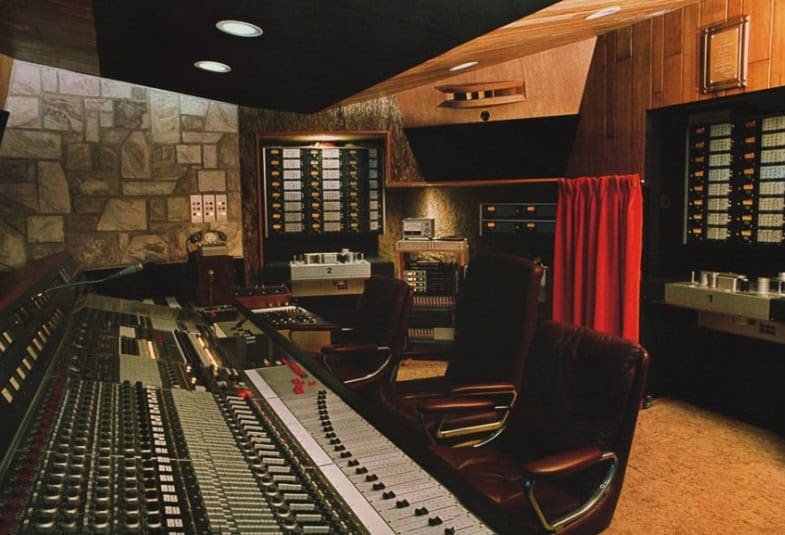
The recording brought Bowie and the core of Metheny’s group together at Mountain Studios in Montreux, Switzerland, during 1984.
Bowie had taken the music away to develop his contribution while work on the score continued in London. By the time the musicians joined him, he had prepared lyrics and further vocal material.
The existing form and substantial elements of the original melody remained. Bowie added another vocal line over part of the composition and developed the demo with an additional drum-machine part.
The songwriting credit reflects that process: Metheny and Mays’ musical foundation was transformed through Bowie’s contribution into the song released under all three names.
The musicians and the wider soundtrack
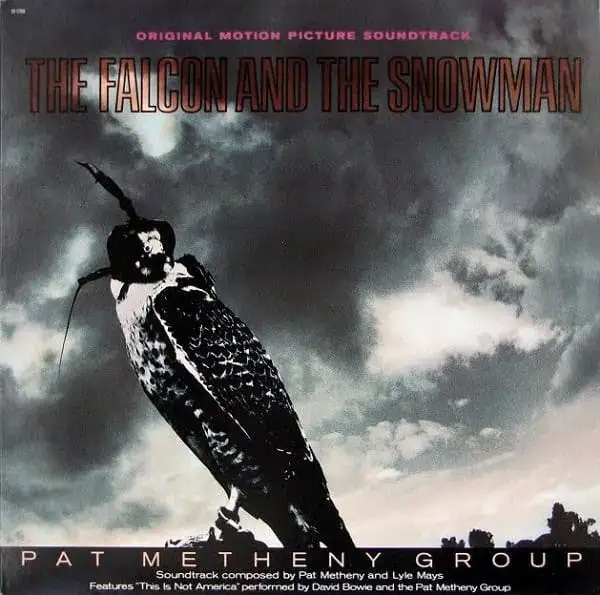
The song’s core instrumental personnel comprised Pat Metheny on guitar, Lyle Mays on keyboards, Steve Rodby on bass and Paul Wertico on drums and percussion.
The soundtrack also involved Pedro Aznar and orchestral and choral forces. Its complete ensemble should be distinguished from the personnel heard on an individual track.
Across the album, pieces including Daulton Lee, Extent of the Lie and Capture sit alongside the character theme Chris and material associated with Psalm 121.
The full soundtrack reveals the broader setting of the single: a score moving between different instrumental scales and dramatic functions.
Bowie’s lead and backing vocals
Bowie’s performance gives the recording its distinctive vocal identity. His phrasing places weight on the words without requiring a shouted delivery.
Short statements sit within the continuing instrumental movement, while longer phrases blend with the sustained textures. The emotional effect can be heard as controlled unease, appropriate to the film’s uncertain loyalties.
Pat Metheny remembers Bowie’s vocal session
“Watching him do his vocal was something I will never forget.”
— Pat Metheny, “David Bowie R.I.P.”, official website, 11 January 2016.
Metheny also remembered Bowie creating the layered backing vocals himself, changing his vocal character between parts and working quickly.
Those layers serve a different purpose from the lead. They create a surrounding texture, allowing the voice to become part of the arrangement as well as the carrier of the lyric.
The balance between the two is central to the record. Bowie remains recognisable in the foreground while the backing parts help connect his performance with the instrumental sound.
Musical architecture
David Bowie & Pat Metheny Group – This Is Not America (1985)
The arrangement combines a steady pulse with melodic lines that seem suspended above it. Keyboards and guitar surround the vocal, while the bass supplies definition beneath the sustained textures.
Its tension can be heard in the relationship between the smooth instrumental surface and the less comfortable implications of the title.
The parts work together without an extended instrumental showcase. Metheny’s guitar contributes colour and melodic detail within the composition, leaving space for Bowie’s voice.
The record’s identity emerges from the interaction of these elements. Rhythm gives it continuity, harmony sustains its atmosphere and the recurring vocal material keeps the central statement in focus.
Lyle Mays and the Gloria Gaynor connection
Mays later identified an unexpected influence on the guitar writing near the end of the song: Gloria Gaynor’s I Will Survive.
He explained that he admired the recording and drew on its guitar parts in thirds when writing material for Metheny.
Lyle Mays on the guitar arrangement
“I used the guitar parts in thirds at the end of ‘This Is Not America’ from that cut”
— Lyle Mays, reflections on The Falcon and the Snowman, official website; excerpt referring to Gloria Gaynor’s I Will Survive.
The connection demonstrates how widely the musicians could draw their ideas. It also identifies a specific arrangement decision made by Mays, whose contribution can otherwise be overshadowed by the two more prominent names associated with the single.
Images, uncertainty and political meaning
Bowie’s lyric approaches the film through images rather than a sequence of named characters and events. Its title becomes the recurring statement against which those images are heard.
One possible reading is that the song explores a gap between an ideal and the experience confronting the speaker. The repeated phrase can suggest disbelief, rejection or the recognition that a familiar national image no longer explains what is happening.
That openness helps the recording function beyond the film. A listener does not need detailed knowledge of the espionage story to recognise its emotional uncertainty.
Metheny nevertheless heard the words as having a definite political force.
Pat Metheny on Bowie’s words
“one of the greatest protest songs ever.”
— Pat Metheny, describing This Is Not America in “David Bowie R.I.P.”, official website, 11 January 2016; excerpt.
His description is a collaborator’s judgement. It supports recognising the song’s protest element without assigning every image a single fixed meaning or treating its restrained performance as political neutrality.
The instrumental B-side
David Bowie & Pat Metheny Group – “This Is Not America” (Instrumental), the single’s B-side (1985), distinct from the soundtrack piece “Chris”.
The single paired Bowie’s vocal recording with an instrumental version of This Is Not America.
This is distinct from Chris. The B-side presents the song’s backing track without Bowie’s vocal performance, allowing its instrumental relationships to be heard directly.
Metheny continued to value that version and later expressed regret that it had not been included on the original soundtrack album.
Pat Metheny on the vocal and instrumental versions
“i always liked both versions, both were mixed by bob clearmountain”
— Pat Metheny, official website Q&A, 29 December 2000; excerpt.
The statement confirms Bob Clearmountain’s work on both mixes and preserves Metheny’s affection for the band-only presentation.
1985: international chart success
Released by EMI America in early 1985, the single reached audiences through radio, record shops and its connection with the film.
It entered the UK singles chart in February and reached number 14. In the United States, it peaked at number 32 on the Billboard Hot 100.
In the Netherlands, it reached number 1 in the Dutch Top 40 and spent eleven weeks on that chart.
These results establish it as a substantial international release. Its success was not confined to a later audience discovering an overlooked soundtrack recording.
Single releases and editions
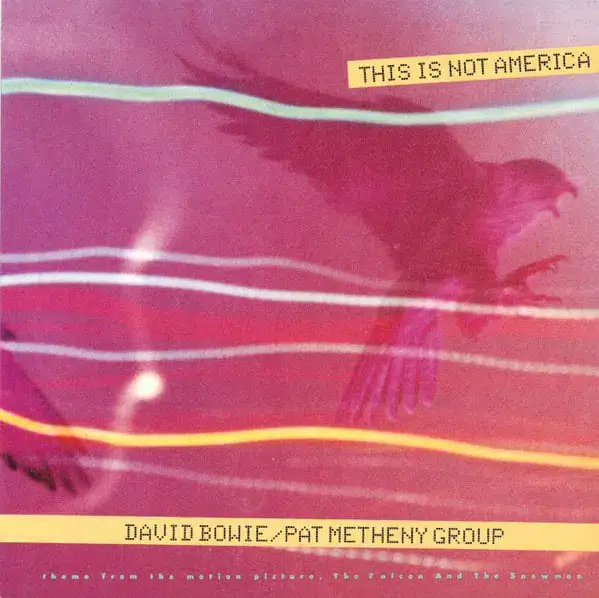
The record circulated in 7-inch and 12-inch editions, with sleeves and catalogue details varying between territories.
The principal pairing was the vocal song and its instrumental counterpart. A particular edition’s format should not automatically be taken to indicate a different performance or an extended remix.
The original single, the soundtrack instrumental Chris and the later reinterpretations belong to different parts of the song’s history.
Its shared artist credit also remains important. Record buyers encountered Bowie and the Pat Metheny Group together, while the songwriting credit recognised Mays alongside Bowie and Metheny.
1995: the group performs the song in Japan
Pat Metheny Group – “This Is Not America”, from We Live Here: Live in Japan (1995).
The Pat Metheny Group retained the composition in its concert repertoire. The film We Live Here, documenting the group in Japan in 1995, includes This Is Not America.
The ensemble featured Metheny, Mays, Rodby and Wertico with David Blamires, Mark Ledford and Armando Marçal.
Bowie did not participate in that performance. The group adapted the song to its own concert personnel and repertoire.
Metheny also confirmed that the ensemble had performed other soundtrack pieces, including Chris and Daulton Lee. The film commission had produced material that continued to function outside the cinema.
2000: Bowie returns to the song on stage
Bowie began performing This Is Not America in 2000, around fifteen years after its original release.
His performance at the BBC Radio Theatre in London on 27 June 2000 preserved this later interpretation. It took place two days after Glastonbury, although the song was not part of his Glastonbury set.
At the BBC, it appeared within a programme spanning several periods of his career. Bowie was now singing it with his own band, returning to material originally created with Metheny and Mays.
The recording was released on the live bonus disc accompanying the initial edition of Bowie at the Beeb.
An expanded version of the concert subsequently appeared in Brilliant Adventure (1992–2001) in 2021. The song was also included among the performances selected for the concert’s original television broadcast.
2001: American Dream and Training Day
In July 2001, Bowie recorded with Sean Combs, then working as P. Diddy, for a project associated with the film Training Day.
The resulting piece, American Dream, incorporated elements of This Is Not America alongside new material and contributions from rappers.
Bowie supplied new vocal material for the recording. Its production placed his contribution within a different rhythmic environment.
David Bowie on the new recording
“The beats have a definite techno/hiphop drive.”
— David Bowie, statement published on his official website, July 2001.
The project returned elements of the earlier composition to a film soundtrack. It was a new recording rather than a reissue of the original single.
2003: The Scumfrog’s reinterpretation
A further transformation appeared through The Scumfrog, whose version of This Is Not America was included on Club Bowie in 2003.
The compilation presented remixes and reworkings of Bowie material for a club-oriented setting.
This version belongs to the later history of the song’s reinterpretation. It did not represent another recording session between Bowie and the Pat Metheny Group.
Later compilations and archival releases
The original recording remained accessible through Bowie’s retrospective catalogue.
It appeared on the two-CD and three-CD editions of Nothing Has Changed in 2014 and the deluxe two-CD edition of Bowie Legacy in 2016.
In 2018, Loving the Alien (1983–1988) included it within Re:Call 4, alongside other singles, alternate versions, B-sides and soundtrack material.
These releases preserved its position in Bowie’s career while retaining the shared credit with the Pat Metheny Group.
Lazarus: another dramatic setting
The song entered a different form of drama through Lazarus, the stage work created by Bowie and Enda Walsh.
The original New York cast recording, released in 2016, includes This Is Not America performed by Sophia Anne Caruso and the original New York cast.
Another performer now carried the lyric within a new story and theatrical arrangement. The production used the composition rather than simply playing the original soundtrack master.
Its theatrical life demonstrated how music connected with one narrative could acquire new associations while remaining recognisable.
The collaboration’s lasting significance
This Is Not America brought together a film director’s proposal, Metheny and Mays’ compositional partnership, the group’s instrumental work and Bowie’s vocal imagination.
Its effectiveness depends on the relationship between those contributions. The music gives Bowie’s words an atmosphere and structure, while his performance gives the theme a vocal identity capable of reaching listeners beyond the film.
The song’s later appearances demonstrate that flexibility. It could function in the group’s concerts, Bowie’s own repertoire, a new soundtrack recording, a club reinterpretation and a stage musical.
The original collaboration remains the point at which those possibilities first came together: a film theme developed into an internationally successful song with an identity shared by its creators.
Official Websites & Further Information
For Pat Metheny’s recordings, performances, writings and archive of responses to listeners, visit his official website:
Lyle Mays’ official website preserves information about his career, recordings and musical thinking:
For official information about Bowie’s recordings and archival releases, visit:
First-Hand Contributions
This page includes seven short quotations drawn from published first-hand statements by Pat Metheny, Lyle Mays and David Bowie.
They address the choice of singer, Bowie’s performance, the arrangement, the instrumental version and the later American Dream recording.
The article is based on published research. It does not claim direct cooperation, private correspondence or unpublished contributions from the musicians, their families or the Bowie estate.
Article Origin
This article has been researched and written for DavidBowieWorld.com as part of its archive of David Bowie’s collaborators and creative partnerships.
It follows the composition from its foundation in The Falcon and the Snowman through the recording, release and subsequent performance history.
The account distinguishes Chris, the vocal single, its instrumental B-side and the later reinterpretations. It recognises Lyle Mays as a co-writer alongside Pat Metheny and David Bowie.
Observations about atmosphere and lyrical meaning are critical interpretations rather than statements attributed to the artists. Further verified first-hand information can extend the article.
© DavidBowieWorld.com — David Bowie Collaborations & Creative Circle Archive.
