
The Making Of Station to Station (1976)
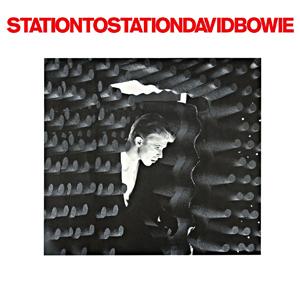
Image: David Bowie World collection / editorial use
Released on 23 January 1976, Station to Station is one of the most important transitional albums in David Bowie’s career. It stands between the American soul direction of Young Americans and the more European, experimental work that would soon lead to Low, “Heroes” and Lodger.
The album introduced the Thin White Duke in its opening line and brought together funk, soul, rock, art-rock, European atmosphere, spiritual longing and a darker psychological edge. Although recorded during one of the most troubled periods of Bowie’s life, the finished record is remarkably focused, disciplined and powerful.
- Album: Station to Station
- Released: 23 January 1976
- Recorded: September – November 1975
- Main studio: Cherokee Studios, Hollywood, Los Angeles
- Additional work: Record Plant, Los Angeles; mixing at The Hit Factory, New York
- Producers: David Bowie and Harry Maslin
- Label: RCA Records
- Previous studio album: Young Americans
- Next studio album: Low
- Major singles: Golden Years, TVC 15, Stay
- Visual era: Thin White Duke
- Cover image: Film still from The Man Who Fell To Earth
- Cover photographer: Steve Schapiro
Introduction
Station to Station was created at a strange and difficult moment. David Bowie had achieved major American success with Fame and Young Americans, had completed filming Nicolas Roeg’s The Man Who Fell To Earth, and was living in Los Angeles during a period of extreme personal pressure.
The album is often described as the bridge between Bowie’s American soul period and his Berlin-era experimentation. That description is accurate, but the record is more than a simple transition. It is a complete artistic statement in its own right: six long, carefully shaped tracks that combine rhythm, atmosphere, drama and spiritual unease.
Although Bowie later said he remembered little of the sessions because of his heavy cocaine use at the time, the album itself does not sound careless or chaotic. It sounds controlled, cold, intense and unusually precise.
Its power comes from that contrast. Behind the music stood personal instability, exhaustion and paranoia; on the record, however, Bowie created one of the most disciplined and mysterious works of his career.
Making Of The Album
The making of Station to Station began after Bowie had completed work on The Man Who Fell To Earth in 1975. The film had placed him in the role of Thomas Jerome Newton, an alien who becomes trapped on Earth, wealthy, isolated and emotionally broken.
That role had a deep impact on Bowie’s public image. The stillness, alienation and elegant detachment of Newton flowed naturally into the next stage of Bowie’s work. The Thin White Duke was not identical to Newton, but the two figures became closely linked in the public imagination.
Musically, Bowie was also moving away from the Philadelphia soul textures of Young Americans. He did not abandon soul and funk completely; instead, he made them colder, more European and more abstract.
The result was a record that could move from the long, dramatic opening of Station to Station to the clipped funk of Golden Years, the prayer-like intensity of Word On A Wing, the surreal pop of TVC 15, the hard groove of Stay and the emotional grandeur of Wild Is The Wind.
The Man Who Fell To Earth Connection

Image: David Bowie World collection
Nicolas Roeg’s The Man Who Fell To Earth was central to the visual and psychological world surrounding Station to Station.
Bowie played Thomas Jerome Newton, an alien who arrives on Earth, builds a business empire and becomes trapped by human weakness, addiction and isolation. The role suited Bowie’s appearance and mood in 1975 so closely that the boundary between actor, character and pop star became increasingly blurred.
The album sleeve used a still from the film, and the detached, elegant, almost ghostly atmosphere of Newton fed directly into the Thin White Duke period.
The film connection also explains why Station to Station feels so cinematic. The album is not a soundtrack, but its sense of distance, movement and alienation belongs to the same world.
Los Angeles And Personal Crisis
Station to Station was recorded during one of the most dangerous periods of Bowie’s life.
By 1975 he was living in Los Angeles, struggling with heavy cocaine use, legal disputes connected to his former management, the decline of his marriage and growing disillusionment with the music industry.
Bowie’s physical appearance during this period was extremely thin, and later interviews made clear that he regarded the time as frightening and unhealthy. He also repeatedly connected the atmosphere of the album with his desire to leave America and return to Europe.
It is important not to romanticise this period. The personal circumstances were damaging and dangerous. Yet Bowie somehow transformed that instability into music of remarkable clarity.
The Thin White Duke
The Thin White Duke is introduced in the opening line of the title track: “The return of the Thin White Duke.”
The character was elegant, cold, controlled and emotionally distant. On stage Bowie appeared in a severe wardrobe of black waistcoats, white shirts and formal trousers, a major contrast with the colourful costumes of Ziggy Stardust and Aladdin Sane.
Unlike Ziggy Stardust, the Duke was not a fully developed narrative character with a complete fictional story. He was more of a performance mask: detached, aristocratic, theatrical and deeply unsettling.
Because Bowie’s personal life was unstable at the time, the Duke also became one of his most troubling personas. Bowie later distanced himself from the darker ideas and imagery associated with that period.
From American Soul To European Experiment
The music of Station to Station still contains elements of soul and funk, especially in Golden Years, TVC 15 and Stay.
At the same time, the album moves away from the warmer American sound of Young Americans. The arrangements are colder, longer, more angular and more mysterious.
The title track is the clearest example of this shift. Its long instrumental opening, train-like rhythm, dramatic build and references to spiritual systems create an atmosphere far removed from conventional soul or rock.
This is why Station to Station is often heard as the first clear step toward Bowie’s later European period. The album still belongs to Los Angeles, but it is already looking toward Berlin.
Recording Sessions
The sessions for Station to Station took place mainly at Cherokee Studios in Hollywood, Los Angeles, beginning in September 1975 and continuing into November.
Cherokee was a relatively new studio at the time, and producer Harry Maslin later explained that it was chosen partly because it was quiet, modern and less exposed to media attention than some more famous Los Angeles studios.
The album was co-produced by David Bowie and Harry Maslin. Maslin had already worked with Bowie during the Young Americans period, including on Fame and Across The Universe.
The basic band was small but powerful: Carlos Alomar and Earl Slick on guitars, George Murray on bass, Dennis Davis on drums and Roy Bittan on piano. This group gave the album its tight, hard rhythmic foundation.
Cherokee Studios

Image: Cherokee Studios, Los Angeles. Photo by Coolcaesar, via Wikimedia Commons. Licensed under CC BY-SA 3.0.
Cherokee Studios was central to the album’s sound.
The studio gave Bowie and Harry Maslin the technical space to build long, layered recordings. The title track in particular required careful construction, with its extended opening section, dramatic changes of mood and complex arrangement.
Unlike Young Americans, which had been strongly connected to Philadelphia soul and Sigma Sound, Station to Station was recorded in Los Angeles with a colder, more experimental atmosphere.
The sessions were often long and intense. Bowie remained highly creative, but the working environment was shaped by exhaustion, heavy drug use and intense concentration, resulting in one of the most distinctive albums of his career.
Harry Maslin
Producer and engineer Harry Maslin played a crucial role in turning the sessions into a finished album.
Maslin helped organise the recordings, worked closely with the musicians and later mixed the album in New York. His work was especially important because Bowie was not always fully involved in the later technical stages.
The album’s sound is one of its greatest strengths. It is not warm in the way Young Americans is warm. Instead it is spacious, sharp and dramatic, with each instrument placed carefully inside a tense musical frame.
Maslin’s later 2010 remix and surround work also confirmed how important he remained to the album’s official history.
Mixing At The Hit Factory
After the Los Angeles sessions, Harry Maslin took the tapes to The Hit Factory in New York for mixing.
The mixing process was technically demanding. Some tracks, especially TVC 15, had been recorded in sections and required careful assembly.
Bowie was less directly involved in the mixing than he had been on Young Americans. Maslin shaped much of the final sound, creating a record that feels both commercial and experimental.
That balance is essential to the album. Station to Station is accessible enough to contain hit singles, but strange enough to remain one of Bowie’s most mysterious works.
Key Musicians
The musicians on Station to Station created one of the strongest rhythm-and-guitar foundations of Bowie’s 1970s work.
- David Bowie: vocals, guitar, saxophone, Moog synthesizer, Chamberlin, harmonium
- Carlos Alomar: rhythm guitar and arrangements
- Earl Slick: lead guitar
- Roy Bittan: piano
- George Murray: bass guitar
- Dennis Davis: drums
- Warren Peace: backing vocals
- Harry Maslin: co-production, engineering, mixing and saxophone contribution on TVC 15
Carlos Alomar And Earl Slick
Carlos Alomar and Earl Slick gave Station to Station much of its guitar identity.
Alomar brought rhythmic discipline, funk knowledge and arrangement intelligence. His work helped connect the album to the soul and R&B world Bowie had explored on Young Americans.
Earl Slick provided a harder, more dramatic rock edge. His guitar work on the title track and Stay gives the album much of its tension and force.
Together they created a guitar sound that was neither Ziggy-era glam nor straightforward American funk. It was lean, sharp and unusually controlled.
George Murray And Dennis Davis
The rhythm section of George Murray and Dennis Davis was one of the most important developments in Bowie’s mid-1970s music.
Murray’s bass playing was precise, melodic and powerful, while Davis brought a disciplined but flexible drumming style that could move between funk, rock and more experimental forms.
Their work on Station to Station would become even more important on Bowie’s next albums. The rhythm section that emerged here became a major part of the sound of Low and “Heroes”.
Roy Bittan
Pianist Roy Bittan, known for his work with Bruce Springsteen’s E Street Band, joined the sessions in Los Angeles.
His piano playing added movement, colour and a strong melodic layer to the album. He appears on most of the record and is especially important on tracks such as TVC 15 and Word On A Wing.
Bittan’s contribution helped make Station to Station more than a guitar-and-rhythm record. His playing gives the album a dramatic, almost cinematic surface.
Important Songs
There are only six tracks on Station to Station, but each one carries major weight.
The album is unusually balanced: three tracks on each side, each song extended enough to create its own world. There is no filler. Every track reveals a different part of Bowie’s transformation during 1975 and 1976.
Important Song: Station to Station
The title track is one of David Bowie’s greatest long-form recordings.
Opening with a slow, mechanical build that suggests a train or machine gathering force, the song moves through several sections before becoming a driving mixture of rock, funk and European atmosphere.
The lyrics introduce the Thin White Duke and include references that have been connected with spiritual systems, mysticism and the Stations of the Cross. Bowie later described the song as one of his darkest and most occult-influenced works.
Musically, it is the central bridge between Young Americans and Low. It contains soul rhythm, rock guitar and a sense of European distance that would become increasingly important in Bowie’s work.
Important Song: Golden Years
Golden Years was the first single connected to the album and one of Bowie’s major hits of the period.
The song retains a strong soul and funk feel, but its sound is more clipped and controlled than the material on Young Americans.
Its vocal arrangement, handclaps, rhythm guitar and bright chorus made it the album’s most immediate pop moment. At the same time, its slightly haunted atmosphere keeps it connected to the darker world of the record.
Bowie performed Golden Years on Soul Train, making him one of the few white artists to appear on the influential American television programme during that period.
Important Song: Word On A Wing
Word On A Wing is one of the album’s most emotional recordings.
Written during a period of personal crisis, the song has often been understood as a serious spiritual plea rather than a simple love song.
Bowie’s vocal performance is unusually direct. The arrangement builds slowly, with Roy Bittan’s piano and the band’s restrained playing giving the track a sense of dignity and pressure.
In the context of the album, Word On A Wing provides warmth and vulnerability inside an otherwise cold and detached world.
Important Song: TVC 15
TVC 15 is one of the strangest songs on the album.
Its lyrics were inspired by a surreal idea involving a television set and a person disappearing into it, a story often connected with Bowie’s conversations with Iggy Pop.
Musically, the track is far more playful than much of the album. Its piano-driven arrangement, saxophone parts and repeated chorus give it an eccentric, almost vaudeville-like energy.
Despite its lighter surface, TVC 15 still fits the album’s themes of technology, unreality and unstable perception.
Important Song: Stay
Stay is one of Bowie’s strongest funk-rock recordings.
Built around a hard rhythmic groove and sharp guitar interplay, the song shows how powerful the Alomar, Slick, Murray and Davis combination had become.
The lyrics suggest emotional uncertainty and the difficulty of connection. Like much of the album, the song sounds physically tight but emotionally distant.
Stay became an important live number during the 1976 tour and remained one of the clearest examples of Bowie’s ability to turn funk influences into something darker and more individual.
Important Song: Wild Is The Wind
Wild Is The Wind is the only song on the album not written by Bowie.
Originally associated with the 1957 film of the same name and later famously recorded by Nina Simone, the song allowed Bowie to close the album with one of his most dramatic vocal performances.
Bowie’s version is intense, controlled and deeply romantic. After the coldness and fragmentation of the rest of the album, it brings a sense of human emotion back into the record.
It was later released as a single in 1981, several years after the original album campaign.
Track Listing
The final album sequence contains only six tracks, but each one is extended and carefully placed, giving Station to Station its unusually strong dramatic structure.

Image: David Bowie World collection / editorial use
- Station to Station
- Golden Years
- Word On A Wing
- TVC 15
- Stay
- Wild Is The Wind (Dimitri Tiomkin / Ned Washington)
Together these six tracks created one of Bowie’s most concentrated albums: short in track count, but enormous in atmosphere, ambition and influence.
Singles From The Album
Golden Years

Golden Years was released as a single before the album and became the main commercial introduction to the Station to Station era.
The song reached the Top 10 in both the United Kingdom and the United States, confirming Bowie’s continued commercial strength after the success of Fame.
Although it is the most immediately accessible track on the album, Golden Years is not simply a continuation of Young Americans. Its sound is tighter, cooler and more controlled, making it a perfect bridge into the new period.
TVC 15
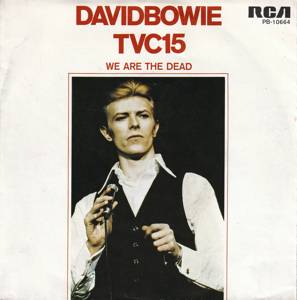
TVC 15 was issued as a single in 1976 and showed a different side of the album.
Where Golden Years was sleek and radio-friendly, TVC 15 was eccentric, surreal and rhythmically playful. Its television imagery and odd narrative made it one of Bowie’s most unusual singles of the decade.
The song became closely associated with the 1976 period and was also used effectively in live performance.
Stay
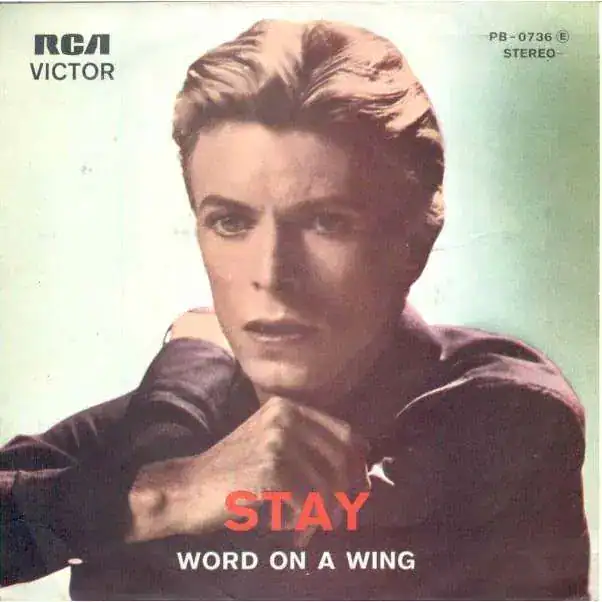
Stay was released as a single in selected territories, including the United States.
Its hard funk-rock arrangement made it one of the strongest examples of the new band sound Bowie had developed with Carlos Alomar, Earl Slick, George Murray and Dennis Davis.
Although it was not a major hit, it remains one of the key recordings from the album and an important link to Bowie’s later live arrangements.
Later Single Releases
Wild Is The Wind

Wild Is The Wind became historically important again when it was released as a single in 1981, outside the original Station to Station album campaign.
By then Bowie’s reputation had changed again, and the single allowed listeners to reconsider one of his strongest vocal performances from the mid-1970s.
Because the 1981 release belongs to a later period, it is historically separate from the original 1975–1976 single campaign.
The Soul Train Appearance
Before the album was released, Bowie appeared on the American television programme Soul Train, where he performed Golden Years and Fame.
The appearance was significant because Soul Train was one of the most important showcases for Black American music and dance culture. Bowie’s presence reflected the success of Young Americans and his continued connection with soul and funk audiences.
At the same time, Bowie appeared visibly tense and fragile. The performance has become one of the most revealing television documents of the period.
The Cher Show And Other Appearances
During the months around the album’s creation, Bowie also appeared on American television with Cher.
These appearances showed him moving away from the colourful theatricality of earlier years toward a colder, more severe mid-1970s image.
They also helped introduce the visual language that would become central to the Thin White Duke period: formal clothing, pale appearance, controlled gestures and emotional distance.
The Isolar Tour 1976
The album was followed by the 1976 world tour, often known as the Isolar Tour.
The stage presentation was stark and controlled, matching the Thin White Duke image. Instead of the elaborate theatrical scenery of the Diamond Dogs Tour, the 1976 performances relied on lighting, band power and Bowie’s severe stage presence.
The tour featured material from Station to Station alongside earlier songs, but the arrangements often made older material sound harder and colder.
The tour also captured Bowie at a moment of extreme intensity. Musically it was one of his strongest live periods, even though the personal circumstances around it were deeply troubled.
Nassau Coliseum 1976
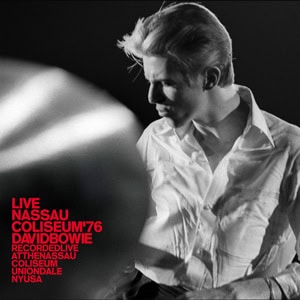
One of the most famous live documents from the period is the concert recorded at Nassau Coliseum in Uniondale, New York, on 23 March 1976.
The performance was later issued officially and became an important part of the Station to Station reissue history.
It shows the 1976 band at full power, with the album’s material transformed into sharp, dramatic live arrangements.
Making Of The Album Covers / Cover Story
The cover of Station to Station is one of David Bowie’s most mysterious and restrained album sleeves.
Unlike Aladdin Sane, Diamond Dogs or Young Americans, the sleeve did not depend on a new glamour portrait or a staged rock-star image. Bowie chose a still from The Man Who Fell To Earth, turning a film image into an album statement.
Image: David Bowie World collection
The front cover shows Bowie as Thomas Jerome Newton, the alien character he played in Nicolas Roeg’s film.
The image appears to show Newton entering a futuristic chamber, a visual idea that perfectly matches the album’s themes of travel, transformation and movement between states of being.
The original sleeve used a stark black-and-white presentation with a white border and red title lettering. This gave the album an austere, almost clinical appearance that suited the Thin White Duke era.
The sleeve’s simplicity is part of its strength. It does not explain the album; it leaves the listener with an image of transition and uncertainty.
Want to discover the full story behind the Station to Station album cover? Explore its connection with The Man Who Fell to Earth, the original artwork and the design of the album sleeve.
Steve Schapiro And The Film Still
The cover image is connected to photographer Steve Schapiro, whose work with Bowie during the mid-1970s became one of the most important visual records of the period.
Schapiro photographed Bowie in a number of striking settings and also captured images connected with The Man Who Fell To Earth. His photographs from this era helped define Bowie’s mid-1970s visual identity.
The decision to use a film still rather than a conventional album portrait blurred the boundary between cinema and music. It made Station to Station feel like part of a larger psychological drama.
The Thin White Duke Visual Style
Although the Thin White Duke is not named on the cover, the sleeve is inseparable from that persona.
The monochrome image, the white border and the sense of distance all match the Duke’s visual world: formal, severe, elegant and emotionally removed.
This was a deliberate break from Bowie’s earlier 1970s sleeves. The colourful alien glamour of Ziggy Stardust and the painted grotesque of Diamond Dogs had disappeared. In their place was a colder and more minimal image.
The Dark Printing Mystery
Many early copies of the album appeared darker than later reproductions, making details in the image difficult to see.
This helped add to the mysterious quality of the sleeve. The image seemed almost hidden, as if the viewer were seeing only a fragment of a larger scene.
Later reissues sometimes used clearer or colour versions of the image, revealing more of the original still and changing the way listeners encountered the artwork.
Back Cover / Cover Versions
Image: David Bowie World collection
The original back cover continued the minimalist visual language of the front sleeve.
Rather than overwhelming the design with decorative imagery, the packaging focused on typography, credits and the track listing.
Later reissues changed the way the artwork was presented. Some used a clearer or colour version of the film still, while the 1991 Rykodisc/EMI edition used different visual material connected with Steve Schapiro’s photographs.
These variations are important for collectors, but the original 1976 RCA sleeve remains the defining visual statement of the album.
Release And Reception
Station to Station was released by RCA Records on 23 January 1976.
The album was a strong commercial success. It reached number five on the UK Albums Chart and number three on the US Billboard album chart, making it Bowie’s highest-charting American studio album up to that point.
Critical reaction recognised the album’s ambition, although its strange mixture of soul, funk, rock and experimental atmosphere made it difficult to classify.
Over time, Station to Station has become widely regarded as one of Bowie’s greatest albums and one of the central works of his 1970s catalogue.
Reissues, Remasters And Deluxe Editions
![David Bowie Station To Station [Special Edition, 3CD] (2010)](https://www.davidbowieworld.com/wp-content/uploads/2014/08/david-bowie-station-to-station-special-front.jpg "David Bowie Station To Station [Special Edition, 3CD] (2010)")
Station to Station has been reissued many times, reflecting its importance in Bowie’s catalogue.
The album first appeared on compact disc through RCA in the 1980s. A 1991 Rykodisc/EMI edition added live bonus tracks from the 1976 Nassau Coliseum concert.
In 2010 the album received major special and deluxe editions, including the original album, the officially released Nassau Coliseum concert and new Harry Maslin mixes.
The album was remastered again for the Who Can I Be Now? (1974–1976) box set and later made available as a standalone release.
Legacy
Today Station to Station is considered one of David Bowie’s most important albums.
It is short, but every track matters. It contains commercial singles, spiritual crisis, experimental structure, hard funk, European atmosphere and one of Bowie’s most memorable personas.
The album also introduced the core rhythm section of George Murray and Dennis Davis into one of Bowie’s most important creative phases, while Carlos Alomar’s role became even more central to Bowie’s sound.
Most importantly, Station to Station opened the door to the next transformation. Without this album, the move toward Low and the Berlin period would be much harder to understand.
The Road To Low
After Station to Station, Bowie left Los Angeles behind and moved toward Europe.
The desire for a new environment, a healthier life and a more experimental artistic direction became increasingly urgent. The European influence that appears inside the title track would soon become central to his work.
Low, released in 1977, did not simply appear from nowhere. Its roots can already be heard in the cold spaces, fractured moods and forward-looking structure of Station to Station.
Why Station to Station Still Matters
Station to Station remains powerful because it captures Bowie at the exact point between collapse and reinvention.
The album was made during a frightening personal period, but the music is controlled, intelligent and daring. Bowie used crisis not as decoration, but as raw material for transformation.
It is one of the clearest examples of his ability to move forward before the audience knew where he was going. The Thin White Duke, the film still, the long title track, the soul fragments and the European shadows all point toward the next phase.
For that reason, Station to Station is not only a great Bowie album. It is one of the essential turning points in modern popular music.
Article Origin
This article was created using documented information relating to the writing, recording, production, release, artwork and later reissue history of David Bowie’s Station to Station.
It incorporates historical album-session information, documented musician and producer recollections, chart data, RCA release history, material connected with The Man Who Fell To Earth and material preserved in the David Bowie World archive.
