
The Making Of The Rise and Fall of Ziggy Stardust and the Spiders from Mars (1972)
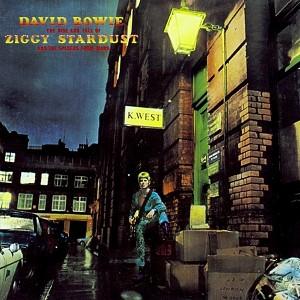
Image: David Bowie World collection / editorial use
Released on 16 June 1972, The Rise and Fall of Ziggy Stardust and the Spiders from Mars became the album that transformed David Bowie from a respected cult artist into one of the most influential figures in popular music. More than simply a collection of songs, the record introduced a fictional rock star whose story would reshape the relationship between music, theatre, fashion and performance.
The album emerged during a period when Bowie was searching for a breakthrough. Although critics admired his songwriting, commercial success remained elusive. With Ziggy Stardust he combined strong songs, a compelling visual identity, a powerful backing band and a carefully developed stage character. The result was one of the defining albums of the twentieth century.
- Album: The Rise and Fall of Ziggy Stardust and the Spiders from Mars
- Released: 16 June 1972
- Official recording sessions began: 8 November 1971
- Recorded: November 1971 – February 1972
- Main studio: Trident Studios, London
- Producers: David Bowie & Ken Scott
- Label: RCA Records
- Previous album: Hunky Dory
- Next album: Aladdin Sane
- Backing band: The Spiders from Mars
- Breakthrough single: Starman
The Road To Ziggy Stardust
The story of Ziggy Stardust did not begin in 1972. Its roots can be traced back several years to Bowie’s fascination with identity, performance and reinvention. During the late 1960s he experimented with mime, theatre, folk music, psychedelic rock and hard rock, constantly searching for a creative direction that would allow him to stand apart from other performers.
By 1971 Bowie had already released four studio albums, yet he remained far from being a household name. Critics often praised his ambition, but chart success arrived only in brief flashes. Songs such as Space Oddity demonstrated his potential, yet he still lacked a defining artistic identity that could unite his music, image and stage presentation.
The breakthrough would come when Bowie stopped thinking purely as a songwriter and began thinking as a dramatist.
That new creative approach quickly took shape during 1971. Bowie began developing the character of Ziggy Stardust while writing a new collection of songs inspired by science fiction, rock and roll, celebrity culture and the idea of an alien rock star whose meteoric rise would ultimately lead to his downfall. At the same time, guitarist Mick Ronson, bassist Trevor Bolder and drummer Mick Woodmansey were evolving into the classic Spiders from Mars line-up, giving Bowie the powerful band he had long been searching for.
On 8 November 1971, Bowie and the Spiders from Mars entered Trident Studios in Soho, London, for what is widely regarded as the official beginning of the The Rise and Fall of Ziggy Stardust and the Spiders from Mars recording sessions. Working alongside co-producer Ken Scott, they recorded Hang On to Yourself, Ziggy Stardust, Star, It Ain’t Easy and the outtake Velvet Goldmine. These energetic sessions established the distinctive sound of the Spiders from Mars and laid the musical foundations for what would become one of the most influential rock albums ever made.
Lindsay Kemp And Performance Art
One of the most important influences on Bowie during this period was mime artist and theatrical performer Lindsay Kemp.
Bowie had studied under Kemp during the late 1960s and often credited him with teaching him how to communicate visually as well as musically. Kemp encouraged students to create characters, use exaggerated movement and approach performance as a form of storytelling.
Those lessons remained with Bowie for the rest of his career. Long before Ziggy Stardust appeared, Bowie had learned that a performer could become a character rather than simply present themselves as a conventional singer.
The theatrical approach that later defined Ziggy owed a considerable debt to Kemp’s influence.
Arnold Corns: The Missing Link
One of the most important stepping stones towards Ziggy Stardust was a short-lived project called Arnold Corns.
The group revolved around Bowie and fashion designer Freddi Burretti, although Bowie effectively controlled the musical direction. The project produced early versions of songs that would later become central parts of the Ziggy mythology.
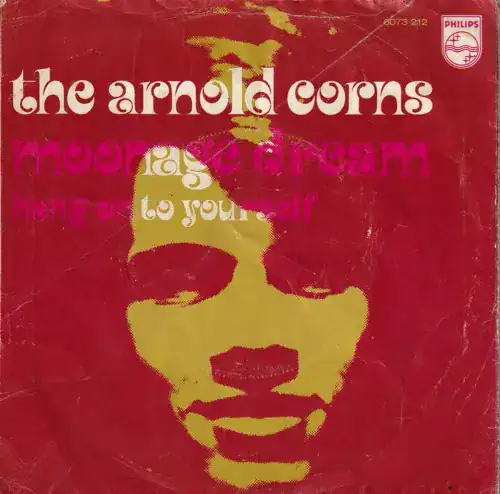
Among these were Moonage Daydream and Hang On To Yourself, both released in 1971 in versions that sounded very different from the recordings that would later appear on Ziggy Stardust.
Commercially the Arnold Corns singles failed, but artistically they proved crucial. They allowed Bowie to experiment with themes, sounds and imagery that would later become central to the Ziggy concept.
Freddi Burretti And The Ziggy Look
While many people remember Ziggy Stardust primarily as a musical creation, the visual side was equally important.
Freddi Burretti played a major role in developing that appearance. Originally involved with the Arnold Corns project, Burretti later became one of the key designers behind Ziggy’s stage wardrobe.
The costumes helped separate Ziggy from the conventional rock stars of the early 1970s. Instead of denim, leather jackets and blues-rock imagery, Ziggy appeared in brightly coloured outfits, dramatic silhouettes and designs that owed as much to theatre and fashion as they did to rock music.
This visual transformation became one of the defining aspects of the Ziggy phenomenon.
The Inspirations Behind Ziggy
Contrary to popular belief, Ziggy Stardust was not based on a single real person.
Bowie drew inspiration from multiple sources and combined them into a unique character. One influence was The Legendary Stardust Cowboy, an eccentric American outsider musician whose stage name almost certainly contributed to Ziggy’s surname.
Another important influence was British rock-and-roll singer Vince Taylor.
Taylor had enjoyed success during the late 1950s and early 1960s but later developed increasingly erratic behaviour. By the mid-1960s he reportedly believed himself to be a messianic figure and spoke openly about extraterrestrial ideas and cosmic visions.
Bowie encountered Taylor and found him fascinating. Elements of Taylor’s rise, decline and self-created mythology later became woven into Ziggy Stardust.
At the same time, Bowie was absorbing influences from science fiction, Japanese theatre, underground American rock music and contemporary fashion culture.
Ziggy ultimately became a synthesis of all those elements rather than a direct portrait of any individual.
The Creation Of Ziggy Stardust
During 1971 Bowie gradually began shaping the character that would become Ziggy Stardust.
The earliest ideas did not necessarily form a complete narrative. Instead, Bowie developed fragments: an alien visitor, a doomed rock star, a messenger figure and a performer who becomes consumed by fame.
As additional songs emerged, those fragments began connecting with one another.
The character allowed Bowie to explore subjects that fascinated him: celebrity culture, isolation, sexuality, apocalypse, ambition and the relationship between performer and audience.
Importantly, Ziggy was not simply a fictional character living inside the lyrics. Bowie intended to perform him on stage, in interviews, on television and in photographs.
This decision would prove revolutionary. Rather than promoting an album, Bowie was creating an entire world.
Hunky Dory And The New Direction
The making of Ziggy Stardust was closely connected to Hunky Dory, even though the two albums feel very different.
Hunky Dory showed Bowie’s growing confidence as a songwriter. It contained piano-led songs, reflective lyrics and a wide range of influences, from art pop to cabaret and singer-songwriter material.
But Bowie knew that admiration from critics was not enough. He wanted a stronger live identity, a more direct rock sound and a visual concept powerful enough to cut through the crowded British music scene.
Where Hunky Dory often looked inward, Ziggy Stardust looked outward. It was built for impact: shorter, sharper, louder and more theatrical.
Back To Trident Studios
Bowie returned to Trident Studios in London with a team that had already proved itself during the Hunky Dory sessions.
Trident was one of the most important studios in London at the time, and it gave Bowie and Ken Scott the technical freedom they needed. For Ziggy Stardust, the studio had moved into sixteen-track recording, which allowed more space for overdubs, arrangements and detailed production work.
The atmosphere was focused rather than chaotic. The album was not created through endless studio experimentation. Instead, Bowie arrived with strong ideas, and the band worked quickly.
The speed of the sessions helped preserve the record’s energy. Ziggy Stardust still sounds immediate because much of it was built around a tight band playing with confidence.
Ken Scott’s Role
Producer and engineer Ken Scott was one of the central figures in the making of the album.
Scott had already worked with Bowie on Hunky Dory and understood how to capture both the intimacy and theatricality of Bowie’s voice. On Ziggy Stardust, he helped create a sound that was cleaner and more powerful than Bowie’s earlier records.
Scott later recalled that Bowie’s vocals were often completed very quickly. Bowie did not usually labour over take after take. He trusted instinct, and many of his vocal performances from this period kept the freshness of early takes.
That approach gave the album part of its urgency. Even when the arrangements are carefully built, the performances rarely feel overworked.
The Spiders From Mars
The album’s title gave Bowie’s band a mythic identity: The Spiders from Mars.
The core group consisted of Mick Ronson on guitar, Trevor Bolder on bass and Mick Woodmansey on drums. Together they gave Bowie the strongest rock band sound of his career so far.
The Spiders were essential because Ziggy Stardust needed to feel like more than a solo singer’s fantasy. The album had to sound as if a real band existed inside the story.
Ronson, Bolder and Woodmansey gave that illusion weight. Their playing made the fictional band believable.
Mick Ronson: Guitarist, Arranger And Architect
Mick Ronson was the album’s most important musical collaborator.
His guitar playing gave Ziggy Stardust its authority. The riffs and solos on Moonage Daydream, Ziggy Stardust, Suffragette City and Hang On To Yourself helped define the sound of early-1970s glam rock.
But Ronson’s contribution went far beyond guitar.
He also arranged strings and brass, adding drama and emotional scale to songs that could otherwise have remained simple rock performances.
On tracks such as Five Years and Rock ’n’ Roll Suicide, Ronson’s arrangement work helped turn Bowie’s songs into miniature theatre pieces.
His partnership with Bowie was one of the reasons the album could be both raw and sophisticated at the same time.
Trevor Bolder And The Weight Of The Band
Trevor Bolder’s bass playing gave the album much of its physical strength.
Bolder had a firm, melodic style that supported Ronson’s guitar without simply following it. His playing added movement to the songs and helped the band sound larger than its three-piece core.
On the faster tracks, he gave the music drive. On the more dramatic songs, he helped anchor the arrangements so that Bowie’s theatrical vocals never floated away from the rhythm section.
His contribution is sometimes less discussed than Ronson’s, but it is central to the album’s power.
Mick Woodmansey And The Drum Sound
Mick “Woody” Woodmansey provided the album’s direct and muscular drum style.
His playing was never flashy for its own sake. Instead, he gave each song exactly what it needed: the slow build of Five Years, the tight drive of Hang On To Yourself, the punch of Suffragette City and the drama of Rock ’n’ Roll Suicide.
The drum sound on Ziggy Stardust was stronger and more focused than on some earlier Bowie recordings. That helped the album feel like a true rock record rather than simply a theatrical concept.
Rick Wakeman’s Final Link To Hunky Dory
Rick Wakeman was not part of the main Ziggy Stardust sessions in the same way he had been central to Hunky Dory.
However, his playing remained present through It Ain’t Easy, a track recorded during the earlier period.
That song became the only cover version on the finished album and the clearest musical link back to Hunky Dory.
Its inclusion shows how Bowie assembled the final album from both new material and selected earlier recordings that could fit the mood of the project.
Recording The Album
The main recording process was relatively fast.
Bowie and the band worked with confidence, and many backing tracks were completed quickly. The musicians were expected to learn songs fast and capture performances while the energy was still fresh.
This method suited Bowie’s creative temperament. He was not interested in draining the life out of songs through excessive perfectionism.
The band could be pushed hard, but that pressure helped create the album’s distinctive tension. The recordings feel rehearsed enough to be powerful but spontaneous enough to remain alive.
Overdubs And Details
Although the band performances were central, Ziggy Stardust was not recorded as a completely live album.
Overdubs were used throughout. Bowie and Ken Scott shaped the recordings with extra guitars, vocals, acoustic textures, saxophone, strings, brass and other details.
One of the album’s secrets is how carefully these details are placed. The record never loses its directness, yet it contains far more arrangement work than a casual listen might suggest.
That balance between raw band energy and carefully controlled studio craft is one of the reasons the album has aged so well.
Acoustic Guitar In The Sound
A notable feature of the album is the presence of acoustic guitar even within the rock songs.
The acoustic parts often add rhythm, brightness and movement beneath the electric instruments. They help the tracks cut through without relying only on cymbals or heavy distortion.
This gives the album a special texture. It rocks hard, but it also has a sharp, percussive clarity that separates it from many heavier records of the same period.
The Vocals
Bowie’s vocal performances are among the strongest of his early career.
Across the album he shifts between narrator, prophet, outsider, lover, star and doomed performer. The voice is not always the same character, but it always belongs to the same dramatic world.
On Five Years, he builds from shock to hysteria. On Starman, he becomes a mysterious messenger. On Ziggy Stardust, he narrates the rise and fall of the star from a distance. On Rock ’n’ Roll Suicide, he turns collapse into communal rescue.
This dramatic vocal range is central to the album’s power. Ziggy Stardust is not only written; he is performed into existence.
Starman And The Turning Point
One of the most important changes to the album came late in the process.
RCA wanted a stronger single, and Bowie returned to Trident to record Starman.
Before that, the Chuck Berry song Round And Round had been considered for the album. Once Starman was added, Round And Round was removed from the final track listing.
This decision changed the album dramatically.
Starman gave the record a clear pop centre and helped listeners understand the Ziggy world. Its image of a mysterious figure communicating through radio was perfect for the album’s mythology.
Without Starman, the album would still have been strong. With it, Bowie had the song that could carry Ziggy into the mainstream.
Outtakes And Unused Material
Several songs connected to the sessions did not appear on the final album.
Among the most important were Round And Round, Velvet Goldmine, Sweet Head, Holy Holy, Bombers and Amsterdam.
Some of these recordings were close to completion, while others were less developed or simply did not fit the final shape of the album.
Their existence shows that Ziggy Stardust was not created as a locked story from the beginning. Bowie shaped the album through selection, replacement and refinement.
The final version feels inevitable now, but it was the result of practical decisions made during recording and preparation for release.
From Round And Round To Ziggy Stardust
At one stage, Round And Round was more than just an unused track. It reflected Bowie’s interest in building the album around a harder rock-and-roll energy.
The replacement of that song with Starman shifted the balance.
Instead of ending up as a more straightforward rock record, Ziggy Stardust gained a stronger science-fiction pop identity.
That change helped make the album more distinctive. It was no longer only about rock-and-roll energy. It was about communication, salvation, stardom and myth.
The Album Concept Takes Shape
As the songs were assembled, the Ziggy concept became clearer.
The album begins with apocalypse, moves through different forms of love and belief, introduces a cosmic messenger, then gradually turns towards rock stardom, fame, excess and collapse.
The story is not literal from beginning to end, but the emotional arc is unmistakable.
Bowie used the loose concept to give the songs a shared atmosphere. That atmosphere was strong enough for listeners to imagine a complete world even when the lyrics left gaps.
Important Songs: Five Years
Five Years opens the album with one of Bowie’s most powerful scenes.
The song begins with a simple drum pattern and gradually builds into a vision of public shock after humanity learns that only five years remain.
It is not a conventional rock opening. Instead, it feels like the curtain rising on a dramatic production.
The song establishes the emotional stakes of the album: panic, longing, disbelief and the desperate need for something or someone to appear.
Important Songs: Soul Love
Soul Love follows the apocalypse of Five Years with a colder and more reflective song.
The lyric moves through different kinds of love, but it does not treat love as a simple solution.
Instead, Bowie presents love as something observed from a distance: powerful, human and possibly inadequate in the face of catastrophe.
Musically, the song softens the album after the intensity of the opening, while still keeping the listener inside the same strange world.
Important Songs: Moonage Daydream
Moonage Daydream is one of the album’s defining tracks.
The song had existed earlier in a very different Arnold Corns version, but the Ziggy recording transformed it completely.
Here Bowie fully enters the language of science-fiction rock. The lyrics are surreal, sexual and cosmic, while the music gives Mick Ronson space for one of his most famous guitar performances.
The track is central because it presents Ziggy not as an idea being explained, but as a force arriving.
Important Songs: Starman
Starman became the album’s breakthrough song.
It offered a hopeful and accessible doorway into the Ziggy story. The song’s central image — a mysterious figure contacting young people through the radio — connected perfectly with Bowie’s own rise through television, radio and youth culture.
Its melody was direct, but its message was strange enough to remain unmistakably Bowie.
More than any other song on the album, Starman turned Ziggy into a figure listeners could welcome into their own lives.
Important Songs: Lady Stardust
Lady Stardust is one of the album’s most tender performances.
The song presents an androgynous performer admired by an audience that is both fascinated and moved.
Its gentle piano-led arrangement creates a contrast with the louder rock material around it.
The song is important because it shows that the Ziggy world was not built only on shock and volume. It also contained beauty, vulnerability and longing.
Important Songs: Star
If Starman represents hope, Star represents ambition.
The song is one of the clearest statements of the album’s central obsession: fame. Bowie presents the dream of becoming a rock-and-roll star as both escape and destiny.
The lyric reflects his own experiences. By 1971 he had spent years searching for commercial success while watching other performers achieve the fame he believed was within his reach.
In hindsight, the song feels almost prophetic. Within months of the album’s release, Bowie himself would become exactly what he was singing about.
Important Songs: Hang On To Yourself
Hang On To Yourself began life during the Arnold Corns period but was transformed for the album.
The Ziggy version is faster, tighter and far more aggressive than the earlier recording. Its driving rhythm and relentless energy have often been cited as an influence on the punk movement that would emerge later in the decade.
The song demonstrates how Bowie could take an existing idea and completely reinvent it. What had once been an interesting experiment became one of the most exciting performances on the album.
The track also allowed the Spiders from Mars to demonstrate their power as a live band.
Important Songs: Ziggy Stardust
The title track remains one of Bowie’s greatest achievements.
Unlike many songs about rock stars, Ziggy Stardust feels both celebratory and tragic. Bowie describes a performer whose talent, charisma and ambition elevate him above everyone around him, yet those same qualities eventually contribute to his downfall.
The song provides the clearest portrait of Ziggy as a character. It is also one of the finest examples of Mick Ronson’s guitar work.
Its central riff has become one of the most recognisable guitar figures in Bowie’s catalogue.
Important Songs: Suffragette City
Few songs on the album hit as hard as Suffragette City.
Built around a relentless rhythm and one of the album’s most memorable hooks, it became a live favourite almost immediately.
The song is also famous for a long-standing misconception. Many listeners believed they were hearing a saxophone section, but the distinctive sound was actually created using a synthesizer.
The result added a futuristic edge that helped separate the track from more traditional rock-and-roll influences.
Important Songs: Rock ’n’ Roll Suicide
The album closes with one of the most dramatic performances of Bowie’s career.
Rock ’n’ Roll Suicide begins quietly and intimately before expanding into a grand emotional finale supported by strings and brass.
The song functions as both an ending and a warning. Ziggy’s rise has reached its conclusion, and the cost of fame becomes impossible to ignore.
At the same time, Bowie refuses to leave the listener in despair. The song ends with a gesture of connection and compassion, transforming personal collapse into communal survival.
It remains one of the most powerful closing tracks in rock history.
Track Listing
The final sequence of songs gave the album a remarkable sense of momentum. Each track contributes to the atmosphere and emotional journey, creating one of the most cohesive albums of Bowie’s career.
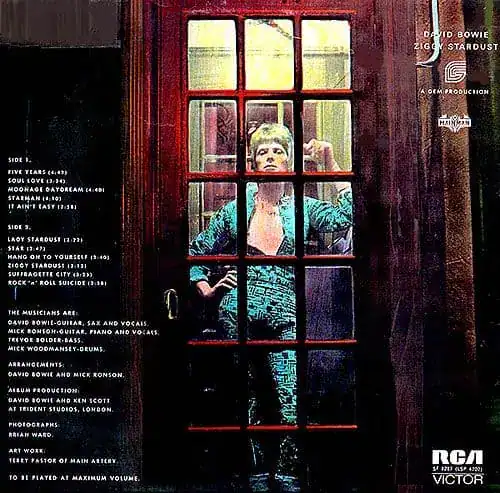
Image: David Bowie World collection / editorial use
- Five Years
- Soul Love
- Moonage Daydream
- Starman
- It Ain’t Easy (Ron Davies)
- Lady Stardust
- Star
- Hang On To Yourself
- Ziggy Stardust
- Suffragette City
- Rock ’n’ Roll Suicide
Together these eleven tracks created an album that was both commercially accessible and artistically ambitious, helping establish David Bowie as one of the most important artists of the decade.
Singles From The Album
Starman
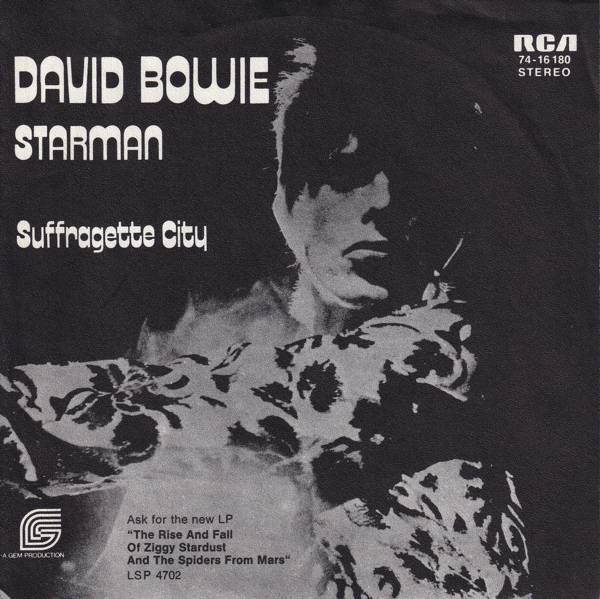
Released in April 1972, Starman became the breakthrough single that introduced Ziggy Stardust to a mass audience.
The song reached the UK Top 10 and provided Bowie with the hit he had been searching for. More importantly, it gave listeners an entry point into the wider Ziggy mythology.
Without Starman, the album might still have become a critical success. With it, Bowie gained the commercial momentum necessary to transform Ziggy into a national phenomenon.
Rock ’n’ Roll Suicide
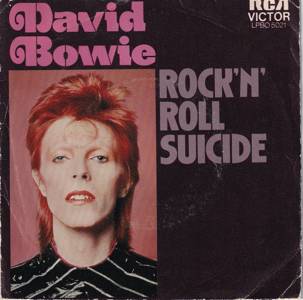
Although released later than Starman, Rock ’n’ Roll Suicide became one of the defining songs of the Ziggy era.
Its emotional power increased through live performance, particularly during the final Ziggy concerts in 1973.
For many fans, it became inseparable from the character’s eventual farewell.
Later Single Releases
Suffragette City (1976)
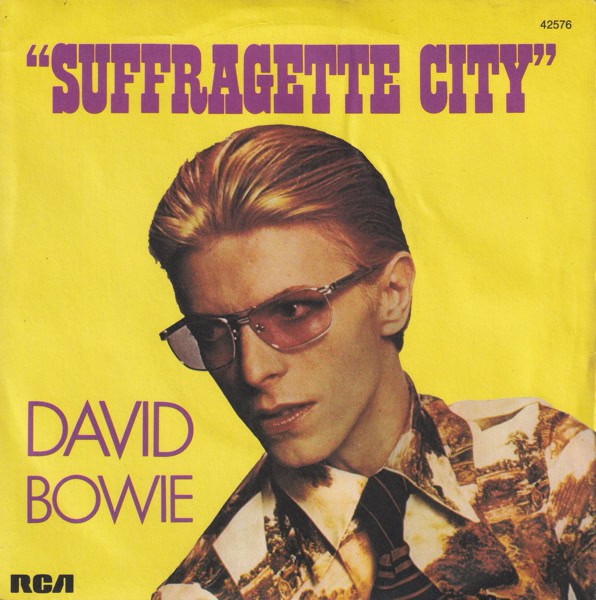
Although not released as a UK single during the original Ziggy Stardust campaign, Suffragette City remained one of the album’s most popular songs.
The track was originally issued as the B-side of Starman in 1972 and later received single releases in various territories, including a UK release in 1976.
Over time it became one of the most recognisable recordings associated with the Ziggy era and a regular feature of Bowie compilation albums and live performances.
The Top Of The Pops Performance
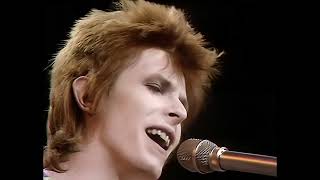
The true breakthrough moment arrived on 6 July 1972 when Bowie performed Starman on BBC television’s Top of the Pops.
Millions of viewers suddenly encountered Ziggy Stardust in their living rooms. Bowie’s appearance was unlike anything most British audiences had seen before.
VIDEO: Live on Top Of The Pops
-
VIDEO: Live on Top Of The Pops
Watch the performance that launched David Bowie to stardom. Thursday 6th July, 1972 is said to be 'the day that invented the 80’s’ as so many musicians who went on to be household names saw the performance and it changed their lives. Those watching that night included U2’s Bono, The Cure’s Robert Smith, Boy George, Adam Ant, Mick Jones of the Clash, Gary Kemp of Spandau Ballet, Morrissey and Johnny Marr of the Smiths, Siouxsie Sioux, Toyah Willcox, John Taylor and Nick Rhodes of Duran Duran, Dave Gahan of Depeche Mode and many more. Recorded on 5 July 1972 at the BBC Television Centre in White City, London, the performance is undoubtedly one of the most essential pieces of music television ever broadcast. It has influenced generations of musicians, artists and writers who saw it at the time and countless others who have since seen it over the decades, from bootleg VHS copies to YouTube clips.
His bright costume, striking hair, theatrical gestures and obvious comfort with ambiguity challenged many assumptions about what a rock star could look like.
The performance instantly became one of the most famous moments in British television history.
Many future musicians later described it as a life-changing experience.
The Ziggy Stardust Tour
The album was only one part of the Ziggy phenomenon. The tour transformed the character into a living presence.
Beginning in early 1972 and continuing into 1973, Bowie and the Spiders from Mars developed one of the most visually distinctive live shows of the era.
Costume changes, theatrical presentation and carefully constructed stage imagery helped separate Ziggy from traditional rock performers.
The concerts also allowed the songs to evolve. Tracks such as Moonage Daydream, Hang On To Yourself and Suffragette City became even more powerful in front of an audience.
As the tour expanded internationally, Bowie’s popularity grew rapidly.
Ziggy As Performance Art
One reason Ziggy Stardust remains important is that Bowie treated the character as more than a marketing device.
He effectively turned popular music into a form of performance art.
The boundaries between artist and character became deliberately blurred. Bowie appeared as Ziggy in interviews, photographs, television appearances and live performances.
This approach was unusual at the time. While other musicians adopted stage personas, few committed to them as completely as Bowie did during the Ziggy era.
The result was both artistically successful and personally complicated.
Gender, Identity And Ziggy
The Ziggy character challenged expectations surrounding gender and identity.
Bowie combined traditionally masculine and feminine elements in both his appearance and stage presentation. Bright make-up, dramatic clothing and androgynous styling became central parts of the Ziggy image.
For many young fans, particularly those who felt different or excluded, Ziggy offered a new model of self-expression.
The character suggested that identity could be flexible, creative and self-invented rather than fixed by social expectations.
That message remains one of the most enduring aspects of the Ziggy legacy.
America Discovers Bowie
As Ziggy Stardust gained momentum in Britain, Bowie increasingly turned his attention toward America.
The United States represented both opportunity and challenge. American audiences were larger, but they were also unfamiliar with Bowie’s theatrical approach.
The Ziggy tour gradually introduced him to American listeners, and the album’s reputation grew steadily through live performances, press coverage and word of mouth.
The experience would profoundly influence Bowie and eventually contribute to the creation of Aladdin Sane.
The Beginning Of The End
Ironically, the success of Ziggy Stardust contained the seeds of its eventual destruction.
As the character became more popular, audiences increasingly treated Ziggy as a real person rather than a performance.
Bowie later spoke about becoming deeply immersed in the role. The distinction between artist and character became harder to maintain.
The very success that made Ziggy famous also made it difficult for Bowie to move beyond him.
The Death Of Ziggy Stardust
By 1973, Ziggy Stardust had become far more successful than anyone could have predicted when the album was recorded at Trident Studios.
The character that had begun as a creative experiment had evolved into an international phenomenon. Audiences no longer simply listened to Ziggy Stardust; many believed in him.
For Bowie, this created a problem.
The character had become so successful that it threatened to limit his future artistic freedom. Bowie had always been driven by change and reinvention. Remaining Ziggy forever was never part of the plan.
At the same time, the demands of touring, publicity and constant performance were becoming increasingly exhausting.
As Ziggy’s fame grew, Bowie began considering how and when he should bring the character’s story to an end.
The Hammersmith Odeon Farewell
The final Ziggy Stardust performance took place at London’s Hammersmith Odeon on 3 July 1973.
The concert was already a major event, but few people in the audience realised they were about to witness one of the most famous moments in rock history.
Near the end of the show, Bowie surprised both fans and members of his own band by announcing:
“Of all the shows on this tour, this particular show will remain with us the longest because not only is it the last show of the tour, but it’s the last show that we’ll ever do.”
The statement caused confusion and shock.
Bowie was not retiring from music, but he was retiring Ziggy Stardust.
The announcement effectively ended one of the most influential characters in popular music.
The farewell performance was later immortalised in D. A. Pennebaker’s concert film Ziggy Stardust and the Spiders from Mars.
How Ziggy Changed Bowie
The Ziggy era transformed David Bowie in ways that extended far beyond commercial success.
For the first time, he achieved the level of fame he had pursued throughout the previous decade. The album, the tour and the character established him as one of the most important artists of his generation.
At the same time, Ziggy taught Bowie the dangers of becoming trapped inside a successful persona.
Throughout the remainder of his career he would continue creating characters and artistic identities, but he rarely immersed himself as completely as he had during the Ziggy years.
The experience shaped the way he approached fame, performance and self-invention for the rest of his life.
The Road To Aladdin Sane
Even before Ziggy officially ended, Bowie was already moving towards a new creative direction.
The extensive touring that followed the album’s success exposed him to America in a way he had never experienced before. The energy, scale and contradictions of the United States fascinated him.
Those experiences became the foundation for Aladdin Sane, released in 1973.
Bowie famously described the album as:
“Ziggy goes to America.”
Although Ziggy Stardust was disappearing, the lessons learned during the period would continue influencing Bowie’s work for years.
Making Of The Cover
The famous album cover was photographed by Brian Ward on Heddon Street in London during January 1972.
The image showed Bowie standing beneath the now legendary K. West sign, creating one of the most recognisable photographs in rock history.
The final artwork was colourised by Terry Pastor, whose work helped transform an ordinary London street into a mysterious and cinematic setting.
The photograph became inseparable from the Ziggy myth and remains one of the defining visual images of David Bowie’s career.
For the complete story behind the cover photograph, Heddon Street, Brian Ward, Terry Pastor and the K. West sign, see the dedicated David Bowie World article:
Want to discover the full story behind the iconic Ziggy Stardust cover? Explore the famous Heddon Street photo session, photographer Brian Ward and the making of one of rock’s greatest album sleeves.
Release And Reception
When The Rise and Fall of Ziggy Stardust and the Spiders from Mars was released on 16 June 1972, reviews were generally positive, but few observers predicted the long-term impact the album would have.
The record gradually built momentum through touring, radio exposure and television appearances.
The success of Starman, combined with Bowie’s increasingly striking public image, helped propel the album into the British charts.
Over time, Ziggy Stardust became recognised not simply as a successful album but as a cultural event.
Its influence expanded year after year as new generations discovered the music.
The Birth Of Glam Rock’s Greatest Icon
Although Bowie was not the sole creator of glam rock, Ziggy Stardust became the movement’s defining figure.
The album brought together theatrical presentation, visual experimentation, hard rock energy and pop accessibility in a way that few artists had attempted before.
Many of the images now associated with glam rock — platform boots, vivid costumes, androgynous styling and dramatic stage presentation — became inseparable from Ziggy Stardust.
The album helped establish a blueprint that countless artists would follow throughout the 1970s.
An Influence On Punk
While Ziggy Stardust is usually associated with glam rock, its influence on punk should not be underestimated.
Songs such as Hang On To Yourself and Suffragette City possessed a speed and aggression that pointed towards the future.
Many musicians involved in the punk movement later cited Bowie as an important influence.
The album demonstrated that rock music could be theatrical and rebellious at the same time.
Its impact can be heard not only in glam rock but also in punk, new wave, alternative rock and countless later genres.
Ziggy And Cultural Identity
Beyond music, Ziggy Stardust had a profound cultural impact.
For many listeners, the character represented freedom from conventional expectations surrounding gender, appearance and identity.
Bowie showed that self-expression could be fluid, imaginative and unapologetically individual.
For outsiders, dreamers and people who felt disconnected from mainstream culture, Ziggy became a symbol of possibility.
That aspect of the character remains one of the reasons why the album continues to resonate decades after its release.
Legacy
More than fifty years after its release, The Rise and Fall of Ziggy Stardust and the Spiders from Mars remains one of the most celebrated albums ever recorded.
Its songs continue to appear in lists of the greatest recordings in popular music. The album has been reissued, re-evaluated and rediscovered countless times, yet it has never lost its ability to surprise new listeners.
Part of its enduring power comes from its combination of accessibility and mystery. The melodies are memorable, the performances are exciting and the imagery remains unforgettable.
At the same time, the album never fully explains itself. Listeners are invited to enter the world of Ziggy Stardust and interpret it for themselves.
That openness is one reason why the record continues to inspire musicians, writers, artists and fans around the world.
What began as a bold attempt by David Bowie to create a breakthrough album ultimately became one of the defining works of twentieth-century popular culture.
Article Origin
This page was created using historically documented information relating to the recording and development of The Rise and Fall of Ziggy Stardust and the Spiders from Mars, including interviews with David Bowie, Ken Scott, Mick Ronson, Trevor Bolder, Mick Woodmansey and contemporary sources from the Ziggy Stardust period.
Additional research was drawn from Bowie archive material, recording-session documentation, published biographies, contemporary press coverage, live-performance history and David Bowie World archive sources relating to the creation of the Ziggy Stardust album and character.
