
Dennis Garcia & David Bowie – Keyboards on the Isolar II Tour in Australia
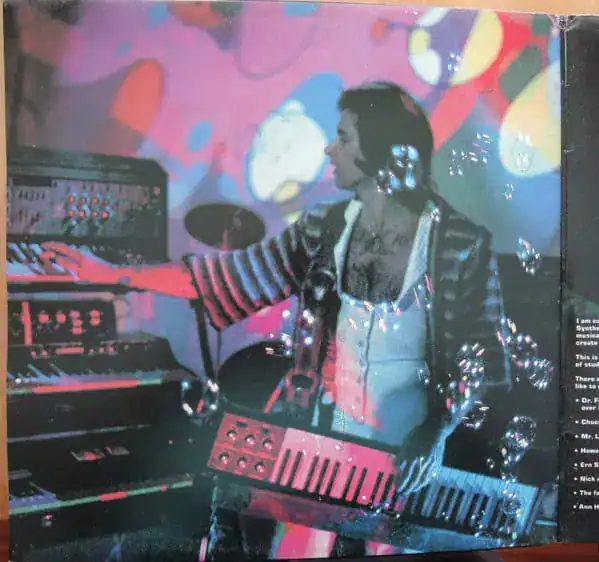
Image: David Bowie World collection / editorial use
Dennis Garcia is an Australian keyboardist, Hammond organ player, synthesizer musician and electronic-music experimenter whose brief connection with David Bowie belongs to one of the most unusual corners of the Isolar II – The 1978 World Tour.
Garcia was not a permanent member of Bowie’s touring band. His role was short but historically significant. During Bowie’s Australian tour dates in November 1978, Garcia stepped into the keyboard position for two confirmed performances, becoming part of one of the most celebrated tours of Bowie’s career.
Outside the Bowie story, Garcia built a fascinating career that stretched from Australian beat groups and session work to pioneering synthesizer experiments and biofeedback-based electronic music. Long before brain-computer interfaces became a serious topic, Garcia was already exploring ways to create music using signals generated by the human body.
- Name: Dennis Garcia
- Nationality: Australian
- Role: Keyboards, synthesizer
- Bowie link: Temporary keyboard and synthesizer player on Bowie’s Australian Isolar II concerts
- Confirmed appearances: Adelaide (11 November 1978) and Perth (14 November 1978)
- Tour: Isolar II – The 1978 World Tour
- Status: Temporary replacement musician
- Known for: Biofeedback synthesizer experiments and the album Jive To Stay Alive
Who is Dennis Garcia?
Dennis Garcia belongs to a fascinating generation of Australian musicians who moved effortlessly between live performance, studio work, technological experimentation and commercial music. Although he is not a household name in the same way as many Bowie collaborators, his story offers a unique glimpse into the musical culture that surrounded Bowie’s Australian tour in 1978.
Garcia began his musical journey at a very young age. According to later interviews, his father gave him a miniature piano accordion when he was only three years old. While the instrument may have seemed an unlikely starting point, it introduced him to music and performance at an age when most children were still learning basic coordination.
As he grew older, Garcia moved away from the accordion and became increasingly interested in keyboards. Eventually he adopted the Hammond organ, an instrument that would become central to his early professional career and open doors into the rapidly expanding Australian music scene of the 1960s.
Julian Jones and the New Breed
During his teenage years Garcia left home and entered the professional music world. One of his earliest significant groups was Julian Jones and the New Breed, a band operating during a period when Australian popular music was becoming increasingly influenced by British beat music, rhythm and blues and the growing international rock scene.
The group was managed by Ivan Damon, an important figure in Australian entertainment who was also associated with one of the country’s biggest pop stars, Normie Rowe.
When Rowe was called into military service during the Vietnam era, Damon looked for new acts capable of attracting young audiences. This brought additional attention to Julian Jones and the New Breed and gave Garcia valuable experience within a professional touring and promotional environment.
For the young keyboard player, this period provided an education in how the music business operated beyond simply performing on stage. He learned about touring schedules, management structures and the realities of working as a professional musician.
Running, Jumping, Standing Still
Garcia later moved to a very different musical environment when he joined the Melbourne rhythm-and-blues group Running, Jumping, Standing Still.
The band gained a reputation for energetic performances and theatrical stage behaviour. Long before punk rock popularised destruction as part of a live show, the group became known for smashing instruments and creating chaos on stage.
Garcia later recalled that the financial damage caused by broken equipment became substantial. The group developed a reputation as one of the wilder acts on the Australian circuit.
The band’s career came to an abrupt end after singer and drummer Andy James suffered a serious throat haemorrhage during a performance at Melbourne’s famous Thumpin’ Tum venue. According to Garcia’s recollections, the audience initially believed the incident was part of the act.
Although the experience was dramatic, it exposed Garcia to a completely different side of performance than the disciplined studio and electronic work that would later define much of his career.
The Mixtures
In 1967 Garcia joined The Mixtures, one of Australia’s most successful pop groups of the period.
The band would later become internationally known through recordings such as In the Summertime and especially The Pushbike Song, which became a major hit in both Australia and the United Kingdom.
Garcia’s time with The Mixtures further strengthened his reputation as a capable keyboard player able to move comfortably between pop, rhythm and blues and commercial recording work.
While many musicians would have been content to remain within a successful chart-oriented group, Garcia’s interests were broader. He was becoming increasingly interested in studio technology, electronic sound and the possibilities offered by new keyboard instruments.
Session musician and synthesizer specialist
After leaving The Mixtures, Garcia devoted much of his time to session work. This brought him into contact with a wide range of Australian artists and recording projects during the 1970s.
Accounts of his career associate him with recording work involving notable Australian acts such as The Seekers, Little River Band and Master’s Apprentices. Whether on stage or in the studio, Garcia became known as a versatile keyboard player capable of adapting to very different musical situations.
During this same period, synthesizers were beginning to transform popular music. Garcia embraced these instruments early and quickly developed a reputation as a musician willing to explore new technologies rather than simply rely on traditional keyboard techniques.
Jive To Stay Alive and biofeedback music
The most unusual chapter of Garcia’s career began in the mid-1970s when he received support to investigate biofeedback-based musical performance.
Working with synthesizers, computers and electronic control systems, Garcia experimented with using signals generated by the human body to influence musical performance. Electrodes attached to the head and body were connected to electronic equipment capable of converting those signals into musical information.
The resulting experiments eventually led to the album Jive To Stay Alive, one of the most unusual electronic recordings produced in Australia during the decade.
Although the concept never entered the mainstream, it attracted attention because it pushed beyond conventional keyboard playing. Garcia was exploring ideas that sounded closer to science fiction than commercial music.
This reputation as a synthesizer innovator would unexpectedly place him on a path that eventually crossed with David Bowie.
How Bowie discovered Dennis Garcia
The precise chain by which David Bowie became aware of Dennis Garcia is difficult to document fully, so it should be described carefully. The most reliable way to frame it is that Garcia’s reputation as an Australian keyboardist and synthesizer musician made him a suitable emergency replacement when Bowie’s touring organisation needed help during the Australian leg of the 1978 tour.
By 1978, Bowie’s live music required players who understood more than basic rock keyboards. The Low and “Heroes” material demanded atmosphere, electronic colour, discipline and the ability to fit into complex arrangements quickly.
Garcia’s background in Hammond organ, studio work and synthesizer experimentation made him an unusual but logical choice. His involvement was brief, but it connected one of Australia’s more adventurous keyboard musicians with one of Bowie’s most important live periods.
Isolar II – The 1978 World Tour
Isolar II – The 1978 World Tour was one of David Bowie’s most important tours. It followed the release of Low and “Heroes”, the two albums most closely associated with Bowie’s Berlin period, and presented Bowie in a sharply modern live setting.
The tour was visually restrained compared with the theatrical excess of earlier Bowie productions. Musically, however, it was extremely demanding. The band had to perform older material, recent art-rock songs, instrumental sections and rhythmically precise arrangements.
The regular 1978 touring band included Carlos Alomar, George Murray, Dennis Davis, Adrian Belew, Simon House, Sean Mayes and Roger Powell. Garcia’s role was not as a permanent member of this line-up, but as a temporary keyboard and synthesizer replacement for two confirmed Australian shows.
Why Garcia’s role must be described carefully
Dennis Garcia should not be listed as a full Isolar II tour member in the same way as Bowie’s regular musicians. His Bowie role was limited and specific.
The historically safe description is that Garcia performed keyboards and synthesizer at two confirmed David Bowie concerts in Australia during November 1978.
Those confirmed appearances are:
-
📅 1978-11-11
📍 Adelaide, 🇦🇺 Australia
🏛️ Adelaide Oval Cricket Ground
🎤 Artist: David Bowie -
📅 1978-11-14
📍 Perth, 🇦🇺 Australia
🏛️ Perth Entertainment Centre
🎤 Artist: David Bowie
This careful wording keeps the page historically accurate. Garcia’s story is interesting because it is brief, unusual and specific. It does not need to be exaggerated into a longer touring role.
Adelaide — 11 November 1978
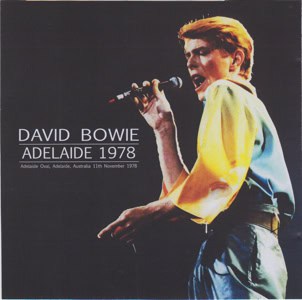
Dennis Garcia’s first confirmed Bowie appearance was on 11 November 1978 at the Adelaide Oval Cricket Ground in Adelaide, Australia.
This was part of Bowie’s Australian Isolar II schedule. For Garcia, the situation meant stepping into a world-class touring production with little room for uncertainty. Bowie’s arrangements in 1978 were not casual rock-band versions of the songs; they were structured, disciplined and heavily dependent on the interaction between rhythm section, guitar, violin, keyboards and synthesizers.
Garcia’s task was therefore significant even if his time with the tour was short. Keyboard and synthesizer parts were central to the sound of the Berlin-era material, and any replacement musician had to support the architecture of the show without disrupting it.
Perth — 14 November 1978
Garcia’s second confirmed Bowie appearance was on 14 November 1978 at the Perth Entertainment Centre in Perth, Australia.
The Perth concert provides the second confirmed date for Garcia’s role in Bowie’s touring history. Again, the safest and most accurate description is that Garcia performed keyboards and synthesizer for this show, rather than that he became a permanent member of the Isolar II band.
The distance between Adelaide and Perth also underlines the scale of Bowie’s 1978 touring operation. Garcia’s brief involvement placed him inside an international production at a moment when Bowie was performing some of the most demanding live arrangements of his career.
Working with Bowie
Later accounts describe Bowie as gracious toward Garcia during this brief period. Garcia recalled that Bowie treated him well and spoke positively about him in the Australian press.
Garcia also remembered the surreal nature of being brought into Bowie’s touring world. For an Australian musician whose career had ranged from pop groups and session work to electronic experimentation, the sudden shift into Bowie’s international touring machine was extraordinary.
One of Garcia’s later recollections was that he was given his own limousine during the tour period. The detail is small, but it captures the contrast between his normal working life and the scale of Bowie’s late-1970s operation.
The band Garcia briefly joined
The Isolar II band was one of Bowie’s finest live groups. Carlos Alomar provided guitar and musical direction, George Murray and Dennis Davis formed the powerful rhythm section, Adrian Belew brought experimental guitar, Simon House added violin, and Sean Mayes and Roger Powell handled keyboards.
Garcia’s brief appearance alongside this musical environment is historically notable. He entered a band already known for precision and power, and he did so during a tour whose official live document, Stage, remains one of the key records of Bowie’s 1970s performance style.
The fact that Garcia’s involvement lasted only for confirmed Australian dates should not diminish the interest of the story. In Bowie history, even a short appearance can reveal how complex and adaptive the touring machine had to be.
The sound world Garcia entered
Bowie’s 1978 live repertoire required a wide musical range. The band performed songs from Low, “Heroes”, Station to Station, Young Americans, Diamond Dogs and earlier classics.
The keyboard role was especially important because the music moved between rhythm-driven songs, atmospheric instrumental passages and sharply arranged live versions of Bowie’s catalogue.
Garcia’s synthesizer knowledge made him relevant to this particular Bowie period. The late 1970s were a moment when electronic instruments were no longer novelties; they were becoming central to how ambitious rock and pop artists imagined the future.
After Bowie
After his brief connection with Bowie, Garcia continued to work in music. Later accounts connect him with further touring and performance activity, including work with Grace Jones in 1981 and Max Merritt the following year.
He also remained involved in electronic and performance-based projects. In 1982, he supplied music for a major laser light show at the Royal Easter Show in Sydney, with the music reportedly broadcast live on Triple J.
His later career included unusual performance settings as well, including a period as a musical ringmaster for Ashtons Circus. These details fit the broader pattern of Garcia’s life: he was not only a conventional keyboard player, but a musician repeatedly drawn to performance situations outside the ordinary rock-band format.
Later life and Mission Beach
In later years, Garcia settled in Far North Queensland and lived a lower-profile musical life. He continued to play, record and collaborate, even while describing music more modestly as a hobby.
Accounts from the Mission Beach and Seafest period show him still active, still open to collaboration and still connected to the experience of live performance.
This later chapter gives the Bowie story an unusual afterlife. Garcia’s time with Bowie was brief, but it remained one of the most striking episodes in a career that had already included pop success, experimental electronics and Australian session work.
Why Dennis Garcia matters in Bowie’s story
Dennis Garcia matters because Bowie history is not made only by the famous long-term collaborators. It is also made by musicians who appear briefly, solve a practical musical problem, and then disappear back into their own careers.
Garcia’s role was small in duration but real in historical importance. He stands as a rare Australian keyboard and synthesizer player connected directly to the Isolar II Tour.
His story is also valuable because it joins two different histories: Bowie’s late-1970s live world and Australia’s experimental electronic-music culture. The same musician associated with Jive To Stay Alive and biofeedback synthesizer experiments briefly stepped into Bowie’s Berlin-era stage universe.
Legacy within Bowie’s universe
Within David Bowie’s wider collaboration history, Dennis Garcia should be remembered carefully and accurately: keyboards and synthesizer, confirmed for Adelaide on 11 November 1978 and Perth on 14 November 1978 only.
He was not a permanent Bowie band member, and he should not be presented as part of the full 1978 tour line-up. His value lies in the precision of the story: a brief, documented, unusual replacement role during one of Bowie’s most important tours.
That makes Garcia a fascinating minor figure in Bowie history. His contribution was short, but the context was extraordinary.
