
The Making Of Hunky Dory (1971)
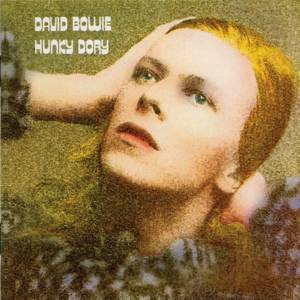
Image: David Bowie World collection / editorial use
Released on 17 December 1971, Hunky Dory became one of the most important albums of David Bowie’s career. It was the record on which Bowie fully emerged as a songwriter of exceptional originality, combining ambitious storytelling, theatrical imagination and melodic sophistication in a way that had never been heard before.
Although later overshadowed commercially by The Rise And Fall Of Ziggy Stardust And The Spiders From Mars, many critics and musicians regard Hunky Dory as one of Bowie’s greatest achievements. The album introduced classics such as Changes, Life On Mars?, Kooks and Queen Bitch, while revealing a songwriter operating at an extraordinary creative peak.
- Album: Hunky Dory
- Released: 17 December 1971
- Recorded: June–August 1971
- Studio: Trident Studios, London
- Producer: Ken Scott and David Bowie
- Label: RCA Records
- Cover photography: Brian Ward
- Cover design: George Underwood and Terry Pastor
- Key musicians: Mick Ronson, Trevor Bolder, Mick Woodmansey and Rick Wakeman
A New Beginning
By early 1971, David Bowie stood at a crossroads. His previous album, The Man Who Sold The World, had received strong reviews but achieved only modest commercial success.
Although Bowie had finally found a powerful musical identity through his collaboration with guitarist Mick Ronson and producer Tony Visconti, he still lacked the breakthrough record that would establish him as a major artist.
At the same time, significant changes were taking place behind the scenes. Bowie signed with RCA Records, assembled a stronger management team and began planning the next phase of his career with greater confidence than ever before.
Most importantly, he was writing songs at an astonishing rate.
America Changes Everything
A promotional trip to the United States during 1971 had a profound impact on Bowie’s thinking.
He later explained that the experience transformed his approach to songwriting. America exposed him to new musical ideas, new ambitions and a new sense of possibility.
When Bowie returned to England, songs seemed to pour out of him. Unlike many of the compositions on earlier records, the new material felt immediate, personal and fully formed.
Within a remarkably short period, Bowie wrote much of what would become Hunky Dory.
Haddon Hall: The Creative Headquarters
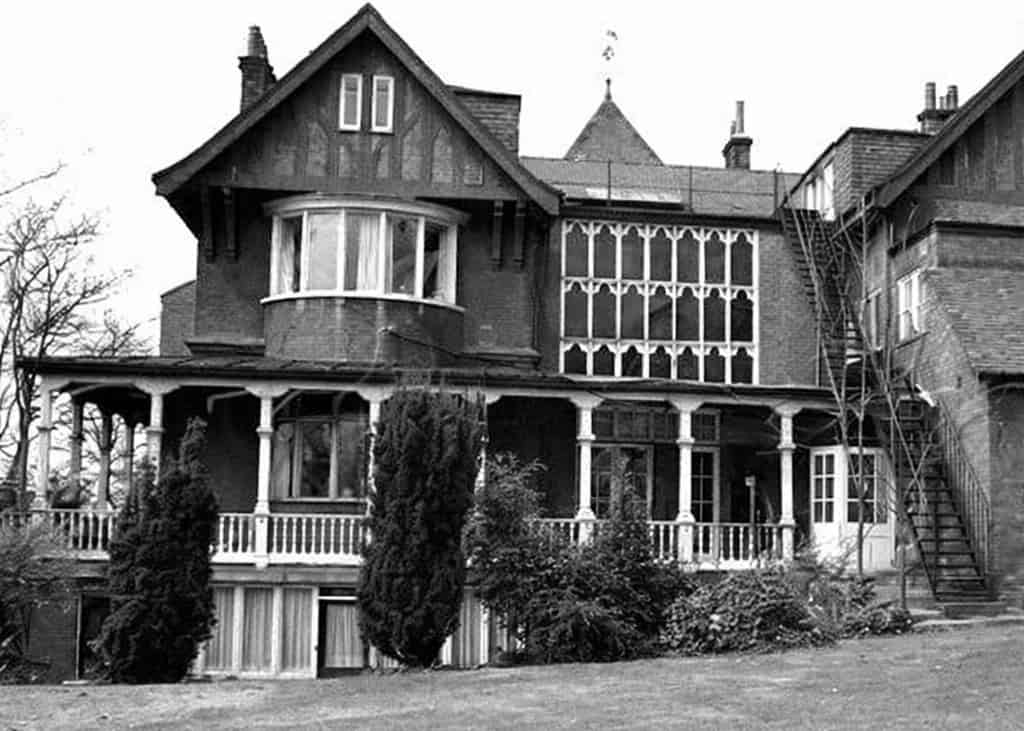
Many of the songs were developed at Haddon Hall in Beckenham, the large Victorian house where Bowie lived during this crucial period.
Haddon Hall became far more than simply a residence. It functioned as a creative workshop where Bowie wrote, rehearsed, experimented and planned his future.
Friends, musicians, managers and collaborators regularly passed through the house, creating an environment filled with artistic energy.
It was here that Bowie refined many of the songs that would define Hunky Dory.
The Piano Becomes Central
One of the biggest differences between Hunky Dory and its predecessor was Bowie’s increasing use of piano during the writing process.
While The Man Who Sold The World had been driven largely by heavy guitar riffs and hard rock arrangements, the new songs emerged from piano chords, melodic structures and lyrical ideas.
This shift allowed Bowie to explore a broader emotional range.
Songs such as Changes, Life On Mars?, Kooks and Oh! You Pretty Things demonstrated a level of melodic sophistication that surprised even some of his closest collaborators.
The Songwriting Explosion
The songs written during the Hunky Dory period revealed an artist working at full creative capacity.
Some tracks reflected Bowie’s fascination with cultural icons and artistic heroes. Others explored family life, personal identity, social change or philosophical questions.
The album would ultimately include tributes to Andy Warhol, Bob Dylan and the Velvet Underground, alongside deeply personal songs inspired by Bowie’s own experiences.
The result was a collection unlike anything else being created in British rock music during 1971.
From Songwriter To Visionary
One reason Hunky Dory remains so important is that it captures Bowie before the arrival of Ziggy Stardust.
Later albums would introduce famous characters and elaborate concepts, but Hunky Dory largely presents Bowie as himself: a songwriter, observer and cultural commentator.
Many fans and historians therefore view the album as the closest representation of David Jones the artist before he transformed into David Bowie the global icon.
Everything that followed was built upon the creative foundations established during the making of Hunky Dory.
Recording At Trident Studios
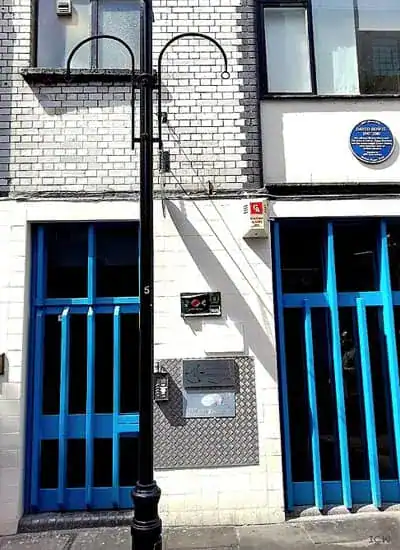
The recording sessions for Hunky Dory took place primarily between June and August 1971 at Trident Studios in Soho, London.
Trident had already become one of Britain’s most respected recording facilities and offered state-of-the-art equipment together with a relaxed creative atmosphere.
For Bowie, the studio provided the ideal environment to transform his rapidly growing collection of songs into a fully realised album.
Unlike many artists who spent weeks rehearsing before entering the studio, Bowie often arrived with little more than acoustic demonstrations. Much of the final sound developed during the recording process itself.
Ken Scott Becomes Co-Producer
One of the most important developments during the making of Hunky Dory was Bowie’s decision to work with engineer-turned-producer Ken Scott.
Scott had previously worked on Bowie’s Space Oddity and The Man Who Sold The World, but Hunky Dory marked the beginning of a much closer creative partnership.
After hearing Bowie’s new songs, Scott immediately recognised that something extraordinary was happening. He later described the experience as a moment when a “light bulb” suddenly switched on and revealed the full scale of Bowie’s talent.
The collaboration proved crucial. Scott’s technical expertise and Bowie’s artistic vision formed one of the most successful producer-artist partnerships of the decade.
The Spiders Begin To Form
Although the famous Ziggy Stardust era had not yet arrived, the core musicians who would soon become the Spiders From Mars were already in place.
Guitarist Mick Ronson, bassist Trevor Bolder and drummer Mick Woodmansey provided the musical foundation of the album.
Together they brought discipline, power and versatility to Bowie’s increasingly ambitious compositions.
The chemistry between Bowie and his musicians was becoming stronger with every recording session.
Mick Ronson’s Expanding Role
Mick Ronson was far more than simply the album’s lead guitarist.
During the making of Hunky Dory, he became one of Bowie’s most trusted musical collaborators, contributing arrangements, orchestration ideas and creative solutions throughout the project.
Ronson possessed a rare ability to translate Bowie’s often abstract ideas into practical musical arrangements.
His influence can be heard across the entire album, from subtle guitar textures to sweeping orchestral passages.
Rick Wakeman And The Piano Sound
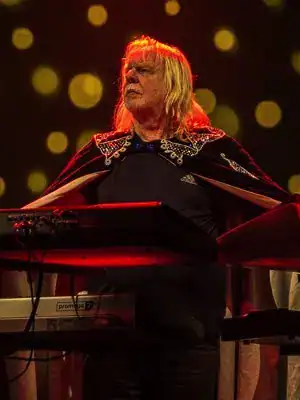
One of the defining sounds of Hunky Dory came from pianist Rick Wakeman.
Before joining Yes and becoming one of progressive rock’s most celebrated keyboard players, Wakeman was a highly sought-after session musician.
Bowie invited him to Haddon Hall and played the new songs on a twelve-string guitar. Wakeman later recalled being astonished by the quality of the material and immediately recognising that he was hearing something special.
Bowie encouraged Wakeman to build the arrangements around piano, giving him unusual freedom to interpret the songs.
The result became one of the defining musical characteristics of the album.
Life On Mars?
Among the album’s masterpieces, Life On Mars? remains one of Bowie’s most celebrated achievements.
Built around Rick Wakeman’s dramatic piano performance and Mick Ronson’s ambitious string arrangement, the song combined theatrical grandeur with emotional intensity.
Ronson had never before written an orchestral arrangement on such a scale and was reportedly nervous when the score was presented to professional session musicians.
The musicians quickly recognised the quality of the arrangement and delivered one of the most iconic recordings in Bowie’s catalogue.
Changes
The opening track, Changes, served almost as a manifesto for Bowie’s future career.
Its lyrics explored transformation, reinvention and artistic evolution — themes that would define Bowie’s work for decades.
Although not initially a major commercial success, the song eventually became one of Bowie’s signature recordings and a perfect summary of his artistic philosophy.
Kooks And Family Life
Not every song on the album explored art, fame or cultural icons.
Kooks was written for Bowie’s newborn son Duncan Jones, known at the time as Zowie.
Warm, playful and affectionate, it revealed a softer and more personal side of Bowie rarely heard on earlier recordings.
The song remains one of the most charming and heartfelt moments in his entire catalogue.
Bowie’s Heroes And Inspirations
Several songs reflected Bowie’s fascination with the artists who had inspired him.
Andy Warhol paid tribute to the famous American artist, while Song For Bob Dylan acknowledged one of the most influential songwriters of the era.
Meanwhile, Queen Bitch drew heavily from the sound and attitude of Lou Reed and The Velvet Underground.
Rather than simple imitations, these songs transformed Bowie’s influences into something uniquely his own.
How The Album Got Its Title
The title Hunky Dory reportedly emerged from a phrase frequently used by Peter Shoot, a colourful publican known to Bowie’s publishing associate Bob Grace.
Whenever someone asked how he was doing, Shoot would reportedly answer with the cheerful expression “Hunky Dory.”
Bowie loved unusual language and memorable phrases, often collecting words and expressions from everyday conversations.
The title perfectly matched the album’s spirit: playful, eccentric, optimistic and distinctly British.
A Masterpiece Takes Shape
By the end of the summer of 1971, Bowie and his collaborators had created one of the most accomplished albums of the decade.
The songs were ambitious without being pretentious, sophisticated without losing accessibility and deeply personal while remaining universally relatable.
Although Bowie’s greatest commercial success still lay ahead, Hunky Dory established the artistic foundations upon which the rest of his career would be built.
The Making Of The Cover
While the music of Hunky Dory revealed a songwriter operating at a new level of confidence, the album cover introduced a visual style that was equally important to Bowie’s evolution.
The sleeve moved away from the hard rock imagery associated with The Man Who Sold The World and instead presented Bowie as a sophisticated, almost cinematic figure inspired by classic Hollywood glamour.
The result was one of the most elegant and recognisable album covers of the 1970s.
Brian Ward’s Original Photograph
The photograph used for the cover was taken by photographer Brian Ward during a session at Haddon Hall.
Ward captured Bowie reclining with his hand resting against his face, creating a pose that immediately evoked the glamour photography of the 1930s and 1940s.
Bowie was particularly fascinated by classic film stars such as Greta Garbo, Marlene Dietrich and Lauren Bacall, and elements of their visual style can clearly be seen in the final image.
Unlike many later Bowie covers, the photograph itself was remarkably simple. The power of the image came from expression, posture and atmosphere rather than elaborate costumes or special effects.
George Underwood And Terry Pastor
After the photographs had been selected, Bowie asked his lifelong friend George Underwood to help develop the final artwork.
Underwood received several sepia photographic prints and initially planned to hand-colour them.
However, while travelling abroad, he asked Terry Pastor, his partner at the Main Artery design studio, to complete the work.
Pastor used an airbrush technique together with photo dyes and transparent inks to create the famous soft-focus appearance that transformed the black-and-white photograph into the finished cover image.
The colours used on the final sleeve were not intended to reproduce reality. Instead they were chosen to create a dreamlike atmosphere that enhanced the Hollywood-inspired concept.
A New Bowie Image
The completed cover presented Bowie in a way audiences had never seen before.
Gone were the heavier rock influences of earlier publicity photographs. In their place stood a figure who appeared refined, artistic and mysterious.
The image reflected Bowie’s growing understanding that visual presentation could be every bit as important as the music itself.
In many ways, Hunky Dory laid the foundations for the sophisticated image-making that would later reach its full expression with Ziggy Stardust.
The Original Back Cover

Image: David Bowie World collection / editorial use
The back cover of Hunky Dory continued the elegant and cinematic atmosphere established by the famous front sleeve.
Rather than presenting Bowie as a conventional rock performer, the packaging maintained the sophisticated Hollywood-inspired mood that defined the entire visual concept of the album.
The typography, photography and soft visual styling all reflected Bowie’s growing understanding that image and music could function together as one artistic statement.
Looking back today, the complete sleeve package feels like the final step before Bowie’s full transformation into Ziggy Stardust only months later.
Want to discover the full story behind the iconic Hunky Dory album cover? Explore its photography, artwork, design and artistic influences.
Track Listing
The original 1971 release contained eleven tracks that showcased the remarkable breadth of Bowie’s songwriting during this period.
- Changes
- Oh! You Pretty Things
- Eight Line Poem
- Life On Mars?
- Kooks
- Quicksand
- Fill Your Heart
- Andy Warhol
- Song For Bob Dylan
- Queen Bitch
- The Bewlay Brothers
Together these songs formed one of the most diverse and imaginative albums of Bowie’s career, balancing commercial accessibility with artistic ambition.
The Singles From Hunky Dory
Although Hunky Dory is often celebrated as an album masterpiece, several of its songs also enjoyed successful lives as singles and later became some of the most enduring recordings in David Bowie’s catalogue.
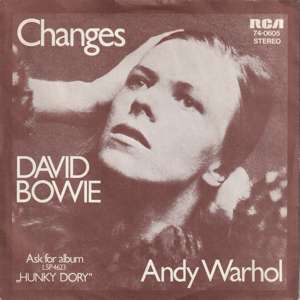
The first single associated with the album was Changes, released in January 1972.
Although it achieved only modest chart success at the time, it later became one of Bowie’s signature songs and an anthem of artistic reinvention.
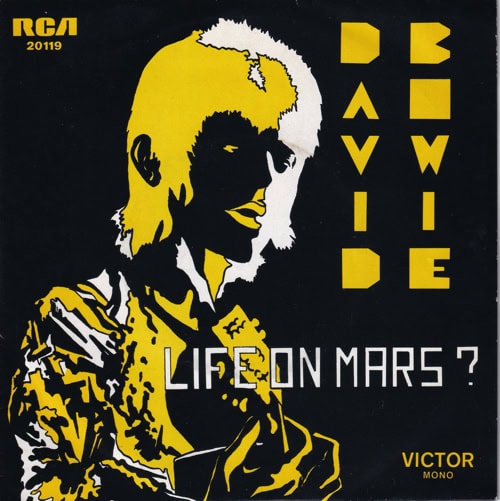
The album’s most famous song, Life On Mars?, was issued as a single in June 1973 after Bowie had already become a major star through Ziggy Stardust.
It reached the UK Top 5 and remains one of the most celebrated recordings of his entire career.
Other tracks such as Oh! You Pretty Things and Kooks were never major Bowie hit singles, but became fan favourites and important parts of the album’s lasting reputation.
Together these songs helped transform Hunky Dory from a critically admired album into one of the most influential records of the 1970s.
Release And Reception
When Hunky Dory was released in December 1971, critical reaction was overwhelmingly positive.
Reviewers recognised the dramatic leap in songwriting quality and many praised Bowie’s growing confidence as both a composer and performer.
Commercial success arrived more gradually. Only after the breakthrough of Ziggy Stardust during 1972 did large numbers of listeners discover Hunky Dory.
As Bowie’s fame increased, the album steadily gained recognition as one of the finest works in his catalogue.
Legacy
More than fifty years after its release, Hunky Dory remains one of the most admired albums in popular music.
It captures Bowie at a unique moment: no longer an aspiring artist searching for direction, but not yet the global phenomenon he would soon become.
The album combines extraordinary songwriting, inspired musicianship and a visual identity that perfectly complements the music.
For many listeners, it represents David Bowie at his most human, most personal and most complete.
Without Hunky Dory, there would almost certainly have been no Ziggy Stardust, no Aladdin Sane and no David Bowie as the world eventually came to know him.
Article Origin
This page was created using documented research into the making of Hunky Dory, including interviews with Ken Scott, Mick Woodmansey, Trevor Bolder, Rick Wakeman, George Underwood, Terry Pastor and contemporary David Bowie interviews.
Additional historical information was drawn from archive material surrounding Trident Studios, RCA Records, Haddon Hall, the original 1971 album artwork and research published about the creation of both the album and its iconic cover.
