
Derek Fearnley & David Bowie – Bass Guitar in David Bowie and The Buzz

Image: No image available / placeholder / editorial use
Derek “Dek” Fearnley was the bass guitarist in David Bowie and The Buzz, the short-lived group that worked with Bowie during 1966, immediately after the collapse of The Lower Third and before the release of Bowie’s 1967 debut album.
Fearnley’s Bowie connection belongs to a formative but often overlooked phase. He played bass in The Buzz, appeared on Bowie’s 1966 singles, and later had an important arranging role connected with the material that became Bowie’s first album for Deram.
Although Fearnley was not a long-term Bowie collaborator, he was close enough to Bowie during this period to work on songs at home, discuss arrangements and later recognise elements of himself in the song Uncle Arthur.
- Name: Derek “Dek” Fearnley
- Born: c. 1939 (exact date unknown)
- Died: 1 November 2008 (aged 69)
- Role: Bass guitar, arrangements
- Bowie band: David Bowie and The Buzz
- With Bowie: 1966–early 1967 period
- Key recordings: Do Anything You Say, Good Morning Girl, I Dig Everything, Rubber Band, The London Boys
- Album connection: Arrangements for Bowie’s 1967 debut album David Bowie
- Family connection: His brother Gerald Fearnley photographed Bowie for the 1967 debut album cover
- Died: 1 November 2014, East Sussex, England
Who was Derek “Dek” Fearnley?
Derek Fearnley, usually remembered by Bowie fans as Dek Fearnley, was the bass guitarist in David Bowie and The Buzz. His period with Bowie was brief, but it came at a decisive moment in Bowie’s early development.
In 1966 Bowie was still trying to establish himself. He had moved through several groups, including The King Bees, The Manish Boys and The Lower Third, without achieving commercial success. The Buzz became his next attempt to create a stable backing band and move toward a more professional recording career.
Fearnley was part of that attempt. He played bass, worked on arrangements and was present during the period that led directly into Bowie’s first album.
After The Lower Third
Bowie’s time with The Lower Third ended at the end of January 1966. Only a few days later, he began putting together a new band.
Bowie’s manager Ralph Horton placed an advertisement for musicians, and auditions were held at the Marquee Club in London. Drummer John Eager joined the new group, and guitarist John “Hutch” Hutchinson was recruited soon afterwards.
Derek Fearnley was introduced to Bowie through Horton’s circle and became the group’s bass guitarist. Keyboard player Derek “Chow” Boyes completed the line-up.
David Bowie and The Buzz
The new group became known as David Bowie and The Buzz. The name was reportedly suggested by London disc jockey Earl Richmond, also known as John Dienn.
The Buzz line-up generally associated with Bowie’s 1966 recordings consisted of David Bowie on vocals and guitar, John “Hutch” Hutchinson on guitar, Derek “Dek” Fearnley on bass guitar, John Eager on drums and Derek “Chow” Boyes on keyboards.
The group did not last long, but it supported Bowie through one of his busiest early periods: live shows, auditions, singles, television opportunities and the shift toward the Deram material.
Do Anything You Say
Do Anything You Say was released in 1966 and is one of the central recordings connected with Bowie and The Buzz.
Although the single featured Bowie’s backing band, it was credited simply to David Bowie. This is historically important because it marks one of the steps by which Bowie’s name began to move ahead of the group identity.
Fearnley played bass guitar on the recording. The track shows Bowie still working within a mid-1960s pop and beat-group framework, but also trying to sharpen his identity as a solo artist.
Good Morning Girl
The B-side of Do Anything You Say was Good Morning Girl. Like many Bowie B-sides from this period, it did not become widely known outside specialist Bowie circles, but it remains part of the record of his early development.
Fearnley’s bass work helped ground these recordings in the sound of a working 1966 band. Bowie was not yet operating as the studio auteur he would later become; he still relied on bandmates to give his songs shape and drive.
I Dig Everything
I Dig Everything was another 1966 Bowie single associated with The Buzz period. It continued Bowie’s attempt to find commercial traction while absorbing contemporary London styles.
The song is often remembered for its youth-culture atmosphere and its connection to the mid-1960s London scene. Fearnley’s role as bassist places him again inside Bowie’s pre-Deram, pre-fame working environment.
These singles did not bring Bowie the success he wanted, but they helped him learn how to lead musicians, work in studios and refine his public identity.
Rubber Band and The London Boys
The Buzz period also leads directly into Bowie’s Deram recordings. Rubber Band and The London Boys were recorded in 1966 and released by Deram later that year.
Rubber Band moved Bowie toward theatrical character-song writing, brass-band imagery and an Anthony Newley-influenced vocal style. The London Boys, by contrast, was darker and closer to the world of London youth, alienation and pills.
Fearnley’s bass guitar formed part of the band framework around Bowie during this transition. His contribution belongs to the moment when Bowie was moving away from straight mod-pop singles toward the more theatrical songwriting of his 1967 debut album.
The Deram transition
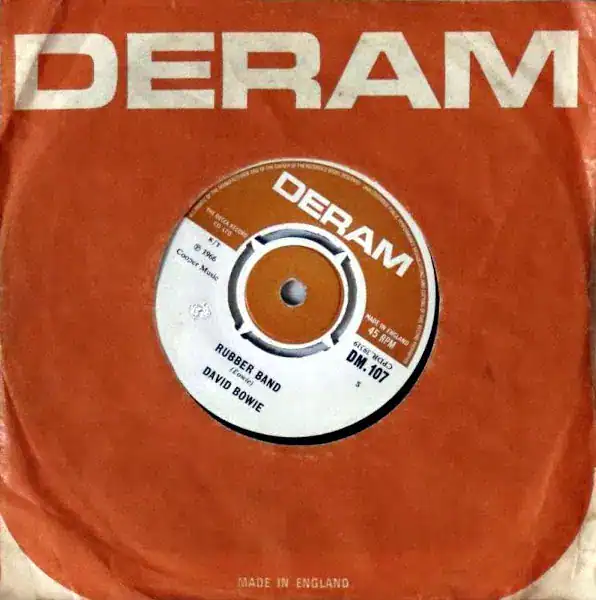
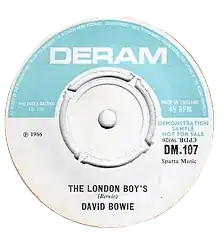
The Deram period is sometimes treated as an odd footnote before Bowie became famous, but it is essential to understanding his development. During this time he tried out theatrical voices, character songs, children’s perspectives, social observation and music-hall-inspired writing.
Fearnley’s role was important because he was not only a bassist in the live band. He was also involved in shaping arrangements for the material that became Bowie’s debut album.
This makes him more significant than a simple one-single sideman. In the short world of Bowie’s 1966–1967 transition, Fearnley helped turn Bowie’s songs into recordable arrangements.
Arranger on David Bowie’s debut album
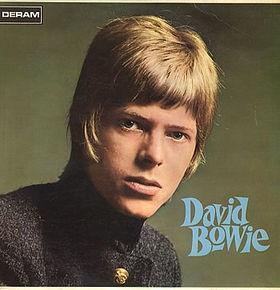
Bowie’s debut album, David Bowie, was released in 1967. It presented a very different artist from the mod singer of The Lower Third. The album included comic miniatures, theatrical scenes, character songs and eccentric observations.
Derek Fearnley had the strongest role of any member of The Buzz in relation to the album because of his arranging work. He helped shape how some of Bowie’s songs came across musically.
This arrangement role is central to why Fearnley deserves a separate Bowie collaboration page. His importance lies not only in playing bass, but also in helping Bowie organise songs during the fragile transition from band singer to solo artist.
Gerald Fearnley and the album cover
Derek Fearnley’s older brother, Gerald Fearnley, was the photographer who took the cover image for Bowie’s 1967 debut album.
This gives the Fearnley family a double connection to the Deram period: Derek through bass and arrangements, and Gerald through one of the defining visual documents of Bowie’s first album.
The cover photograph is an important part of Bowie’s early image history. Before Ziggy Stardust, before the Berlin period and before the global fame, Bowie was already experimenting with visual identity, and Gerald Fearnley’s image helped present that first solo version to the public.
Uncle Arthur
One of the most interesting stories connected with Derek Fearnley concerns the song Uncle Arthur.
Fearnley later recalled that Bowie would visit the home of Fearnley’s older brother Gerald, where there was a piano and space to work on songs. Gerald’s children called Derek “Uncle Derek”.
Fearnley believed that this domestic setting provided the seed for Uncle Arthur. He did not claim the song was a literal portrait of him in every detail, but he recognised something of himself in the idea of an unmarried older male figure viewed through Bowie’s imagination.
This story is valuable because it shows how Bowie transformed small observations from life into character songs. Even in the Deram period, Bowie was already turning people and situations around him into theatrical material.
Working with Bowie
Fearnley’s later recollections of Bowie are revealing. He described Bowie as operating on a different imaginative level, someone whose thoughts and enthusiasms could pull others into unusual fantasies and ideas.
At the same time, Fearnley was honest about the nature of the relationship. He did not present himself as one of Bowie’s great artistic catalysts. He saw the connection as rooted mainly in the band, the music and the album.
That honesty makes his testimony especially valuable. Fearnley was close enough to observe Bowie’s early creative habits, but modest enough not to inflate his own place in the story.
The Buzz split
David Bowie and The Buzz did not survive as a long-term band. The group split from Bowie in December 1966, as Bowie moved further toward his solo identity and the Deram album.
This was part of a larger pattern in Bowie’s early career. He passed through a series of bands, learning from each one but refusing to remain trapped inside a fixed group identity.
For Fearnley, the end of The Buzz marked the beginning of his withdrawal from the professional music world. Unlike Bowie, he did not pursue international fame.
After Bowie
After his work with Bowie, Fearnley left music altogether shortly afterwards. His public musical career was therefore much shorter than Bowie’s, but his brief period with Bowie remained historically important to collectors and researchers.
His story is a reminder that many early Bowie collaborators were working musicians who briefly entered Bowie’s orbit before returning to quieter lives.
Death
Derek “Dek” Fearnley died on 1 November 2008 in a hospital in East Sussex, England, following a prolonged battle with cancer. He was 69 years old.
He was survived by his wife Judith and his children Nigel and Helen.
When informed of Fearnley’s passing, David Bowie remembered him warmly, describing him as “one of the nicest guys you could have wished to meet”.
Fearnley’s death prompted renewed interest in the early Bowie years and in the role played by The Buzz during the crucial period leading to Bowie’s first album for Deram Records.
Why Derek Fearnley matters
Derek Fearnley matters in Bowie’s story because he was part of the fragile bridge between Bowie’s mid-1960s band years and the first solo album.
He played bass in The Buzz, contributed to important 1966 singles and helped arrange material for Bowie’s 1967 debut. That makes him more than a passing name in a line-up list.
His recollections also provide rare insight into Bowie before fame: ambitious, imaginative, unusual, sometimes distant, but already living inside a creative world of his own.
Legacy within Bowie’s universe
Within David Bowie’s wider collaboration history, Derek Fearnley should be remembered as the bassist of David Bowie and The Buzz and as an arranger connected to Bowie’s 1967 debut album.
His contribution was modest in length but important in context. He helped Bowie during a period when every failed single, every band, every arrangement and every recording session pushed him a little closer to the artist he would become.
Fearnley’s story also connects music, image and memory: his bass playing and arrangements belong to Bowie’s Deram period, while his brother Gerald’s photography helped define the visual identity of Bowie’s first album.
